
As electronic products are sold and distributed across global markets, chemical compliance has become an important consideration in global business operations.
One of the most influential regulations is the Restriction of Hazardous Substances (RoHS) Directive, which sets limits for the use of certain hazardous substances in electrical and electronic equipment.
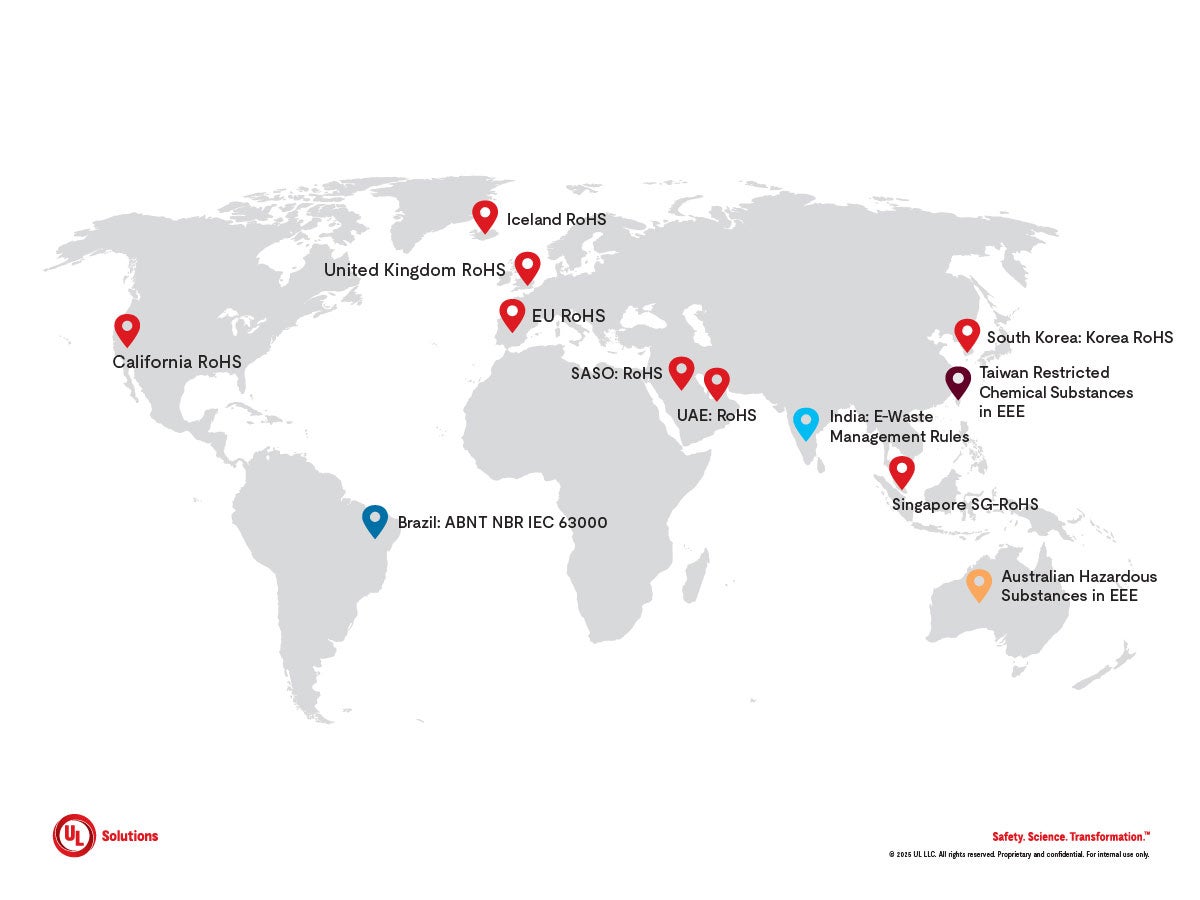
While the European Union pioneered RoHS, many countries and regions have since developed their own RoHS-based regulations — each with distinct scopes, substance thresholds, exemptions and enforcement approaches.
For companies operating internationally, this patchwork of requirements can be difficult to navigate. Subtle regulatory differences can impact material choices, manufacturing processes, supply chain communication, product labeling and overall time to market. However, understanding shared elements across regulations can help streamline compliance efforts and reduce duplication.
This comparison handbook provides a clear, structured overview of RoHS-related regulations worldwide. Through an easy-to-read comparison table, it highlights where requirements align, where they differ and what organizations should consider when planning for global market access.
Note: This comparison table is current as of March 2026. It provides a high-level overview of selected RoHS regulations; it is not intended to be exhaustive.

RoHS comparison table 2026
2.3 MB



To access our handbook, please fill out the form below:
Please wait…