

March 11, 2026
Welcome to the Q1 2026 Global Market Access Regulatory Newsletter from UL Solutions. You’ll find timely content on new and updated regulations in markets around the world — including Asia, Latin America and the Middle East — plus a quick guide to global Restriction of Hazardous Substances (RoHS) regulations.
Q1 2026 Global Market Access regulatory updates
Vietnam National Assembly Published New Cybersecurity Law
On December 10, 2025, the National Assembly of Vietnam published the Law on Cybersecurity, which will take effect on July 1, 2026.
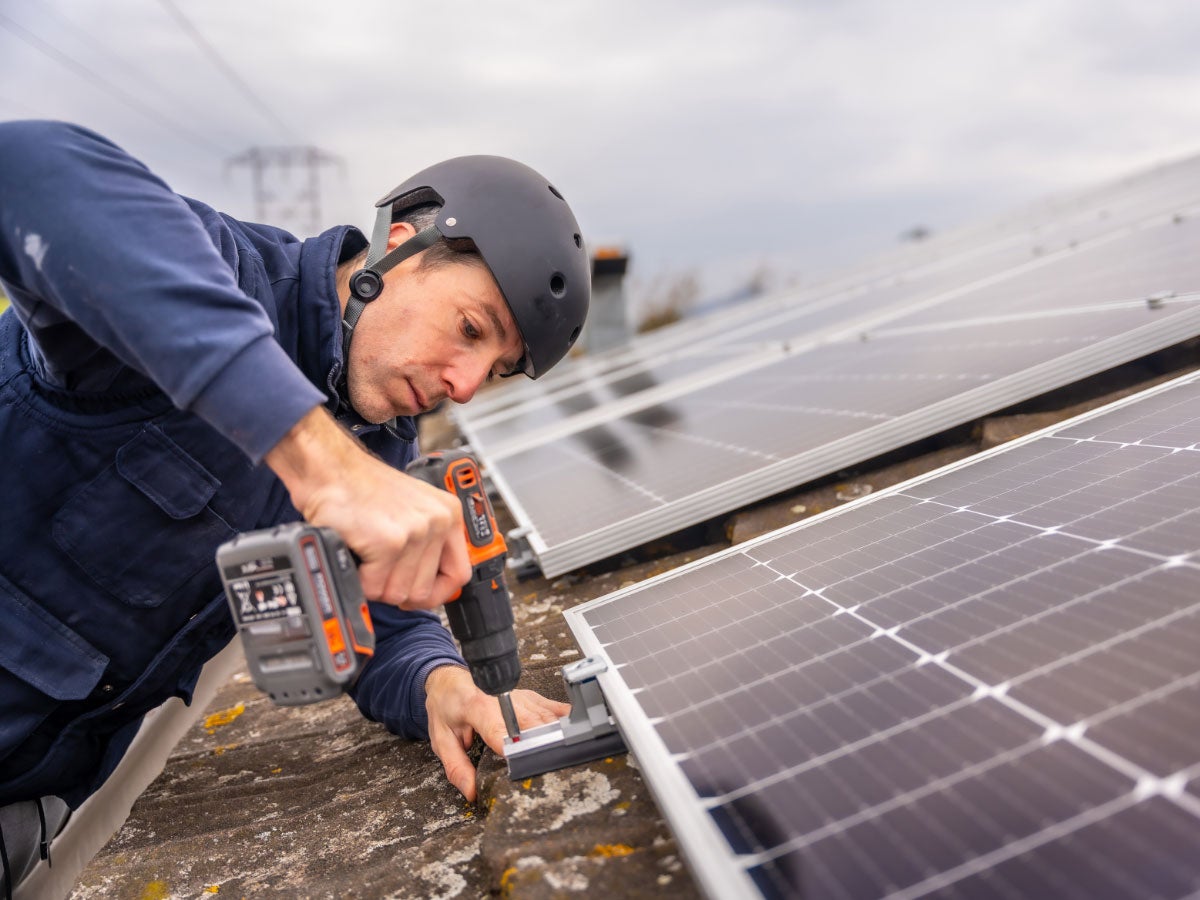
China SAMR Issues Announcement on Adjusting CCC Certification Mode for 16 Product Types
On January 7, 2026, the State Administration for Market Regulation (SAMR) published Announcement No. 57 of 2025 to adjust the Certification Mode for Some Products in the Compulsory Product Certification Catalogue, which was issued on December 28, 2025.

AU and NZ Updated Appliance Safety Standards
On November 27, 2025, Standards Australia and Standards New Zealand issued updated safety standards for household and similar electrical appliances.

India BEE Publishes 2026 Appliance Labeling and Compliance Regulations
On December 29, 2025, the Bureau of Energy Efficiency (BEE) published Bureau of Energy Efficiency (Appliance Labeling and Compliance) Regulations, 2026 under notification no. 506/BEE/S&L/AL/2025-26.

South Korea KEA Updates Effective Date of Efficiency Management Equipment Product-Specific Application of Standards
On January 2, 2026, the Korea Energy Agency (KEA), announced a notice regarding the information on the implementation date of the application standards for each item of efficiency management equipment and uses this reference for making labels and their effective dates as of January 1, 2025.

Albanian Authority Released Draft Decision On National Cybersecurity Certification Scheme
On December 23, 2025 the National Cyber Security Authority of Albania notified the release of a draft, Decision of the Council of Ministers "On the Approval of the National Cybersecurity Certification Scheme, as well as the Security Levels of the Scheme.”
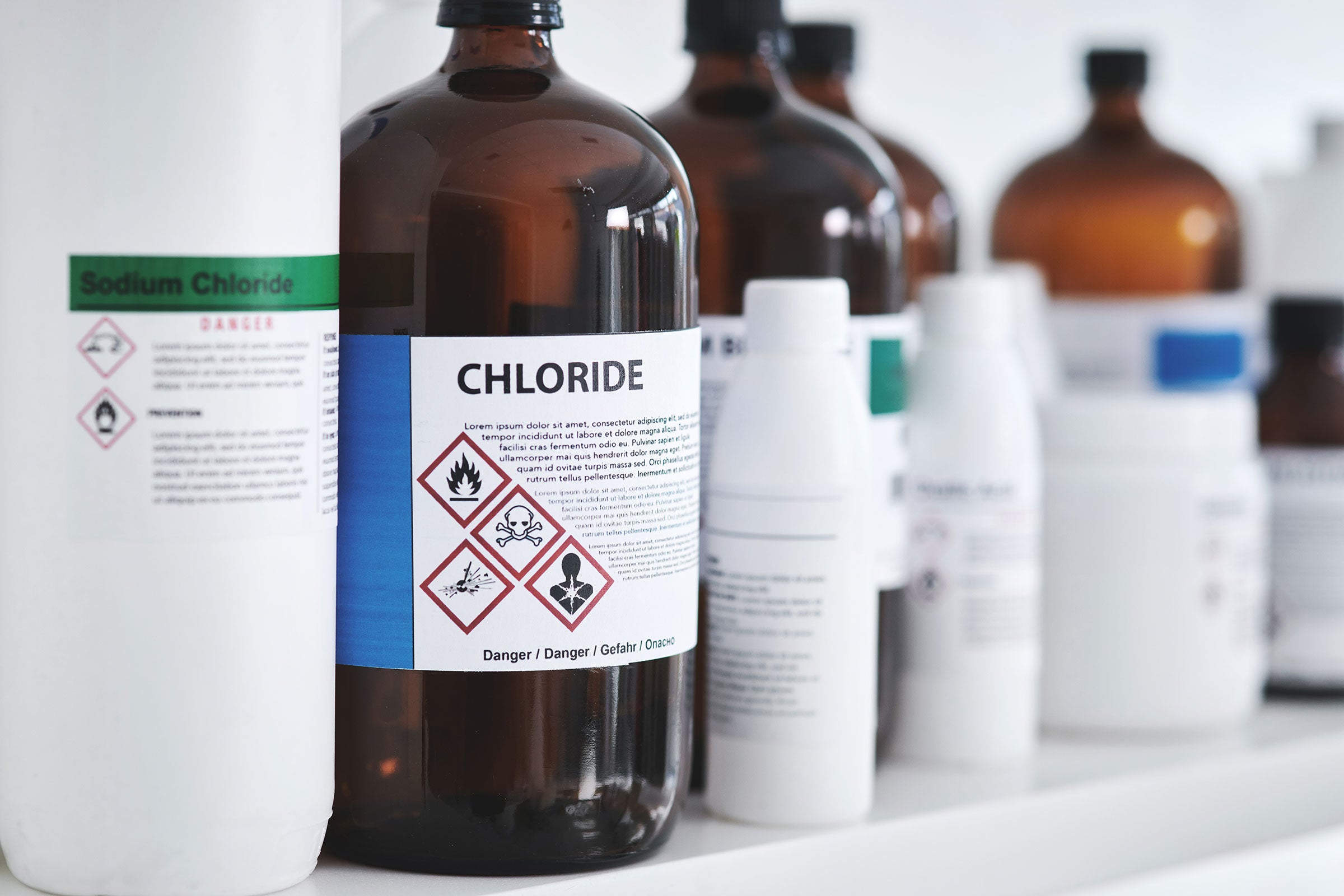
New Jersey’s New 2028 PFAS-Containing Products Requirements
On January 12, 2026, after more than one year of legislative discussion, the New Jersey Senate Bill 1042 (SB 1042), known as the ‘Protecting Against Forever Chemicals Act,’ became law, marking the first PFAS in products law in the state.
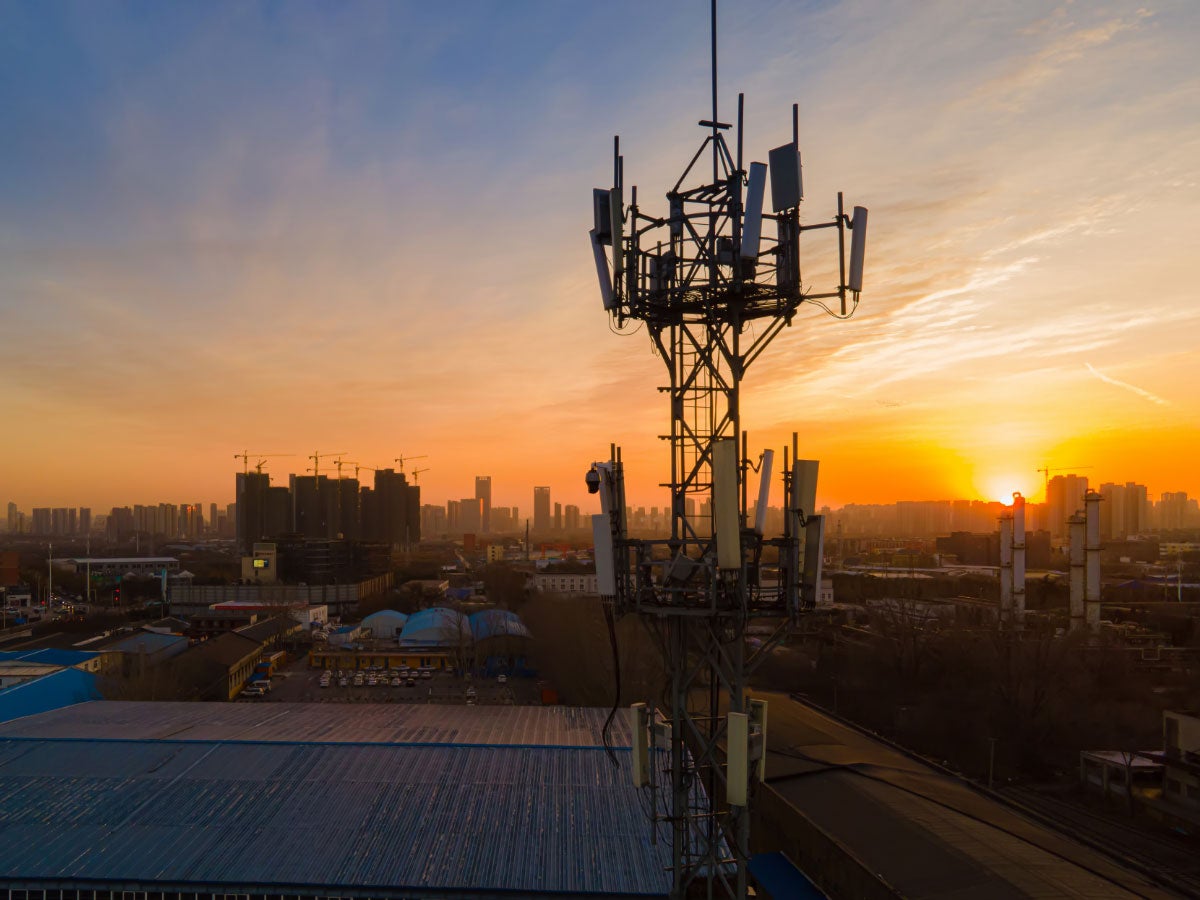
Indonesia Sets New LTE and 5G Tech Standard
On December 19, 2025, the Ministry of Communication and Digital (KOMDIGI) officially enacted the Ministerial Decree No. 569/2025, introducing updated technical standards for mobile telecommunications equipment based on Long Term Evolution (LTE) and International Mobile Telecommunications-2020 (IMT-2020 or 5G) technologies.
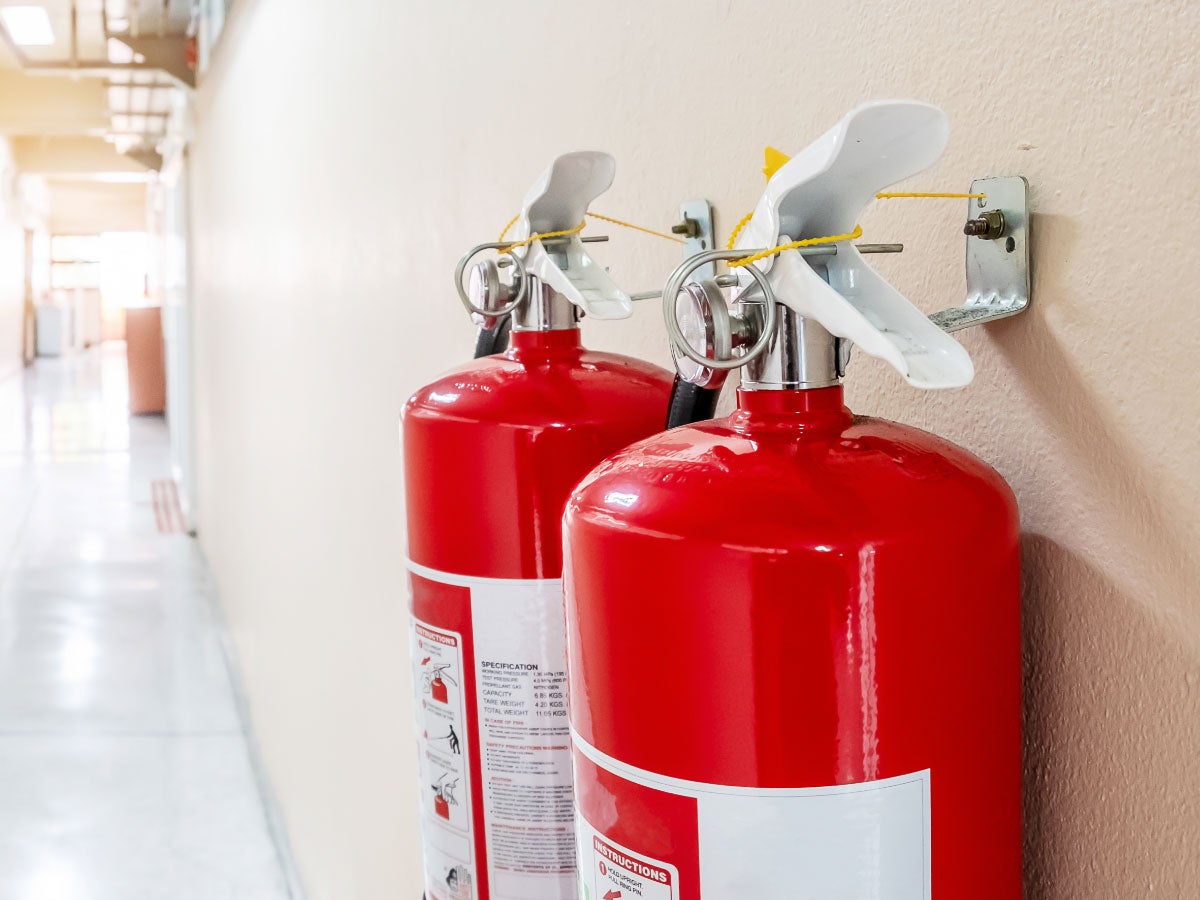
Indonesia Publishes Regulation on Goods Prohibited from Import
On December 29, 2025, the Ministry of Trade of the Republic of Indonesia published Regulation No. 47 of 2025 on Goods Prohibited from Import.

New EU Ecodesign for External Power Supplies and Chargers
The European Commission has published Regulation (EU) 2025/2052, establishing new Ecodesign requirements for electronic power supplies and chargers.
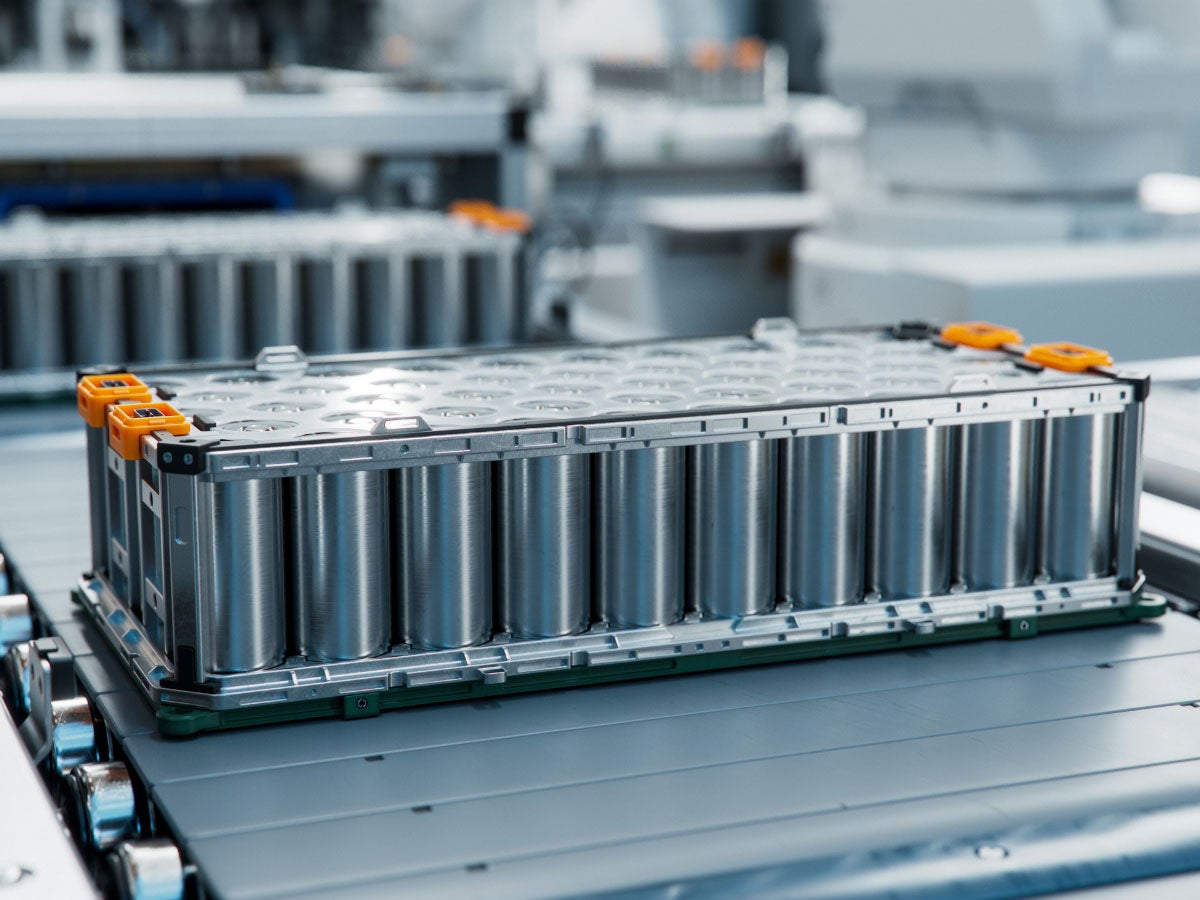
Government of Canada Announced Proposed New Requirements for Lithium-ion Batteries
On December 2, 2025, the Government of Canada announced proposed new requirements for lithium-ion batteries and consumer products containing lithium-ion batteries under the Canada Consumer Product Safety Act.

Belize BBS Issued Mandatory Energy Efficiency Standards
On September 29, 2025, the Belize Bureau of Standards (BBS) issued newly required energy efficiency standards.
Vietnam National Assembly Published New Cybersecurity Law
On December 10, 2025, the National Assembly of Vietnam published the Law on Cybersecurity, which will take effect on July 1, 2026.
The Law on Cybersecurity establishes a legal framework to safeguard national cyberspace. It affects the cybersecurity requirements for individuals and organizations (domestic and foreign) operating in Vietnam’s cyberspace.
The document merges the 2015 Law on Information Security and the 2018 Law on Cyber Security, addressing the overlaps and contradictions between the two laws. It also reflects recent institutional changes, including transferring cybersecurity responsibilities to the Ministry of Public Security (MPS), and addressing cyber threats.
Starting July 1, 2026, the MPS shall oversee cybersecurity responsibilities.
The assessment of conformity with standards and regulations on cybersecurity shall be carried out in the following cases:
- Before putting cybersecurity products on the market, organizations and individuals must certify technical-regulation conformity or announce technical regulation conformity and use the technical-regulation conformity mark.
- Serving the state management of cybersecurity.
Starting July 1, 2026, organizations must comply with updated technical requirements addressing evolving cyber threats.
Source:
Law on Cybersecurity
library-20260120164149-a12235e2-54a5-45b3-81cf-0728d0aec545-4-luat-an-ninh-mang-so-116-2025.pdf
China SAMR Issues Announcement on Adjusting CCC Certification Mode for 16 Product Types
On January 7, 2026, the State Administration for Market Regulation (SAMR) published Announcement No. 57 of 2025 to adjust the Certification Mode for Some Products in the Compulsory Product Certification Catalogue, which was issued on December 28, 2025. Sixteen product types under CCC Self-Declaration certification mode will be requested to comply with the China Compulsory Certification (CCC) certification with the CCC certificate mode. And the relevant implementation rules CNCA-00C-008:2019 CCC Implementation Rules – Self-Declaration will not be applicable anymore.
Implementation requirements and timeline:
From January 1, 2027, 16 product types shall obtain CCC certificates and affix CCC marks before they can be manufactured, sold, imported or used in other business activities. The relevant self-declaration for these products in Compulsory Certification Product Conformity Self-Declaration Information Reporting System will be cancelled.
02 Circuit Switch and Electrical Appliances for Protecting or Connecting
Fuses (0205, 0207)
04 Small-power Motor
Small power electric motor (0401)
05 Power Tools
- Electric drill (0501)
- Electric grinding machine (0503)
- Electric hammer (0506)
06 Electric Welding Machine
- DC arc welding machine (0603)
- TIG arc welding machine (0604)
- MIG/MAG arc welding machine (0605)
- Plasma arc cutting machine (0607)
11 & 13 Vehicle and Safety Accessories
- Automotive safety glass (1301)
- Automotive seat belt (1104)
- Motor vehicle external lighting and light signaling devices (1109, 1116)
- Indirect Vision Device for Motor Vehicles (1110, 1115)
- Automotive seats and headrests (1114)
- Automotive driving recorder (1117)
- Vehicle reflective markings (1118)
Starting from July 1, 2026, the designated certification bodies (will be announced separately) will begin to accept applications of CCC certification for these 16 product types. For products with the valid self-declaration, the certification body shall actively accept the evaluation results of the self-declaration and re-issue the CCC certificate on the basis of confirming the quality of certification and controllable risks. And the system will no longer accept or generate the self-declaration for these products.
Enterprises shall complete the conversion of CCC certificates before December 31, 2026, and promptly and proactively cancel the corresponding self-declaration. For those products that have been manufactured and no longer produced within the validity period of the self-declaration, there is no need to convert the certificate. And products can remain on the market.
Source:
https://www.samr.gov.cn/zw/zfxxgk/fdzdgknr/rzjgs/art/2026/art_28ba93dcb0414369863a9ac8e85ec6a6.html
https://www.cnca.gov.cn/zwxx/gg/2025/art/2026/art_27223a9fb4d146b58b9a7fcb14d5a41a.html
https://www.cnca.gov.cn/xwjj/scjgyw/art/2026/art_329771ec2a614faf809c41f35a6dbaa0.html
AU and NZ Updated Appliance Safety Standards
On November 27, 2025, Standards Australia and Standards New Zealand issued updated safety standards for household and similar electrical appliances. These 2025 editions will replace all previous versions after a three‑year transition period.
Updated standards:
- AS/NZS 60335.2.80:2025 - Safety Requirements for Electric Fans
- AS/NZS 60335.2.14:2025 - Safety Requirements for Kitchen Machines
- AS/NZS 60335.2.15:2025 - Safety Requirements for Heating Liquids Appliances
- AS/NZS 60335.2.40:2025 - Safety Requirements for Electrical Heat Pumps, Air-conditioners and Dehumidifiers
- AS/NZS 60335.2.24:2025 - Safety Requirements for Refrigerating Appliances, Ice-cream Appliances and Ice Makers
- AS/NZS 60335.2.32:2025 - Safety Requirements for electric massage appliances
- AS/NZS 60335.2.43:2025 - Safety Requirements for electric clothes dryers (cabinet)
- AS/NZS 60335.2.66:2025 - Safety Requirements for electric water-bed heaters
- AS/NZS 60335.2.61:2025 - Safety Requirements for electric thermal-storage room heaters
Starting November 27, 2028, only the 2025 editions will be accepted for certification purposes. However, existing certificates will remain valid until the expiration date.
Source:
Latest publications :: Standards New Zealand
New Releases | Standards Australia Store
India BEE Publishes 2026 Appliance Labeling and Compliance Regulations
On December 29, 2025, the Bureau of Energy Efficiency (BEE) published Bureau of Energy Efficiency (Appliance Labeling and Compliance) Regulations, 2026 under notification no. 506/BEE/S&L/AL/2025-26. This regulation consolidates labelling particulars, registration, fees, and compliance for mandatory and voluntary appliances, and supersedes multiple product-specific labelling regulations. The regulation took effect on January 1, 2026.
The Bureau of Energy Efficiency (Appliance Labeling and Compliance) Regulations, 2026 establish a comprehensive framework for displaying essential label information (particulars, manner, and time‑limits) and the process for applying for and granting permission to affix labels, including registration, fees, security deposits and compliance verification.
Appliance labelling and registration
No label without permission:
- Labels cannot be affixed without prior written approval from BEE.
Application process:
- Company registration: 5,000 rupees for a one-time fee.
- Security deposit: 300,000 rupees per appliance (50,000 rupees for small-scale industries).
- Model registration fee: 5,000 rupees per model.
Permission grant:
- Scrutiny within 30 working days; discrepancies must be resolved within 60 days.
- Permission valid for 3 years; renewal requires application but no fee if star rating plan continues.
Obligations for permittee:
- Affix labels only on permitted models.
- Maintain legibility and provide updated seller list annually.
- Comply with revised energy standards within 60 days of notification.
Revocation grounds:
- Non-compliance with standards, fee payment, or display norms.
Label requirements
The following particulars shall be displayed on the label of every appliance or equipment listed in Schedule A and B:
- Appliance name, brand, model number.
- Energy performance parameter, label series.
- Rated capacity/output, star level or endorsement.
- Country of origin, BEE logo, and other specifics per Schedule C.
Manner of display of label:
- Labels with quick response codes are mandatory for every appliance or piece of equipment listed in Schedule A and B.
- Labels must comply with the display requirements specified in Schedule C.
- The permittee is responsible for providing labels that are easily visible and present on all registered units at both online and offline points of sale.
- Star labels can be printed or pasted on packaging boxes for each registered model.
- The design, color, size, content and placement of labels must adhere to the specifications in Schedule C.
- Labels with quick response codes should be made of self-adhesive material.
- All markings must be legible, indelible, and durable, with the quick response code placed next to the star label and following dimension guidelines in Schedule C.
- Refer to the attached document for complete details of the particulars to be displayed on the label and in the manner of display of label specified in Schedule C.
Time Limit:
- Labels must be displayed on every appliance or piece of equipment as specified in Schedule A of these regulations within six months from the start date of the regulations.
- Upon revision of energy performance standards, permittees are required to:
- stop production of appliances or equipment under the expired standards; and
- implement dealer awareness and consumer education efforts.
- Dummy display units must have a replica of the star label, marked with the word “dummy” to indicate it is not original.
Fees and deposits
Label Fee:
- Permittee must pay a label fee for mandatory appliances/equipment as per Schedule A.
- For voluntary appliances/equipment, the fee is based on Schedule B.
- Fees are due quarterly within 30 days post quarter closure.
- A statement detailing production and accrued fees must be submitted within the same timeframe, certified by a chartered accountant within two months of the financial year closure.
- Failure to pay may result in recovery of dues with 10% annual interest and potential cancellation of labels and publication as a defaulter after one year.
Prepaid label fee:
- Effective from April 1, 2027, permittees must pay the prepaid label fee at the time of quick response code requisition on the Bureau's Standards and Labeling web portal.
- If this prepaid mechanism is unavailable, existing regulations on fees will remain applicable.
Refund of label security deposit:
- Permittee can receive a refund of the interest-free security deposit upon ceasing production of applicable appliances.
- The Bureau must refund within 30 days of receiving written notice of cessation.
- Mode of payment: All payments must be made through an acceptable mode, including electronic payment options.
Labelling compliance and enforcement
Verification methods:
- Label verification (market surveillance).
- Check testing (random or complaint-based).
Non-compliance actions:
- Show-cause notice: 30 days for explanation.
- Penalties under Energy Conservation (Compliance Enforcement) Rules, 2025.
- Forfeit deposit, suspend model registration for 1 year, publish defaulter details.
Check testing:
- Failure triggers the second test (double samples).
- Costs shouldered by the permittee if a second test is required.
Failure in check testing:
- Public disclosure within 2 months.
- Mandatory corrective actions (withdraw stock, fix labels, update ads).
- Possible suspension of labeling permission for a minimum of 3 months.
The following regulations are superseded by the Bureau of Energy Efficiency (Appliance Labelling and Compliance) Regulations, 2026:
- Bureau of Energy Efficiency (Particulars and Manner of their Display on Labels of Refrigerators) Regulations, 2022
- Bureau of Energy Efficiency (Particulars and Manner of their Display on Labels of Washing Machine) Regulations, 2023
- Bureau of Energy Efficiency (Particulars and Manner of their Display on Labels of Room Air Conditioners) Regulations, 2017
- Bureau of Energy Efficiency (Particulars and Manner of their Display on Labels of Chillers) Regulations, 2023
- Bureau of Energy Efficiency (Particulars and Manner of their Display on Labels of Light Commercial Air Conditioners) Regulations, 2023
- Bureau of Energy Efficiency (Particulars and Manner of their Display on Labels of Ultra High-Definition Televisions) Regulations, 2023
- Bureau of Energy Efficiency (Particulars and Manner of their Display on Labels of Distribution Transformers) Regulations, 2009 and amended with Notification dated 29th December 2022
- Bureau of Energy Efficiency (Particulars and Manner of their Display on Labels of Stationary Storage Type Electric Water Heater) Regulations, 2016 amended with Notification dated 12th December 2022
- Bureau of Energy Efficiency (Particulars and Manner of their Display on Labels of Tubular Fluorescent Lamps) Regulations, 2023
- Bureau of Energy Efficiency (Particulars and Manner of their Display on Labels of Self Ballasted LED Lamps) Regulations, 2023
- Bureau of Energy Efficiency (Particulars and Manner of their Display on Labels of Color Televisions) Regulations, 2016
- Bureau of Energy Efficiency (Particulars and Manner of their Display on Labels of Deep Freezers) Regulations, 2023
- Bureau of Energy Efficiency (Particulars and Manner of their Display on Labels of Electric Ceiling Type Fans) Regulations, 2022
Source:
https://beestarlabel.com/Content/files/CommonRegulationforBEE.pdf *
*Please note that the weblink may not be accessible as BEE blocks (geo-block) other countries. It is only accessable in India.
South Korea KEA Updates Effective Date of Efficiency Management Equipment Product-Specific Application of Standards
On January 2, 2026, the Korea Energy Agency (KEA), announced a notice regarding the information on the implementation date of the application standards for each item of efficiency management equipment and uses this reference for making labels and their effective dates as of January 1, 2025.
This notice provides the effective dates for application standards across multiple categories of efficiency management equipment. It is intended to guide manufacturers and importers in confirming that labeling and certification documents reflect the updated requirements introduced under Ministry of Trade, Industry and Energy Notice No. 2022-64. Before producing energy efficiency labels, companies must confirm the most recent implementation date applicable to each product.
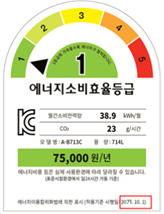
Complete details on the implementation dates for all covered equipment categories are available in the attached reference (table below).
The following items reflect the changes made to the product-specific dates indicated on the label announced on September 11, 2025.
Washing machine 2022.11.01 -> 2026.01.01
Fluorescent lamps 2023.08.21 -> 2025.12.31
Built-in ballast lamp 2016.01.01 -> 2025.12.31
Clothes dryer (new) 2024.04.01
Bidet (new) 2026.01.01
| Product item | Effective date of application standards |
|---|---|
| Electric refrigerator | 2021.10.01 |
| Kimchi refrigerator | 2023.05.01 |
| Electric air conditioner | 2021.10.01 |
| Washing machine | 2026.01.01 |
| Electrical Cooler and Heater for Drinking-water storage | 2024.07.01 |
| Rice cooker | 2025.07.01 |
| Vacuum cleaner | 2019.01.01 |
| Electric fan | 2016.10.01 |
| Air purifiers | 2025.01.01 |
| Incandescent bulbs | 2014.01.01 |
| Fluorescent lamps | 2025.12.31 |
| Built-in ballast lamp | 2025.12.31 |
| Three-phase induction motors | 2019.01.01 |
| Home gas boilers | 2013.06.01 |
| Electric cooling and heating equipment | 2022.11.01 |
| Commercial refrigerators | 2018.10.01 |
| Intuitive LED lamp (with external converter) | 2025.01.01 |
| Gas water heater | 2017.07.01 |
| transformer | 2016.10.01 |
| window set | 2021.10.01 |
| Television receiver | 2022.01.01 |
| Electric heater | 2025.07.01 |
| Electric stove | 2011.12.15 |
| Multi-electric heat pump system | 2018.10.01 |
| Dehumidifier | 2024.07.01 |
| Electric range | 2025.07.01 |
| Set-top box | 2024.07.01 |
| LED lamp with built-in converter | 2018.04.01 |
| LED lamp with external converter | 2018.04.01 |
| Refrigerator | 2019.10.01 |
| Air compressor | 2019.10.01 |
| Signage display | 2019.10.01 |
| Clothes dryer | 2024.04.01 |
| Monitor | 2023.05.01 |
| Portable air conditioner | 2025.01.01 |
| Pump | 2025.01.01 |
| Multifunction printer | 2025.01.01 |
| Bidet | 2026.01.01 |
The "Effective Date of Application Standards" listed at the bottom right of the energy label must be updated and reflected on the following products.
Manufacturers selling products in South Korea should take note of this so that even existing energy efficiency-registered products reflect the updated "Effective Date of Application Standards" on their energy labels before customs clearance.
Source:
https://eep.energy.or.kr/notice/view.aspx?cate=1&no=312
Albanian Authority Released Draft Decision On National Cybersecurity Certification Scheme
On December 23, 2025 the National Cyber Security Authority of Albania notified the release of a draft, Decision of the Council of Ministers “On the Approval of the National Cybersecurity Certification Scheme, as well as the Security Levels of the Scheme.”
This defines the requirements and conditions for the evaluation and certification of ICT Products under the cybersecurity certification scheme.
In addition, it sets out post-transparency obligations, requiring manufacturers or providers to disclose cybersecurity-related information
Comments are accepted until February 21, 2026.
Source:
https://eping.wto.org/en/Search?&viewData=G/TBT/N/ALB/100
New Jersey’s New 2028 PFAS-Containing Products Requirements
On January 12, 2026, after more than one-year legislative discussion, the New Jersey Senate Bill 1042 (SB 1042), known as the 'Protecting Against Forever Chemicals Act', became law, marking the first PFAS in products law in the State.
The Act prohibits the sale of specific products containing intentionally added PFAS and requires greater transparency in cookware labelling.
Under this Act, “intentionally added PFAS” means PFAS added to a product or intentionally used during the development of a product or one of its product components to provide a specific characteristic, appearance or quality or to perform a specific function.
“Intentionally added PFAS” also includes any degradation byproducts of PFAS but shall not include a technically unavoidable trace quantity of PFAS which stems from impurities of natural or synthetic ingredients or the manufacturing process, storage, or migration from packaging of the product or product component.
Products ban
Effective January 12, 2028, two years after the bill’s effective date, the sale, offer for sale, distribution for sale in New Jersey of the following products containing intentionally added PFAS will be prohibited: Cosmetic products, carpets, fabric treatment, and food packaging.
Cookware labelling
In addition to products ban, cookware labelling requirements will also apply.
The Act defines "cookware" as durable houseware items that are used in homes and restaurants to prepare, dispense, or store food, foodstuffs, or beverages, that are intended for direct food contact, and that are items to which heat is transferred or which come into direct contact with a heat source, including pots, pans, skillets, grills, baking sheets, baking molds, trays, bowls, and cooking utensils.
Products that are intended for commercial use only are excluded from the scope.
Effective January 12, 2028, cookware containing intentionally added PFAS in the handle of the product or in any product surface coming into contact with food or beverages, shall be labeled to disclose the presence of PFAS.
The product label shall include a statement, in both English and Spanish, that reads “This product contains PFAS” and shall be visible and legible, including on the product listing for online sales.
Exemptions from labelling will apply if both conditions are met:
- The cookware’s surface is too small to hold a product label of at least two square inches, and
- The cookware also lacks:
- any outer packaging or wrapper where a product label could be placed or attached, or
- any tag or other attachment containing product information that could be affixed to the cookware.
Products including PFAS disclosure label pursuant to another state or federal law are also considered compliant to this law.
Additionally, products containing intentionally added PFAS only in electronic or internal components of the product are exempt from labelling requirements.
Cookware not compliant with labelling requirements will be prohibited for sale, offer for sale, and distribution in the State, unless cookware product contains only a trace amount of PFAS that is technically unavoidable resulting from impurities in natural or synthetic ingredients, or from the manufacturing process, storage, or migration from its packaging.
Claims on PFAS-Free cookware are also prohibited if PFAS have been intentionally added to the product.
Enforcement measures
The Act authorizes the DEP Commissioner to enforce PFAS regulations by issuing compliance orders, filing civil actions, imposing administrative penalties of $1,000–$20,000 per violation, and seeking civil court penalties up to $25,000 per day for ongoing violations.
The Commissioner may also halt sales of non‑compliant products, conduct audits (at the manufacturer’s expense), and publicly identify violators.
Additional provisions
The DEP might recommend to the legislature additional products containing intentionally PFAS to be prohibited in the State.
A source reduction program to reduce the presence of PFAS in the state's air, water, and soil by encouraging the proper management of materials that contain PFAS and the use of safer alternatives should also be established by DEP by January 2027; this would be supported through the allocation of a dedicated budget to DEP.
Source:
https://njleg.state.nj.us/bill-search/2024/S1042
Indonesia Sets New LTE and 5G Tech Standard
On December 19, 2025, the Ministry of Communication and Digital (KOMDIGI) officially enacted the Ministerial Decree No. 569/2025, introducing updated technical standards for mobile telecommunications equipment based on Long Term Evolution (LTE) and International Mobile Telecommunications-2020 (IMT-2020 or 5G) technologies. A significant change in this new Technical Regulation is the addition of 2.6 GHz band (b41/n41) for both 4G LTE and 5G NR technology.
The decree takes effect one (1) month after issuance, revoking the previous Minister of Communication and Information Technology Decision No. 352 of 2024.
Major Changes in the Current Technical Standard:
- Scope is expanded to include additional frequency band 2.6 GHz (2496-2690 MHz) (b41/n41).
- Adds technical standards for IMT-2020 repeaters.
- Base station equipment using 4G LTE and 5G NR technology operating in Downlink 869 – 894 MHz bands must attach additional unwanted emission tests.
- Subscriber station devices classified under HKT category using 4G LTE and 5G NR technology must comply with the 35% TKDN requirement and possess an International Mobile Equipment Identity (IMEI) in accordance with applicable regulations.
- Base station devices using 4G LTE technology are required to meet the 40% Domestic Component Level (TKDN) requirement.
- Inclusion of technical standard parameters for Broadband Wireless Access Telecommunication Devices Based on the International Mobile Telecommunications-2020 Technology Standard, such as:
- Frequency of Working
- Output Power
- RF Spectrum Output
- Adjacent Channel Leakage Ratio (ACLR)
- Out-of-Band Emissions (OBUE)
- Spurious Emission
- Blocking Characteristics
Certification:
Compliance with technical standards is demonstrated by a certificate for telecommunications equipment/devices.
Technical Requirements for 4G LTE and 5G NR equipment
A. Electrical Safety
- SNI IEC 62368-1:2014
- SNI IEC 60950-1:2016
- IEC 62368-1:2014
- IEC 60950-1:2005
- Risk-based approach: identification of energy sources, classification, protection.
B. EMC
- Device classification: fixed, vehicular and portable.
- Emissions: in accordance with:
- SNI CISPR 32:2015
- IEC CISPR 32
- ETSI EN 301 489 series
- Immunity requirements are regulated by a separate decision.
C. Radio Frequency
- LTE Bands: B1, B3, B5, B8, B28, B31, B40, B41.
- 5G NR Bands n1, n3, n5, n8, n28, n40, n41, n258 (24.25–27.5 GHz).
- Channel bandwidth:
- LTE ≤ 20 MHz.
- 5G NR ≤ 100 MHz and ≤ 400 MHz.
Appendix VIII: Technical Standard of IMT‑2020 Repeaters (New)
Hereinafter referred to as IMT‑2020 Repeater, is a telecommunications device based on radio access technology developed by the 3rd Generation Partnership Project (3GPP) for mobile 5G networks that meets the specifications of International Mobile Telecommunications‑2020 (IMT‑2020).
A. General Requirements
Power Supply
- Can be supplied with AC (220 V ±10%, 50 Hz ±2%) or DC power.
- External power supplies must not affect compliance with technical benchmarks.
Electrical Safety Requirements
- Must comply with SNI IEC 60950‑1:2016, SNI IEC 62368‑1:2014, or IEC 62368‑1.
- Parameters:
- Overvoltage/dielectric strength
- Leakage/touch current
- Risk‑based safety assessment per IEC 62368‑1 (energy source identification, classification, protective measures)
- Devices must operate with SELV ≤ 42.4 V peak or 60 V DC.
EMC Requirements
- Classified as fixed equipment (AC‑powered) or vehicular equipment (battery‑powered).
- Must comply with SNI CISPR 32:2015, IEC CISPR 32, or ETSI EN 301 489‑50.
- Covers immunity and emission limits for radiation and conducted emissions (DC, AC, wired ports).
B. Main Requirements
Working Frequency
- n1 (1920–1980 / 2110–2170 MHz, FDD)
- n3 (1710–1785 / 1805–1880 MHz, FDD)
- n5 (824–849 / 869–894 MHz, FDD)
- n8 (880–915 / 925–960 MHz, FDD)
- n28 (703–748 / 758–803 MHz, FDD)
- n40 (2300–2400 MHz, TDD)
- n41 (2496–2690 MHz, TDD)
- n258 (24.25–27.5 GHz, TDD)
Test Parameters
- Type 1‑C (cabled): Output power, ACRR, unwanted emissions, spurious emissions (per 3GPP TS 38.106/115‑1, ETSI TS 138 106/115‑1).
- Type 2‑O (OTA): OTA output power, OTA ACRR, OTA unwanted emissions, OTA spurious emissions (per 3GPP TS 38.106/115‑2, ETSI TS 138 106/115‑2).
- Spurious emission parameters for co‑location are voluntary.
C. Testing Methods
Electrical Safety
Per SNI IEC 62368‑1:2014, SNI IEC 60950‑1:2016, or IEC equivalents.
EMC
Per SNI IEC CISPR 32:2015, IEC CISPR 32, or ETSI EN 301 489‑50.
Radio Frequency
Per 3GPP TS 38.115‑1/2 and ETSI TS 138 115‑1/2 for output power, ACRR, unwanted emissions, and spurious emissions.
Note: Frequency assignments and parameter benchmarks are detailed in the attached tables of the full text.
Indonesia Publishes Regulation on Goods Prohibited from Import
On December 29, 2025, the Ministry of Trade of the Republic of Indonesia published Regulation No. 47 of 2025 on Goods Prohibited from Import. This Regulation effectively revokes Regulation No. 18 of 2021 and Regulation No. 40 of 2022 by updating the list of goods prohibited from being imported into the country, including cooling-system based goods and electronics-based cooling-systems.
The regulation came into force on January 1, 2026.
Regulation No. 47 of 2025 regulates the import of goods within the customs area of Indonesia. This regulation introduces stricter controls for cooling equipment by banning the import of hydrochlorofluorocarbon-123 (HCFC-123), which is an ozone-depleting substance.
Under this regulation, the following products are prohibited from import:
- Ozone-depleting substances - Halogenated derivatives of hydrocarbons, and mixtures containing halogenated derivatives of methane, ethane or propane.
- Fire extinguisher-based cooling system goods - Fire extinguishing systems using chlorofluorocarbons (CFCs) and hydrochlorofluorocarbon 22 (HCFC-22) in empty or filled conditions.
- Cooling system goods other than fire extinguishers - Air conditioners, refrigerators, automatic vending machines, and containers using CFCs, HCFC-22, and HCFC-123 in empty or filled conditions.
- Electronics based on cooling systems - Air conditioners, refrigerators using CFCs, HCFC-22, and HCFC-123 in empty or filled conditions.
- Hazardous and toxic substances - Includes polychlorinated biphenyls (PCBs) and other halogenated derivatives of hydrocarbons.
- Hazardous and toxic waste and registered non-hazardous and toxic waste - Waste and scrap of batteries and accumulators.
- Medical devices containing mercury - Blood pressure measuring instrument and thermometers.
Importers are prohibited from bringing these products from outside the Indonesian Customs Area, which includes land, air, and water territories of Indonesia and certain places in the exclusive economic zone, to:
- Free Trade Area (KBPBP)
- Special Economic Zones (KEK)
- Bonded Warehouses (TPB)
- Other facilities for import to export processing
Cooling-system based goods other than fire extinguishers and electronics based on cooling-systems using HCFC-123 in empty or filled conditions that are shipped before this regulation took effect (January 1, 2026) and are arriving by January 31, 2026, are exempted from these restrictions. After this, the prohibition shall take full effect on all products listed.
This Regulation revokes the following:
- Provisions on HCFC-123 in Regulation No. 21 of 2025 concerning Policies and Regulations on Imports of Electronic and Telematics Goods
- Regulation No. 18 of 2021 concerning Goods Prohibited from Export and Goods Prohibited from Import
- Regulation No. 40 of 2022 concerning Amendments to Regulation No. 18 of 2021 concerning Goods Prohibited from Export and Goods Prohibited from Import
New EU Ecodesign for External Power Supplies and Chargers
The European Commission has published Regulation (EU) 2025/2052, establishing new Ecodesign requirements for: External power supplies (EPS), wireless chargers and wireless charging pads, battery chargers and USB Type-C cables.
This regulation is issued under the Ecodesign framework of Directive 2009/125/EC and will repeal the current EPS Ecodesign Regulation (EU) 2019/1782.
Key Changes
Scope expansion
The regulation now covers:
- wireless chargers, charging pads, portable battery chargers, and USBC cables
- EPS powering household and office products with no upper power limits
Updated requirements
Stricter criteria on energy efficiency, new performance, resistibility requirements and standby consumption limits applicable wireless chargers and charging pads.
New Interoperability and common charger logo rules
- An AC-DC EPS shall be an interoperable EPS, equipped with at least one USB Type-C or USB Power Delivery port, and may not include a hardwired output cable.
- These interoperability obligations are extended to EPS used with devices beyond those listed under the Common Charger Directive and RED Directive 2014/53/EU, in order to maximize compatibility.
- Wireless chargers, general‑purpose portable battery chargers and USB‑C cables are also subject to interoperability provisions.
- Details and exemptions are provided in Annex II, Point
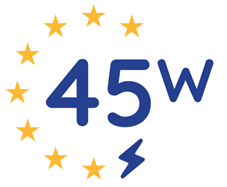
- Interoperable EPS must display the “Common Charger” logo, and both EPS and USB‑C cables must include technical information for end users.
Manufacturers will continue to use self‑declaration, supported by the required technical documentation and testing. The CE marking remains the applicable conformity mark for Ecodesign requirements.
Government of Canada Announced Proposed New Requirements for Lithium-ion Batteries
On December 2, 2025, the Government of Canada announced proposed new requirements for lithium-ion batteries and consumer products containing lithium-ion batteries under the Canada Consumer Product Safety Act. The purpose of this Notice of Intent is to inform interested parties that Health Canada is seeking comments on a proposed regulatory initiative that would introduce mandatory requirements for lithium-ion batteries and consumer products containing lithium-ion batteries under the Canada Consumer Product Safety Act (CCPSA).
To participate in this consultation, stakeholders are asked to submit responses to the questions in the questionnaire. Stakeholders can do this by either filling out the online questionnaire or sending their responses to ccpsa-lcspc@hc-sc.gc.ca. This pre-consultation will be open for comment from December 2, 2025 to February 14, 2026 (75 calendar days).
Feedback collected through this pre-consultation will be used to inform the development of mandatory requirements that align with the purpose of this proposal.
Health Canada will use the input received through this pre-consultation to inform next steps, which may include a cost-benefit analysis of the proposal and future consultation. Any future regulatory proposal would be pre-published in the Canada Gazette, Part I for further stakeholder consultation in accordance with the Treasury Board of Canada Secretariat's Cabinet Directive on Regulation.
Background
Lithium-ion batteries, widely used since the 1990s in consumer, medical, and transportation products, pose safety risks when poorly designed or stressed, leading to overheating, fire, or explosion. From 2013–2023, Canada recorded 924 incidents, including injuries and fatalities, and nearly one million units were recalled. Uncertified or defective batteries are a major factor, prompting calls for stricter safety standards and regulations.
Canadian legislation
The purpose of the Canada Consumer Product Safety Act (CCPSA) is to protect the public by addressing or preventing dangers to human health or safety that are posed by consumer products in Canada.
The CCPSA includes provisions for prohibiting the manufacture, import, advertisement and sale of a consumer product that is a danger to human health or safety. Additionally, the CCPSA enables the Governor in Council to make regulations for carrying out the purposes and provisions of the CCPSA.
Currently, there are no specific regulatory requirements for lithium-ion batteries in Canada.
Additional Information
Health Canada has completed a risk assessment summary report on lithium-ion batteries. To request a copy, please contact Health Canada Consumer Product Safety via email (ccpsa-lcspc@hc-sc.gc.ca) or telephone at 1-866-662-0666 (toll-free within Canada and the United States).
The proposal
Health Canada is proposing a regulatory initiative under the CCPSA that would establish mandatory safety requirements for lithium-ion batteries and consumer products containing lithium-ion batteries that are manufactured, imported, advertised and sold in Canada. This proposal would not constitute a ban on all lithium-ion batteries and consumer products containing lithium-ion batteries. Only products that do not meet these mandatory safety criteria would be impacted.
Health Canada is considering a variety of options for specifying performance criteria that reduce the risks of overheating, off-gassing, smoke, fire, thermal runaway and explosion posed by lithium-ion batteries that are consumer products or components of consumer products. This could include the viability of mandatory third-party certification or the incorporation of safety standards by ambulatory reference in regulations. Existing standards that address hazards associated with the batteries themselves that are under consideration include:
- CSA C22.2 No.62133-2:20 - Secondary cells and batteries containing alkaline or other non-acid electrolytes — Safety requirements for portable sealed secondary cells, and for batteries made from them, for use in portable applications — Part 2: Lithium systems (Bi-national standard with UL 62133-2, harmonized with IEC 62133-2);
- UL 1642, 6thedition - Lithium Batteries; and,
- UL 2054, 3rdedition - Household and Commercial Batteries
With respect to consumer products containing lithium-ion batteries, Health Canada is considering options to include mandatory performance criteria for battery protection and battery management systems of consumer products that will help to maintain a lithium-ion battery's safe operating parameters. In doing so, Health Canada intends to evaluate the viability of mandatory third-party certification for consumer products that are subject to Canadian national product standards which contain battery management systems and other battery safety-related requirements.
Belize BBS Issued Mandatory Energy Efficiency Standards
On September 29, 2025, the Belize Bureau of Standards (BBS) issued the following energy efficiency standards as compulsory:
Products covered by the new Energy Efficiency requirements:
Refrigerating Appliances:
- Household refrigerators and refrigerator-freezers operated by hermetic motor compressors
- Household freezers up to specified maximum volumes
Air Conditioners:
- Non-ducted air conditioners (single-package or split-system) with one interior unit
According to the standards, products must comply with the following test:
Refrigerating Appliances:
AHAM HRF-1-2019 (Latest Edition) Energy and internal volume of refrigerating appliances
Air conditioners:
ISO 5151 (Latest edition) Non-ducted air conditioners and heat pumps - Testing and rating for performance
Product labeling requirements are divided into two types:
- General labeling, containing information such as: Country of origin, serial number, rated voltage etc.
- Refrigerants
- Air-conditioning units must indicate refrigerant name, composition, mass or pressure, hazards and handling requirements.
- Units with flammable refrigerants must include a visible warning near the compressor.
Source:
SI-No.-131-of-2025-Standards.pdf
SI No 130 of 2025 Standards.indd
Stay current, stay informed and stay ahead
Don’t miss the essential updates that could shape your business’s future. Subscribe now and empower your team with the insights needed to thrive in a competitive global marketplace.




X
Stay informed
Actionable insights on the topics you choose, delivered directly to your inbox.
Please wait…
Characters remaining