

January 20, 2026
Welcome to the Q4 2025 Global Market Access Regulatory Newsletter from UL Solutions. You'll find timely content on new and updated regulations in markets around the world — including Asia, Latin America and the Middle East — plus a quick guide to global Restriction of Hazardous Substances (RoHS) regulations.
Q4 2025 Global Market Access regulatory updates
New EU Requirements for HFC-Precharged Products Take Effect January 2026
Effective Jan. 1, 2026, EU importers and manufacturers of products precharged with hydrofluorocarbons (HFCs) must use the new declaration of conformity (DoC) template, maintain required documentation and, in certain cases, obtain independent auditor verification.

India Migrates to IS/IEC 62368-1:2023, Adds XR Products to Mandatory Registration
India's Electronics and IT Goods Order consolidates AV and ICT equipment safety requirements and introducing extended reality products as a new category.
Uzbekistan Issues New Regulation to Restrict Hazardous Substances in Electronics
On Aug. 15, 2025, Uzbekistan adopted Resolution No. 517, establishing substance limits for electrical and radioelectronic products and requiring conformity marking. Compliance becomes mandatory Feb. 17, 2026.

Moldova Expands RoHS Scope for Electrical and Electronic Equipment (EEE)
On Oct. 10, 2025, Moldova approved a technical regulation expanding RoHS coverage to all EEE and increasing the number of restricted substances from six to 10.

U.S. DOE Revokes 2024 Appliance Certification and Labeling Rule
On Sept. 9, 2025, the U.S. Department of Energy (DOE) published a final rule rescinding the certification, labeling and enforcement provisions introduced in October 2024 rule.

UK Updates Guidance to Add Cybersecurity Requirements for Radio Equipment
The U.K. has updated statutory guidance for Regulation (EU) 2022/30 to include mandatory cybersecurity essential requirements for certain categories of radio equipment placed on the market starting Aug. 1, 2025.

Ukraine Implements Revised Energy Labeling and Ecodesign Requirements for Appliances
On Oct. 18, 2025, Ukraine enforced 10 technical regulations harmonizing energy labeling and ecodesign requirements with EU standards.

South Korea Confirms Implementation Dates for Revised Energy Efficiency Standards
On Sept. 11, 2025, the Korea Energy Agency announced implementation dates for revised energy efficiency standards for products manufactured on or after July 1, 2025, providing guidance for compliant labeling and certification.

Quick Guide to Global RoHS Requirements
This UL Solutions article compares global RoHS requirements and highlights compliance obligations for manufacturers, including scope, restricted substances, documentation and marking.

Taiwan Updates MEPS and Energy Efficiency Labeling Rules for Multiple Products
Taiwan amended minimum energy performance and energy efficiency labeling requirements for water chillers, air compressors and drinking water dispensers, introducing updated labeling rules, technical specifications and compliance procedures.

New Zealand Amends Energy Efficiency Regulations to Align with Australia
On Oct. 16, 2025, New Zealand updated energy efficiency standards and labeling requirements for various household electrical appliances. Changes take effect May 1, 2026.

New Zealand Publishes Amendment to Electrical and Gas Safety Regulations
New Zealand amended electricity safety and gas safety and measurement regulations to update cited standards, expand coverage and revise gas safety requirements, effective Nov. 13, 2025.

New Zealand Updates Radio Standards to Expand Scope and Improve Clarity
Radio Spectrum Management updated Radio Standards to help clarify compliance requirements, improve spectrum efficiency, encourage innovation and help protect users from harmful interference.

Mexico Updates MRA with U.S. to Include New Telecom Provisions
On Oct. 28, 2025, Mexico’s Ministry of Economy amended its Mutual Recognition Agreement (MRA) with the U.S. to include three new technical provisions issued by the Federal Telecommunications Institute.

Egypt NTRA Suspends Type Approval for 3G-Only Telecom Devices
Egypt’s National Telecom Regulatory Authority (NTRA) announced that, effective Oct. 1, 2025, telecom devices operating exclusively on 3G technology will no longer be eligible for type approval.

Morocco Approves 5G Network Licenses
On Oct. 30, 2025, Morocco granted 5G network licenses to three major telecom operators, enabling the operators to begin developing and deploying 5G infrastructure across the country.

Iceland Accelerates 2G/3G Shutdown in Favor of 4G/5G
Iceland is phasing out 2G and 3G networks to enhance security and performance through 4G and 5G systems. Operators are required to maintain service quality during the transition.
Indonesia Issues New Trade and Legal Metrology Licensing Requirements
Indonesia’s Ministry of Trade published Regulation No. 33/2025, consolidating licensing requirements and mandating registration for products impacting safety, security, health and the environment (K3L), effective Oct. 5, 2025.

Mexico’s New Telecommunications Regulatory Commission Begins Operations
On Oct. 21, 2025, Mexico’s Telecommunications Regulatory Commission officially began operations to promote universal coverage equitable radio spectrum access and help safeguard orbital resources.

Hong Kong Updates Performance Specification for WLAN 6 GHz Devices
Hong Kong's Office of the Communications Authority published HKCA 1081 Issue 2, defining minimum performance requirements for radiocommunications apparatus operating in the WLAN 6 GHz band, removing electrical safety requirements and introducing a guard band.

Georgia Approves Mercury Trade Rules
On Aug. 14, 2025, Georgia issued Resolution No. 349, establishing mandatory prior informed consent for the import, export and transit of mercury and mercury-added products, effective Aug. 15, 2025.

EU Standardizes Consumer Guarantee Notices and Labels
The European Commission defined harmonized formats for notices on the legal guarantee of conformity and labels for commercial guarantees of durability under the Consumer Rights Directive, effective Sept. 27, 2026.

EU Introduces Repairability Index for Tumble Dryers
The EU amended energy labeling and ecodesign regulations for tumble dryers, introducing repairability information and requirements and clarifying the measurement and calculation of the average final moisture content — effective Jan. 1, 2027.

EU Amends Harmonized Standards for Gas Appliances Regulation
On Sept. 10, 2025, the European Commission updated harmonized standards under Regulation (EU) 2016/426 for appliances burning gaseous fuels — adding new standards for energy efficiency, safety and control devices.
China Revises CCC Certification Rules for Low-Voltage Components
The China Quality Certification Centre (CQC) revised implementation rules for CCC certification of low-voltage electrical appliances and components.

China NHC Issues New Food Contact Material Standards and Testing Methods
China’s National Health Commission (NHC) and the State Administration for Market Regulation (SAMR) issued 32 national food safety standards. Product standards take effect Sept. 2, 2026, and testing method standards take effect March 2, 2026.

Argentina Updates Technical Rules for Conformity Assessment of Electrical Equipment
Argentina’s Resolution No. 17/2025, 16/2025 and 26/2025 replace Resolution 169/18 and align procedures and requirements with the General Framework for Conformity Assessment under Resolution 237/2024.

China Implements New Standard for Network Security O&M Products
China Cybersecurity Review and Certification (CCRC) and Market Supervision Big Data Center announced implementation of GB/T 45409-2025, which sets technical requirements for network security operation and maintenance (O&M) security management products.

Australia Publishes New Class License for Low-Interference Devices
The Australian Communications and Media Authority issued the Radiocommunications (Low Interference Potential Devices) Class Licence 2025, authorizing the operation of low-power transmitters under updated technical conditions and expanded frequency allocations; it took effect Oct. 1, 2025.

New EU Requirements for HFC Precharged Products Take Effect January 2026
On Oct. 24, 2025, the European Commission (EC) published the Commission Implementing Regulation (EU) 2025/2155 — establishing detailed arrangements pursuant to EU F-Gas Regulation (Regulation (EU) 2024/573) for the declaration of conformity and independent auditor verification for products precharged with hydrofluorocarbons (HFCs).
Effective Jan. 1, 2026, importers and manufacturers of refrigeration and air-conditioning equipment, heat pumps, and metered-dose inhalers precharged with HFCs must draw up the declaration of conformity (DoC) referred to in Article 19 of EU F-Gas Regulation using the template in Annex I of this regulation.
Manufacturers and importers must maintain documentation including:
- Declaration of conformity
- Detailed product lists specifying types and quantities of HFCs
- Delivery notes or invoices on hydrofluorocarbon supplies
- Relevant customs documentation demonstrating compliance with import and export controls
- Specific declarations covering cases of export and re-import without addition of HFCs
Independent auditor verification is needed when HFCs contained in products or equipment were not placed on the market prior to the charging of the products or equipment: importers must ensure the accuracy of the documentation, the declaration of conformity and the veracity of their report are confirmed for the preceding calendar year at a reasonable level of assurance by an independent auditor registered in the F-gas Portal.
This regulation entered into force on Nov. 13, 2025, and is directly applicable and binding across all EU Member States.
It replaces Implementing Regulation (EU) 2016/879 and aligns with the framework established by the EU F-Gas Regulation, reflecting the increased regulatory focus on mitigating climate change through strict HFC controls.
Declarations of conformity pursuant to old template (Annex to Commission Implementing Regulation (EU) 2016/879) remain valid until Dec. 31, 2025.
India MoP Notifies LPG Stove Under Mandatory Scheme
On Nov. 4, 2025, the Ministry of Electronics and Information Technology (MeitY), through S.O. 4997(E), notified the migration to IS/IEC 62368: Part 1: 2023 — Audio, Video, Information and Communication Technology Equipment — Part 1: Safety Requirements (Second Revision) from the existing standards IS 13252: Part 1: 2010 — Information Technology Equipment — Safety — Part 1: General Requirements (Second Revision) and IS 616: 2017 — Audio, Video and Similar Electronic Apparatus — Safety Requirements (Fifth Revision).
This notification amends the Electronics and Information Technology Goods (Requirement of Compulsory Registration) Order, 2021 by:
- Replacing IS 13252: Part 1: 2010 and IS 616:2017 with IS/IEC 62368: Part 1: 2023
- Introducing Extended Reality (XR) Products as a new product category under Serial No. 65
The new standard, IS/IEC 62368-1:2023, consolidates safety requirements for audio/video, information, and communication technology equipment, effectively replacing the older standards for both IT and AV equipment. Under this amendment, Extended Reality (XR) Products — including augmented reality (AR), virtual reality (VR) and mixed reality (MR) devices — are now recognized as a distinct category.
A transition period has been granted as follows:
For XR products – The concurrent application of IS 13252: Part 1: 2010 and IS 616:2017, alongside IS/IEC 62368: Part 1: 2023, shall be permitted until May 1, 2026.
For the other 42 existing product categories (comprising 27 under IS 13252-1 and 15 under IS 616) – The concurrent application of IS 13252: Part 1: 2010 and IS 616:2017, alongside IS/IEC 62368: Part 1: 2023, shall be permitted until Nov. 1, 2028. After this date, IS 13252 and IS 616 will be officially withdrawn.

Uzbekistan Issues New Regulation to Restrict Hazardous Substances in Electronics
On Aug. 15, 2025, the Cabinet of Ministers of the Republic of Uzbekistan adopted Resolution No. 517, approving technical regulations to restrict hazardous substances in electrical and radioelectronic products.
Scope and substance limits
The regulation applies to all electrical and radioelectronic products listed in Annex I and set strict thresholds for hazardous substances in homogeneous materials: lead (0.1%), mercury (0.1%), cadmium (0.01%), hexavalent chromium (0.1%), PBB and PBDE (0.1%), and four phthalates (DEHP, BBP, DBP and DIBP) at 0.1%.
Compliance path
Compliance can be ensured through Declaration of Conformity or Certificate of Conformity (voluntary).
- Both options may apply to serial production or batch/single units, with varying requirements for product testing (manufacturer or accredited laboratory), production control (factory inspection, quality management system (QMS)) and validity periods.
Marking requirements
Compliant products must bear the OZS Conformity Mark on the product and technical documentation. If not possible, the mark should appear on packaging. Marking must be clear, durable and easily visible. Technical documentation must also include product name, type, model, manufacturer details and country of origin.
Compliance timeline
Effective date: Aug. 16, 2025
- Mandatory compliance – Feb. 17, 2026
- The Agency for Technical Regulation will publish lists of standards for sampling, testing and measurement and expand accreditation for certification bodies and testing laboratories.
Impact for businesses
Manufacturers and importers should act now to review substance limits, update technical documentation and prepare for conformity assessments. Failure to comply will result in market restrictions and liability under Chapter 9 of the regulation.
Moldova Expands RoHS Scope for Electrical and Electronic Equipment (EEE)
On Oct. 10, 2025, the government of Moldova approved the Technical Regulation on the Restriction of Hazardous Substances in Electrical and Electronic Equipment (EEE), published in the Official Gazette No. 526-528.
Compared with existing provisions for restricted substances in EEE included in Regulation on Waste Electrical and Electronic Equipment (Decision No 212 of March 7, 2018), this regulation expands its scope to include all EEE (open-scope RoHS). It also expands the list of restricted substances from six to 10.
Key highlights:
- Scope: Applies to all EEE listed in Annex 1.
- Substance limits:
- Lead, mercury, hexavalent chromium: 0.1%
- Cadmium: 0.01%
- PBB, PBDE: 0.1%
- Phthalates (DEHP, BBP, DBP, DIBP): 0.1%
Certain applications and reused spare parts under defined timelines are exempted from substances restrictions.
- Marking and documentation
All EEE in scope must:- Be accompanied by an EU Declaration of Conformity (Annex 6) in Romanian.
- Bear the CE marking visibly and indelibly.
- Affix CE marking to the product or, if not possible, to packaging and documents.
- Include manufacturer details (name, trademark, address) on the product or accompanying documentation.
- Until EU accession, SM marking remains permitted, but CE marking overrides SM marking.
- Substance limits:
Manufacturers must prepare technical documentation and follow Annex 7 principles. A single declaration can be drawn up if multiple technical regulations apply.
This regulation transposes EU Directive 2011/65/EU (RoHS) and will enter into force on Oct. 10, 2026.
https://www.legis.md/cautare/getResults?doc_id=151148&lang=ro
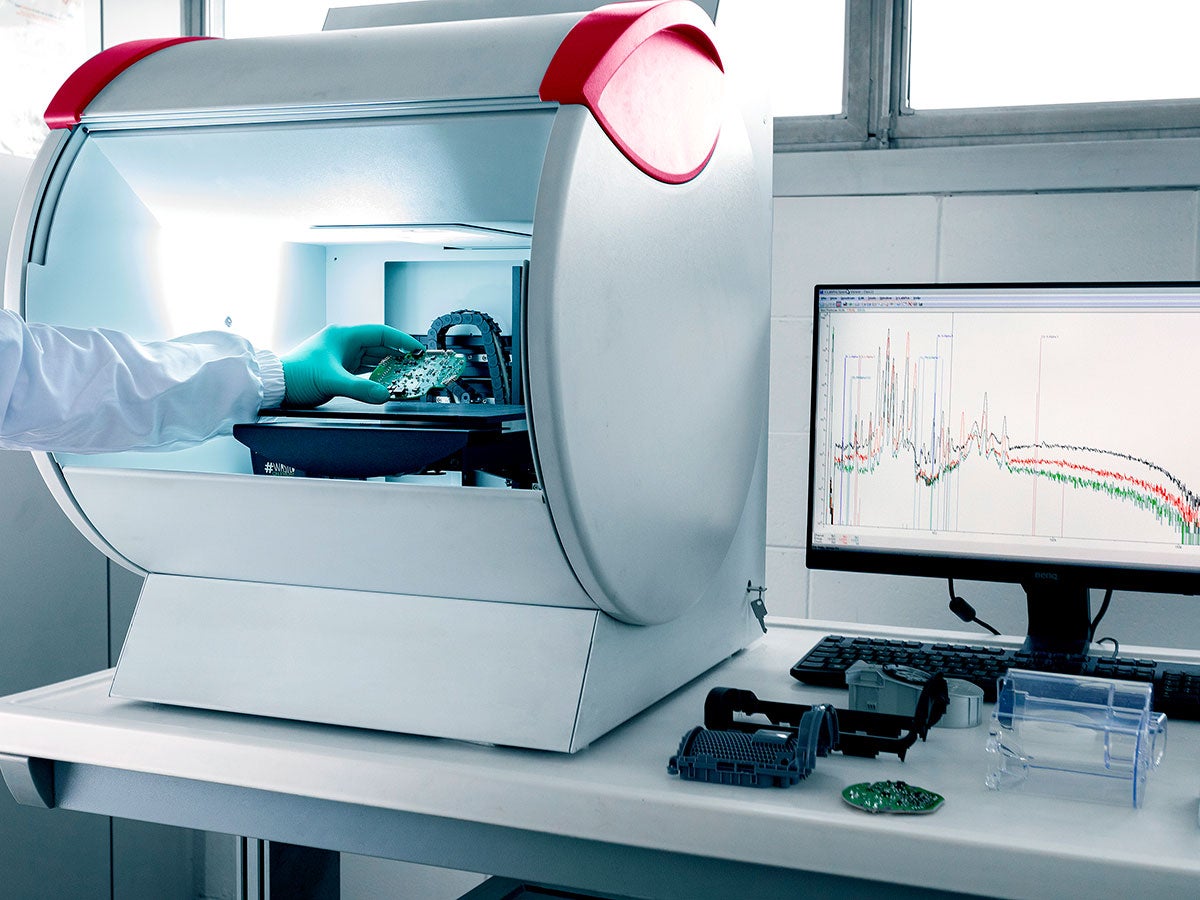

U.S. DOE Final Rule Revokes 2024 Appliance Certification and Labeling Rule
On Sept. 9, 2025, the U.S. Department of Energy (DOE) published a final rule rescinding the certification, labeling and enforcement provisions introduced in the Oct. 9, 2024, rule (89 FR 81994). This action follows a Congressional Review Act (CRA) disapproval, signed into law on May 9, 2025, nullifying the 2024 rule.
This rule took effect on Sept. 9, 2025.
The purpose of this regulation is to formally revoke the October 2024 final rule, which introduced updated certification templates and reporting requirements for various consumer and commercial appliances. The CRA disapproval rendered the 2024 rule legally void, obligating the DOE to remove its provisions from the Code of Federal Regulations. This final rule restores the previous regulatory text and eliminates all changes made in 2024.
https://www.govinfo.gov/app/details/FR-2025-09-09/2025-17262
UK Updates Guidance to Add Cybersecurity Requirements for Radio Equipment
The U.K. statutory guidance for Regulation (EU) 2022/30 has been updated to add the mandatory cybersecurity essential requirements for certain categories of radio equipment placed on the market starting Aug. 1, 2025.
Applicable to Northern Ireland
Manufacturers placing radio equipment in scope of Regulation (EU) 2022/30 on the Northern Ireland (NI) market as of Aug. 1, 2025, will need to ensure that it has been designed and manufactured in accordance with the additional essential requirements.
Products in scope of the Radio Equipment Directive that are made available for supply in NI are excepted from compliance with the U.K.’s Product Security and Telecommunications Infrastructure regime (see Regulation 6 and Schedule 3 of the Product Security and Telecommunications Infrastructure (PSTI; Security Requirements for Relevant Connectable Products) Regulations 2023).
Applicable to Great Britain
CE marked radio equipment placed on the Great Britain (GB) market will need to meet these requirements:
Compliance with Regulation (EU) 2022/30:
Radio equipment must meet the Radio Equipment Directive essential requirements, including those made applicable by (EU) 2022/30, and the manufacturer must:
- Provide updated technical documentation covering the further essential requirements
Provide EU Declaration of Conformity covering the further essential requirements
Affix CE marking
Compliance with the U.K.’s PSTI regime
Radio equipment in scope of the UK’s PSTI regime must also meet the base line PSTI security requirements:
- Banning universal default and easily guessable passwords
- Publishing information on how to report security issues
- Publishing information on minimum security update periods
The manufacturer must also provide a Statement of Compliance.
Manufacturers will continue to be able to place EU-compliant CE marked radio equipment on the GB market from Aug. 1, 2025. Such products will be deemed to have met the essential requirements of the U.K. Radio Equipment Regulations 2017.


Ukraine Implements Revised Energy Labeling and Ecodesign Requirements for Appliances
On Oct. 18, 2025, 10 technical regulations covering energy labeling and ecodesign requirements for household appliances and lighting entered into force.
These regulations harmonize Ukrainian law with EU standards, replacing the previous energy efficiency scale.
The conformity assessment is in the form of manufacturer self-declaration for all products impacted. A major change is the transition from the “pluses” system (A+++, A++, A+) to a simplified A-to-G scale, with mandatory information to be provided on labels, accompanying documents, and manuals.
The energy labels use a templated based on EU labels, with modifications such as the Ukrainian label and language.
The regulations were published in past years, and the implementation date was announced with Resolution No. 1181/2024.
The Technical Regulations on Ecodesign Requirements that came into force are as follows:
- Technical Regulation on Ecodesign Requirements for Household Washing Machines and Household Washer-Dryers
- Technical Regulation on Ecodesign Requirements for Light Sources and Separate Control Devices
- Technical Regulation on Ecodesign Requirements for Refrigeration Appliances
- Technical Regulation on Ecodesign Requirements for Household Dishwashers
- Technical Regulation on Ecodesign Requirements for Electronic Displays
The Technical Regulations for Energy Labeling that came into force are as follows:
- Technical Regulations for Energy Labeling of Refrigeration Appliances
- Technical Regulations on Energy Labeling of Household Dishwashers
- Technical Regulations on Energy Labeling of Household Washing Machines and Household Washer-Dryers
- Technical Regulations for Energy Labeling of Electronic Displays
- Technical Regulations for Energy Labeling of Light Sources
https://zakon.rada.gov.ua/laws/show/1181-2024-%D0%BF#Text
South Korea Confirms Implementation Date for Revised Energy Efficiency Standards
On Sept. 11, 2025, Korea Energy Agency (KEA) announced a notice confirming the implementation dates for revised energy efficiency application standards for various efficiency management equipment items. The new standards apply to specific products manufactured on or after July 1, 2025. The notice serves as a reference for creating compliant labels.
This announcement outlines the implementation dates for application standards related to various categories of efficiency management equipment. It is intended to help manufacturers and importers prepare accurate labeling and certification documentation in line with changes mandated by the Ministry of Trade, Industry and Energy Notice No. 2022-64. Manufacturers must verify the latest implementation date for each equipment item before producing energy efficiency labels.
Refer to the table below for more details.
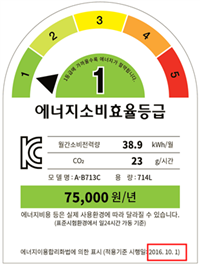
Kimchi refrigerator Electric fan
| Product item | Effective date of application standards |
| Electric refrigerator | 2021.10.01 |
| Kimchi refrigerator | 2023.05.01 |
| Electric air conditioner | 2021.10.01 |
| Washing machine | 2022.11.01 |
| Electrical cooler and heater for drinking water storage | 2024.07.01 |
| Rice cooker | 2025.07.01 |
| Vacuum cleaner | 2019.01.01 |
| Electric fan | 2016.10.01 |
| Air purifier | 2025.01.01 |
| Three-phase induction motors | 2019.01.01 |
| Home gas boiler | 2013.06.01 |
| Electric cooling and heating equipment | 2022.11.01 |
| Commercial refrigerator | 2018.10.01 |
Linear LED lamp (with external converter) | 2025.01.01 |
| Gas water heater | 2017.07.01 |
| Transformer | 2016.10.01 |
| Window set | 2021.10.01 |
| Television receiver | 2022.01.01 |
| Electric heater | 2025.07.01 |
| Electric stove | 2011.12.15 |
| Multi-electric heat pump system | 2018.10.01 |
Dehumidifier | 2024.07.01 |
| Electric range | 2025.07.01 |
| Set-top box | 2024.07.01 |
| LED lamp with built-in converter | 2018.04.01 |
| LED lamp with external converter | 2018.04.01 |
| Refrigerator | 2019.10.01 |
| Air compressor | 2019.10.01 |
| Signage display | 2019.10.01 |
| Clothes dryer | 2024.04.01 |
| Monitor | 2023.05.01 |
| Portable air conditioner | 2025.01.01 |
| Pump | 2025.01.01 |
| Multifunction printer | 2025.01.01 |


Quick Guide to Global RoHS Requirements
Restriction of Hazardous Substances (RoHS) regulations are comprehensive legislation that restrict the concentration of hazardous substances present in electronic and electrical equipment (EEE) to help protect human health and the environment. RoHS establishes product market access requirements for manufacturers, and these requirements continue to evolve worldwide.
Overall, RoHS management is becoming stricter, with expanded product scope and restricted substances. Countries worldwide are in the process of establishing or updating their RoHS regulations, and producers must monitor the latest regulatory updates and prepare for specific national RoHS requirements to maintain compliance.
The UL Solutions article provides a comparative analysis of global RoHS requirements and an overview of recent RoHS regulatory updates, both in progress and finalized in various countries. Because the EU RoHS Directive has served as reference for similar laws and regulations worldwide, understanding EU RoHS requirements is a useful starting point for understanding global RoHS regulations. This article offers insights to help EEE manufacturers better understand the policy focus of RoHS in different markets and what is needed to fulfill compliance obligations.
The article covers four key topics:
- Scope of regulated products under RoHS requirements
- Regulated substances under RoHS
- Required compliance documents
- Conformity marking
Read our detailed article on Adoption of RoHS Requirements in Key Global Markets
Taiwan Updates MEPS and Energy Efficiency Labeling Rules for Multiple Products
From August to October 2025, the Ministry of Economic Affairs (MOEA) issued three amendment regulations to requirements for minimum energy performance standard (MEPS) and energy efficiency rating labeling and inspection.
Water chilling packages using the vapor compression cycle
- Published and implemented on Aug. 28, 2025
- Revised Paragraphs 6 and 14, and Illustration 1 of Paragraph 9:
- Paragraph 6: Manufacturers who produce or import chiller units for domestic use must reapply for energy efficiency rating labelling and registration numbers under the following conditions:
- If product design changes affect the rated cooling capacity or coefficient of performance
- If the product model or energy efficiency grade changes
- Paragraph 14: Products that received approval for energy efficiency labeling from the central competent authority before the effective date of this announcement may continue using the old label design for up to one year from the date this amendment takes effect.
- Illustration 1 of Paragraph 9: The amendment updates the energy efficiency label diagram to reflect the new name and emblem of the Energy Administration, following its restructuring from the Bureau of Energy under the Ministry of Economic Affairs on Sept. 26, 2023.
- Paragraph 6: Manufacturers who produce or import chiller units for domestic use must reapply for energy efficiency rating labelling and registration numbers under the following conditions:
Air compressors
- Published and implemented on Sept. 16, 2025
- Revised Paragraph 4:
- The Ministry of Economic Affairs (MOEA) officially renamed its Bureau of Energy (BOE) to the Energy Administration (EA) on Sept. 26, 2023. As a result, the regulation was updated to reflect the new agency name in Paragraph 4.
- This change is purely editorial — there are no new procedures or requirements. The existing rules still apply:
- Manufacturers must submit energy efficiency test reports for either two designated models (if registering more than two) or all models (if registering two or fewer).
- These reports must come from accredited institutions like Taiwan Accreditation Foundation (TAF), International Laboratory Accreditation Cooperation (ILAC) members, UL Solutions, TÜV, or approved government laboratories.
- Any variation in motor specifications, cooling method, brand or performance counts as a different compressor type.
- In addition, the regulation, now titled “Requirements on Minimum Energy Performance Standard and Energy Efficiency Rating Labeling and Inspection for Air Compressors,” replaces the previous title, “Requirements on Minimum Energy Performance Standard, Energy Efficiency Rating Labeling and Inspection of Air Compressors.”
Chilled-warm-hot drinking water dispensers
- Published on Oct. 17, 2025
- Implemented on Jan. 1, 2028
- Revised the following requirements:
- Renaming the title
- New: Requirements on Minimum Energy Performance Standard, Energy Efficiency Rating Labelling and Inspection for Chilled-Warm-Hot Drinking Water Dispense
- Old: Requirements on Labeling and Inspection of Energy Consumption and Energy Efficiency Rating and Minimum Energy Performance Standards for Drinking Water Dispenser
- Point 2: Technical Requirements
- The actual measured value of 24-hour standby energy loss (E24) must be rounded to three decimal places and must not exceed the labeled value or the allowed baseline (see Appendix 1).
- Appendix 1: Minimum Energy Performance Standard (MEPS)
- The new 24-hour standby energy loss, E24 (kWh) is 0.081 × Veq + 0.405, replacing the old MEPS = 0.09 × Veq+0.45
- Point 4: Application
- The safety and energy efficiency test report submission by compact disc (CD) is replaced by electronic copies or scanned files uploaded to the management system.
- If the test model differs from the product model being registered but both are under the same certification, the applicant must attach a Declaration of Conformity (Appendix 4) and accept full responsibility for its accuracy.
- Point 5: Efficiency Grade Approval
- The central authority will determine the product’s energy efficiency grade based on the submitted E24 value and the grading table (Appendix 5).
- Appendix 5: Energy Efficiency Rating Classification
- Revised the table of Energy Efficiency Rating Standards for Chilled-Warm-Hot Drinking Water Dispenser by introducing updated classification thresholds, with separate criteria for products with equivalent volume (Veq) below and above 8 liters.
- Point 6: Label Placement
- The energy efficiency label (Illustration 1) must be attached to the instruction manual, the smallest sales package or affixed to a prominent location on the front of the product.
- Manufacturers must post, hang or otherwise disclose the energy efficiency labeling diagram in a conspicuous position on the front.
- Illustration 1: Energy Efficiency Rating Label Diagram
- Updated the agency name from “Bureau of Energy” to “Energy Administration” and revised the official emblem and label design reflecting the new regulation number 11458004360, replacing 10504606280.
- Point 11: Random Inspections
- If the manufacturer fails to complete inspection or retesting and does not fix the issue on time, the authority will revoke the energy efficiency label. However, when a manufacturer is unable to conduct an inspection due to the cessation of manufacturing or import, and with the consent of the central competent authority, the energy efficiency classification label of the product is revoked, this does not apply.
- Renaming the title
The applicant must pay attention to these changes when applying for MEPS in Taiwan.
https://gazette.nat.gov.tw/egFront/detail.do?metaid=159743&log=detailLog
https://gazette.nat.gov.tw/egFront/detail.do?metaid=160781&log=detailLog
https://gazette.nat.gov.tw/egFront/detail.do?metaid=160120&log=detailLog

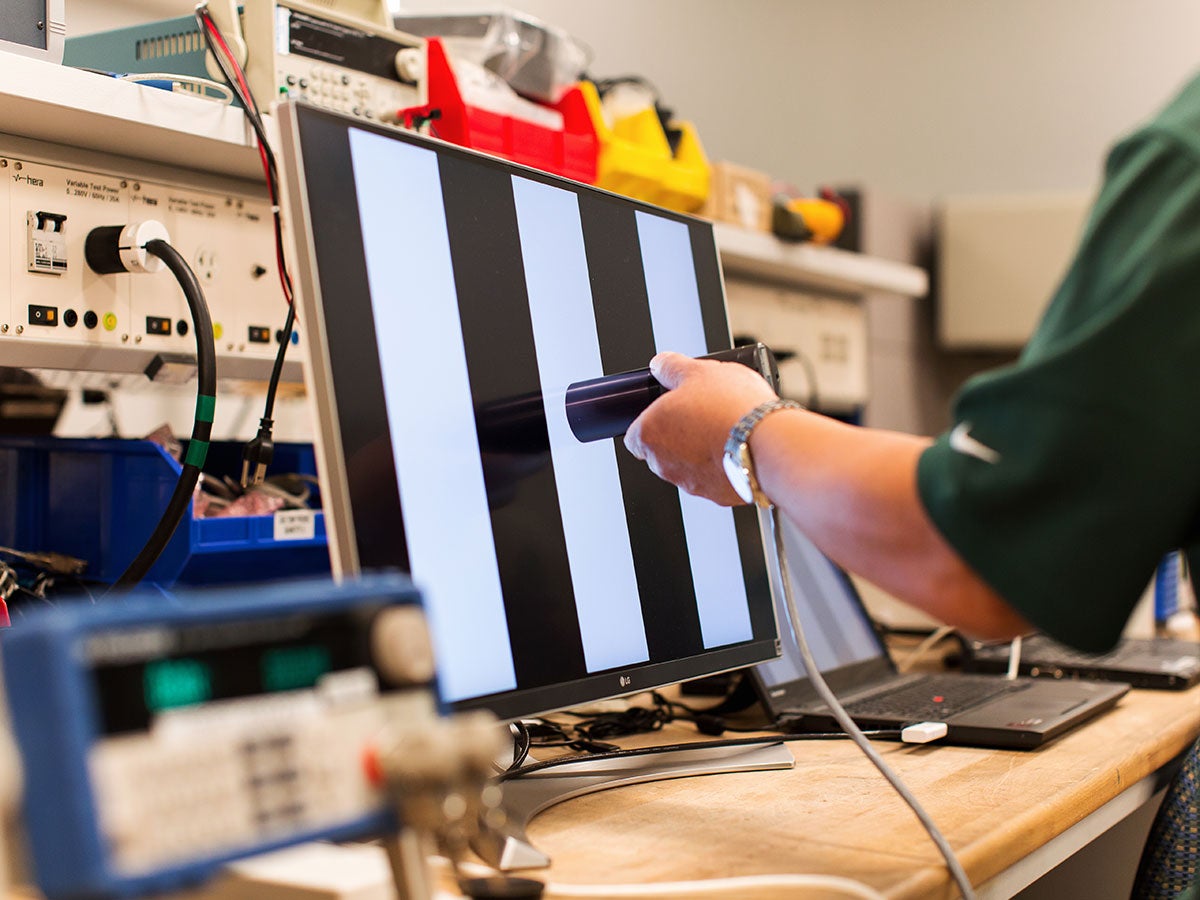
New Zealand Amends Energy Efficiency Regulations to Align with Australia
On Oct. 16, 2025, the Ministry of Business, Innovation, and Employment (MBIE) published an amendment to Energy Efficiency (Energy Using Products) Regulations. The regulation updates New Zealand’s energy efficiency (EE) standards and labeling requirements for various household electrical appliances and aims to align with Australia’s regulations.
The alignment promotes consistency between the two countries for regulated products, improves energy efficiency and harmonizes compliance requirements.
The main change introduced by these amendments is the addition of new Schedules 2C to 2G to the principal regulations. Each schedule specifies updated New Zealand requirements broadly aligned with the relevant Australian determinations:
- Clothes washing machines (New Schedule 2C) –
Greenhouse and Energy Minimum Standards (Clothes Washing Machines) Determination 2015
- Dishwashers (New Schedule 2D) –
Greenhouse and Energy Minimum Standards (Dishwashers) Determination 2015
- Household refrigerating appliances (New Schedule 2E) –
Greenhouse and Energy Minimum Standards (Household Refrigerating Appliances) Determination 2019
- Rotary clothes dryers (New Schedule 2F) –
Greenhouse and Energy Minimum Standards (Rotary Clothes Dryers) Determination 2015
- Three-phase cage induction motors (New Schedule 2G) –
Greenhouse and Energy Minimum Standards (Three Phase Cage Induction Motors) Determination 2019
Schedule 2A (air conditioners) of the principal regulations is also amended to include air conditioners above 65 kW. Labeling requirements for external power supplies are also introduced as part of this amendment.
For some products, New Zealand continues to accept only specific older standards for product registration and does not recognize new standards for compliance. However, products registered in Australia under the Greenhouse and Energy Minimum Standards (GEMS) Act may be sold in New Zealand without separate registration if they meet New Zealand’s minimum energy performance standards (MEPS) and minimum energy performance labeling (MEPL) requirements.
Mandatory implementation of the new requirements begins May 1, 2026.
New Zealand Publishes Amendment to Electrical and Gas Safety Regulations
On Oct. 16, 2025, the Ministry of Business, Innovation, and Employment (MBIE) published amendments to the Electricity (Safety) Regulations 2010 and Gas (Safety and Measurement) Regulations 2010.
Electrical safety
The amendments expand the scope of cited standards (Schedule 4) to include electric bikes, personal e-transporters, electric vehicle supply equipment and lithium batteries. The cited standards (Schedule 4) for other products were also updated to the current versions of the product safety standards.
Key changes include increasing the allowable voltage variation in low-voltage distribution networks from ±6% to ±10% and updating references to standards such as AS/NZS 3000 (national wiring rules) and AS/NZS 3001.
These changes are intended enhance safety, align with international norms and support emerging technologies in New Zealand’s electrical landscape.
Amendments to the regulation took effect on Nov. 13, 2025, with a transitional period until Nov. 12, 2026.
Gas safety
The amendment updates the standards referenced in the principal regulations, replacing NZS 5258 with AS/NZS 4645 and updating safety management system requirements. Key changes include the replacement or removal of references to outdated standards, updates to safety requirements for high-capacity gas installations, and revisions to the list of recognized certification bodies.
A new Schedule 1AA introduces transitional provisions allowing continued compliance with previous standards until Nov. 12, 2026, and permits certification by bodies under older EU directives during this period.
The regulations also clarify that existing or in-process gas systems and appliances may continue to be used under the previous rules, provided they are not unsafe. Additionally, Schedules 1, 2A and 3 are amended to reflect updated standards and certification requirements for a wide range of gas appliances.
Amendments to the regulation took effect on Nov. 13, 2025, with a transitional period until Nov. 12, 2026.
Electricity (Safety) Amendment Regulations 2025 (SL 2025/225) – New Zealand Legislation
Gas (Safety and Measurement) Amendment Regulations 2025 (SL 2025/226) – New Zealand Legislation


New Zealand Updates Radio Standards to Expand Scope and Improve Clarity
On Sept. 1, 2025, Radio Spectrum Management (RSM) of New Zealand released an updated Radiocommunication Regulations (Radio Standards) Notice 2025 (Notice No. 2025-go4751). The update introduced a range of changes designed to help make compliance clearer for suppliers, improve spectrum efficiency and encourage innovation while also helping to protect users from harmful interference.
Key changes include:
- The addition of applicable standards for near-field communication (NFC), road transport and traffic telematics, and digital enhanced cordless telecommunications (DECT)
- Scope expansion to include listening devices, level probing radar (LPR) and satellite services equipment
The updated regulation took effect on Sept. 1, 2025, revoking the 2023 notice.
Radiocommunications Regulations (Radio Standards) Notice 2025 - 2025-go4751- New Zealand Gazette
Mexico Updates MRA with U.S. to Include New Telecom Provisions
On Oct. 28, 2025, the Ministry of Economy (SE) issued an amendment to the Mutual Recognition Agreement (MRA) with the United States; the amendment updates Annex I of the original 2011 agreement to include three new technical provisions issued by Mexico’s Federal Telecommunications Institute (IFT):
- IFT-012-2019
- IFT-016-2024
- IFT-017-2023
https://www.dof.gob.mx/nota_detalle.php?codigo=5771085&fecha=28/10/2025#gsc.tab=0


Egypt NTRA Suspends Type Approval for 3G-Only Telecom Devices
On Sept. 11, 2025, the National Telecom Regulatory Authority (NTRA) published an announcement for suspension of type approval application for 3G telecom devices.
Telecom devices that operate exclusively on 3G technology and do not support higher technologies such as 4G or 5G are no longer approved for type approval, effective Oct. 1, 2025.
The NTRA will not approve the release of any shipments containing such devices. The oversea manufacturer and trader/exporter must pay attention to this deadline to avoid customs clearance issues.
Morocco Approved 5G Network Licenses
On Oct. 30, 2025, the Government of Morocco approved decrees granting 5G network licenses to three major telecom operators. This approval allows the operators to begin developing and deploying 5G infrastructure across the country.
Commercial rollout of 5G services started in November 2025, focusing first on major cities and airports before expanding nationwide in the coming years.


Iceland Accelerates 2G/3G Shutdown in Favor of 4G/5G
Iceland is phasing out older mobile networks (2G and 3G) in favor of more efficient and more secure 4G and 5G systems. This shift is expected to improve mobile network performance and security. The nation’s leading telecom providers are at varying stages of the transition.
To safeguard users during the transition, the Icelandic Telecommunications Authority (FST) has mandated that telecom operators maintain service quality and coverage. The agency also launched a public consultation in early 2023 to allow users and institutions time to upgrade devices and systems reliant on older networks.
Urgent call for readiness
FST is urging all users to verify that their mobile phones, alarm systems and other connected devices are compatible with 4G or 5G networks. Organizations with critical infrastructure are especially advised to verify that their equipment is up to date to avoid service disruptions.
Consumers experiencing issues are encouraged to report them through the FST website, where complaints are investigated and forwarded to the relevant telecom provider if necessary.
Indonesia Issues New Trade and Legal Metrology Licensing Regulation
On Oct. 3, 2025, the Ministry of Trade (MOT) of the Republic of Indonesia published Regulation No. 33/2025 on Standards for Business Activities and/or Product/Service Standards in Risk-Based Business Licensing for the Trade and Legal Metrology Sector. The regulation consolidates licensing requirements and introduces mandatory registration for products impacting safety, security, health and the environment (K3L). It revokes MOT 51/2017, MOT 14/2006, and MOT 26/2021 (as amended by MOT 21/2023). The regulation took effect on Oct. 5, 2025.
K3L product registration creates preconditions for market access with strict marking and after-sales obligations. For electrical equipment, the new regulation does not introduce any changes in the list of products mandatory to do K3L registration. Therefore, the list remains the same:
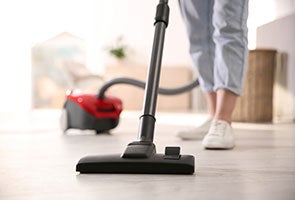
- Vacuum Cleaner (SNI IEC 60335-2-2:2012)
- Toaster (SNI IEC 60335-2-9:2010)
- Hair Dryer (SNI IEC 60335-2-23:2010)
- Microwave Oven (SNI IEC 60335-2-25:2010)
- Shaver (SNI IEC 60335-2-8:2012)
- Massager (SNI IEC 60335-2-32:2012)
- Electric Pan (SNI IEC 60335-2-15:2011)
- Electric Portable Oven (SNI IEC 60335-2-9:2010)
- Food Processor (SNI IEC 60335-2-14:2010)
- Hand Dryer (SNI IEC 60335-2-23:2010)
- Curling Combs (SNI IEC 60335-2-23:2010)
- Electric Drill (SNI IEC 60745-2-1:2014)
- Electric Grinding (SNI IEC 60745-2-3:2015)
- Planers (SNI IEC 60745-2-14:2016)
- Chain Saws (SNI IEC 60745-2-13:2009; SNI IEC 60745-2-20:2008; SNI IEC 60745-2-5:2015; SNI IEC 60745-2-11:2016)

Mexico’s New Telecommunications Regulatory Commission Begins Operations
On Oct. 21, 2025, the Telecommunications Regulatory Commission (CRT), the newly constituted regulatory body replacing the Federal Telecommunications Institute (IFT), officially commenced operations with the installation of its plenary and approval of its operational guidelines. This begins the transformative phase in the country's telecommunications regulation, introducing new mechanisms to support universal coverage, democratize access to the radio spectrum and help safeguard the orbital resources of the Mexican State.
The Telecommunications Regulatory Commission (CRT) is Mexico's newly regulatory body tasked with making critical decisions for telecommunications sector, following the enactment of the Law on Telecommunications and Broadcasting on July 16, 2025.
Hong Kong Updates Performance Specification for WLAN 6 GHz Devices
On Aug. 29, 2025, Hong Kong's Office of the Communications Authority (OFCA) published HKCA 1081 Issue 2, “Performance Specification for Radiocommunications Apparatus Operating in the 6 GHz Band for Wireless Local Area Network.”
This specification defines the minimum performance requirements for radiocommunications apparatus operating in the 6 GHz band for wireless local area network.
Compared with the first version, HKCA 1081 Issue 2 revised Clause 2 to removed electrical safety requirement and revised Clauses 2.1 and 2.3 to clarify the guard band requirements and the equipment categories requirements.
Details of revision:
- The electrical safety requirements, “Compliance Test Specification — Safety and Electrical Protection Requirements for Subscriber Telecommunications Equipment,” have been removed.
- Technical requirement changes:
- Changed the operating frequency band
- Before, the operating frequency band was 5.925-6.425 GHz.
- Now the operating frequency band is 5.945-6.425 GHz, the 5.925-5.945 GHz frequency band is reserved as a guard band.
- New requirement: The apparatus must operate in the equipment categories as defined in ETSI EN 303 687: 6 GHz WAS/RLAN: Harmonized Standard for Access to Radio spectrum, specifically Low Power Indoor (LPI) and Very Low Power (VLP).
- Changed the operating frequency band
https://www.ofca.gov.hk/filemanager/ofca/en/content_401/hkca1081.pdf

Georgia Approves Mercury Trade Rules
On Aug. 14, 2025, the Government of Georgia issued Resolution No. 349, introducing a comprehensive procedure for regulating the import, export and transit of mercury and mercury-added products under a mandatory prior informed consent system. The resolution took effect on Aug. 15, 2025.
This landmark measure aligns Georgia with global standards under the Minamata Convention on Mercury, reinforcing the country’s commitment to protecting human health and the environment from mercury-related risks. It establishes clear responsibilities for the Ministry of Environmental Protection and Agriculture as the policy authority and the National Environmental Agency for consent issuance, database management and reporting.
Key provisions:
- Mandatory prior consent for all mercury trade and transit
- Ban on production, import, and export of mercury-added products listed in Annex I, including certain batteries, switches, relays, fluorescent lamps, cosmetics, pesticides and measuring instruments
- Prohibition of mercury use in specified industrial processes
- Customs enforcement through consent-based risk systems and environmental inspections
- Packaging and labeling requirements aligned with United Nations Globally Harmonized System of Classification and Labelling of Chemicals (UN GHS) standards, including multilingual safety data sheets
- Strict regulation of mercury-containing waste under the Waste Management Code and Basel Convention
- Administrative penalties for violations, including confiscation or destruction of illegal products
This regulation represents a significant step toward reducing mercury exposure and promoting sustainable practices.
https://matsne.gov.ge/ka/document/view/6604857?publication=0#DOCUMENT:1;ENCLOSURE:1;
EU Standardizes Consumer Guarantee Notices and Labels
On Oct. 2, 2025, the European Commission published Regulation (EU) 2025/1960, introducing standardized tools to strengthen consumer rights and promote sustainable choices.
The regulation defines, pursuant to Article 22a(5) of Directive 2011/83/EU (Consumer Rights Directive), the design and content of:
- Harmonized Notice on the Legal Guarantee of Conformity
- Harmonized Label for Commercial Guarantee of Durability
The legal guarantee of conformity is a statutory right under EU law, ensuring that goods purchased by consumers conform to the contract of sale: the minimum duration is two years, but this may be longer under national laws.
The commercial guarantee of durability is a voluntary commitment by producers to guarantee a product’s durability beyond the legal guarantee period, typically for more than two years, at no extra cost to the consumer.
Starting Sept. 27, 2026, to keep consumers throughout the EU well informed and help them easily understand their rights, they shall be informed about:
- The existence of the legal guarantee of conformity for goods and its main elements
- When a producer offers the consumer a commercial guarantee of durability at no extra cost — covering the entire good for more than two years — and provides that information to the trader, the good’s coverage under that guarantee, its duration and a reminder of the existence of the legal guarantee of conformity must be clearly stated
Both notice and label include fixed elements, color schemes, and QR codes to Your Europe Portal linking to further information. Editable fields (e.g., guarantee duration) apply only to the label.
The design and content of the notice and label are provided under the Annexes to Commission Implementing Regulation (EU) 2025/1960 of September 25, 2025: information shall be given as per harmonized format in a prominent manner to the consumer before the consumer is bound by a contract, including distance or off-premises contract or a corresponding offer.
This initiative supports the EU’s Empowering Consumers for the Green Transition strategy, making rights clearer and encouraging the purchase of durable goods. Standardized information and digital access aim to boost transparency, consumer confidence and market sustainability.


EU Introduces Repairability Index for Tumble Dryers
The Amendments to the Energy Labelling and Ecodesign Regulations on Tumble Dryers were recently published in the EU Official Journal.
The modifications include:
- Introduction of repairability information and requirements
- Clarifications on the measurement and calculation of the average final moisture content
This reinforces the EU's commitment to environmentally friendly product design by making repairability a visible, quantifiable and comparable quality for household tumble dryers.
The new rules introduce a repairability index, calculated on the base of four parameters:
- Disassembly depth
- Fastener type
- Tool type
- Repair information
The results are classified on a scale from A (best repairability) to E (worst repairability).
| Repairability class | Repairability index (R) |
|---|---|
| A (most repairable) | R > 9.00 |
| B | 7.00 ≤ R ≤ 9.00 |
| C | 5.00 ≤ R < 7.00 |
| D | 3.00 ≤ R < 5.00 |
| E (least repairable) | R < 3.00 |
A revised template of the label, including the repairability class pictogram is available as Annex IIIa to the regulation. It will be mandatory for products placed on the market after Jan. 1, 2027.
The product information sheet, European Product Registry for Energy Labelling (EPREL) and technical documentation shall also be updated according to the amended regulation.
In parallel, the ecodesign requirements are revised in the section related to the availability of spare parts, with the addition of motor capacitor and the clarification of other clauses.
Summary of the regulation amendments:
| Content | Document reference | Amended regulation |
|---|---|---|
| Energy Labeling of tumble dryers | Commission Delegated Regulation (EU) 2025/1353 | Amending Delegated Regulation (EU) 2023/2534 |
| Ecodesign of tumble dryers | Commission Regulation (EU) 2025/2262 | Amending Regulation (EU) 2023/2533 |
EU Amends Harmonized Standards for Gas Appliances Regulation
The European Commission published an amendment to the lists of harmonized standards for Regulation (EU) 2016/426 on appliances burning gaseous fuels.
The standards published in the Official Journal (OJ) as harmonized standards grant presumption of conformity to the relevant European regulations and directives. Therefore, manufacturers commonly use them to demonstrate that their products comply with the enforced requirements.
The amendment of Sept. 10, 2025 (Commission Implementing Decision (EU) 2025/1793) adds the following standards, introduced for the first time:
- EN 30-2-1:2024 Domestic Cooking Appliances Burning Gas — Part 2-1: Rational Use of Energy — General
- EN 88-2:2022+A1:2024 Safety and Control Devices for Gas Burners and Gas Burning Appliances — Part 2: Pressure Regulators for Inlet Pressures above 50 kPa up to and Including 500 kPa
- EN 88-3:2022+A1:2024 Safety and Control Devices for Gas Burners and Gas Burning Appliances — Part 3: Pressure and/or Flow Rate Regulators for Inlet Pressures up to and Including 500 kPa, Electronic Types
- EN 125:2022+A1:2024 Flame Supervision Devices for Gas Burning Appliances — Thermoelectric Flame Supervision Devices
- EN 15502-2-2:2024 Gas-Fired Central Heating Boilers — Part 2-2: Specific Standard for Type B1 Appliances
- EN 16304:2022+A1:2024 Automatic Vent Valves for Gas Burners and Gas-Burning Appliances
The corrected version of EN 15502-2-1, EN 15502-2-1:2022+A1:2023/AC:2024, is also included.
When used to demonstrate the conformity of the products, the standards are mentioned in the EU Declaration of Conformity and in the EU Type Examination certificates issued by an approved Notified Body.
https://eur-lex.europa.eu/legal-content/EN/TXT/?uri=OJ:L_202501793

China Revises CCC Certification Rules for Low-Voltage Components
On Sept. 16, 2025, the China Quality Certification Centre (CQC) published a notice on the revised “Implementation Rules for Compulsory Product Certification of Low-Voltage Electrical Appliances and Low-Voltage Components” (CQC-C0302-2024), which was issued on Sept. 12, 2025. It is used in conjunction with Certification and Accreditation Administration of the People’s Republic of China (CNCA) implementation rules CNCA-C03-02:2024, and clarifies CCC certification procedures, supervision and testing requirements for low-voltage components under product categories 0302 to 0309.
This notice includes the main revisions to the revised certification implementation rules and its implementation requirements.
Major revisions to the certification implementation rules:
- Changed the certification mode
- Canceled the certification mode “type test + post-certification supervision”
- The only certification mode right now is “type testing + initial factory inspection + post-certification supervision”
- Revised the factory identification codes and coverage principles for low-voltage components in Table 1
- Revised the post-certification supervision and inspection requirements in Section 7.1.2
- Modified the supervisory sampling requirements in Appendix 2
- Revised Appendix 3 for testing items under GB/T 14048.11 and clarified that the validation test does not include robust testing
II. Implementation requirements
- CQC began to use the revised implementation rules for CCC certification beginning the date of this notice.
https://www.cqc.com.cn/www/chinese/c/2025-09-16/599388.shtml
China NHC Issues New Food Contact Material Standards and Testing Methods
On Sept. 25, 2025, the National Health Commission (NHC) and the State Administration for Market Regulation (SAMR) of the People's Republic of China issued 32 national food safety standards, including four national mandatory standards: two standards on food contact materials and two testing methods.
GB 4806.10-2025 Paints and Coatings for Food Contact Materials and Articles
This standard replaces the previous version of GB 4806.10-2016. This applies to paint and coatings intended to be coated on food contact materials and articles, directly or indirectly contacting food. It details the technical requirements for paint and coatings, including sensory requirements, physical and chemical indicators, and raw material requirements. Appendix A contains the expanded raw material requirements compared to the list in GB 4806.10-2016.
GB 4806.16-2025 Food Contact Silicone Rubber Materials and Products
This standard replaces GB 4806.11-2016 National Food Safety Standard for Food Contact Rubber Materials and Products. This standard revises the physical and chemical indicators by adding a limit for volatile matter (0.5 g/100 g) and revising the test conditions for other parameters. Appendix B, Determination of Volatile Substances, was added.
GB 31604.21-2025 Determination of Migration of Benzoic Acid, Phthalic Acid and Trimellitic Acid from Food Contact Materials and Articles
This standard replaces GB 31604.21-2016 National Food Safety Standard for Food Contact Materials and Articles — Determination of Migration of Terephthalic Acid. This standard specifies the testing method for determining the migration in food contact materials of benzoic acid, phthalic acid, isophthalic acid, terephthalic acid, trimesic acid, trimellitic acid and styrene trimesic acid.
GB 31604.64-2025 Determination of Migration of Citrate and Sebacate Compounds in Food Contact Materials and Articles
This standard specifies the testing method for the determination of migration in food contact materials of triethyl citrate, di-n-butyl sebacate, acetyl tributyl citrate, di(2-ethylhexyl) sebacate, diisooctyl sebacate and di(2,2,6,6-tetramethyl-4-piperidinyl) sebacate.
The two testing method standards will be effective on March 2, 2026, while the other two product standards will take effect on Sept. 2, 2026.
https://www.nhc.gov.cn/sps/c100088/202509/5dc5e1e2b26d4d27a7913b9e71bbe931.shtml


Argentina Updates Technical Rule for Conformity Assessment of Electrical Equipment
On Feb. 25, 2025, the Secretariat of Industry and Commerce released Resolution No. 17/2025, 16/2025 and 26/2025. This resolution approves the new Technical Rule for Conformity Assessment of Electrical Machines and Tools, replacing Resolution 169/18.
It specifies the procedure and requirements for conformity assessment of the products in scope, in accordance with Resolution No.237/2024 (General Framework for Conformity Assessment).
Read our detailed article on Argentina: Changes in Conformity Assessment Regulations
China Implements New Standard for Network Security O&M Products
On Sept. 29, 2025, the China Cybersecurity Review and Certification (CCRC) and Market Supervision Big Data Center published a notice on the implementation of the new standard GB/T 45409-2025 Technical Specifications for Network Security Technology Operation and Maintenance Security Management Products.
GB/T 45409-2025 specifies the technical requirements for network security technology operation and maintenance (O&M) security management products in network critical equipment and dedicated products for network security certification scope.
- Issued on March 28, 2025
- Based on National Standards Announcement No. 6 of 2025
- Went into effect on Oct. 1, 2025
The CCRC clarified the certification implementation requirements as follows:
Certification implementation requirements:
- From the date of this notice (Sept. 29, 2025), CCRC will accept certification applications for key network equipment and O&M security management products listed in Network Critical Equipment and Specialized Network Security Products Catalog, in accordance with GB 42250-2022 and GB/T 45409-2025 standards. Certification evaluation will be conducted, and certificates will be issued accordingly.
- For certificates issued before the implementation of the new standard that do not include GB/T 45409-2025 (old certificates), certified enterprises may submit a modification application for certification conversion through the product certification system (https://p.isccc.gov.cn). After completing the GB/T 45409-2025 full test and certification evaluation, new certificates will be issued.
- Conversion must be completed before Sept. 30, 2027. If the certificate has not been converted within this time frame, the old certificate’s validity will be suspended.
Submit applications to:
- Product Certification Division I
- Consultation hotline: 010-88652515
- Email: huy@isccc.gov.cn
https://www.isccc.gov.cn/wlaqrz/cprz/wlgjsb/tzgg_7/202509/t20250929_8696.htm


Australia Publishes New Class License for Low-Interference Devices
On Sept. 4, 2025, the Australian Communications and Media Authority (ACMA) issued the Radiocommunications (Low Interference Potential Devices) Class Licence 2025, replacing the 2015 version. The license authorizes the operation of low-power transmitters under updated technical conditions and expanded frequency allocations.
It consolidates and modernizes frequency allocations, power limits and technical references for low-interference-potential devices (LIPDs), aligning with current European Telecommunications Standards Institute (ETSI), 3rd Generation Partnership Project (3GPP) and U.S. Federal Communications Commission (FCC) standards.
Key changes include:
- Creation of separate tables for each category of transmitter and listing limitations under each table to improve the readability of the instrument
- Update of references to ETSI standards
- Extension of the upper frequency limit of WLAN 6 GHz from 6,425 MHz to 6,585 MHz
This document took effect on Oct. 1, 2025.
Stay current, stay informed and stay ahead
Don’t miss the essential updates that could shape your business’s future. Subscribe now and empower your team with the insights needed to thrive in a competitive global marketplace.




X
Stay informed
Actionable insights on the topics you choose, delivered directly to your inbox.
Please wait…
Characters remaining