By Michal Hofkin, lead regulatory engineer, UL Solutions
The 2026 edition of NFPA 70®, the National Electrical Code® (NEC®), was issued by the National Fire Protection Association (NFPA®) Standards Council on Aug. 20, 2025, with an effective date of Sept. 9, 2025. Numerous significant changes were made to the latest edition of the NEC. One of these revisions includes a delayed effective date, meaning the new requirements are not enforceable until the specific date identified within the code text. The language in question is in 210.8(F), Outdoor Outlets.
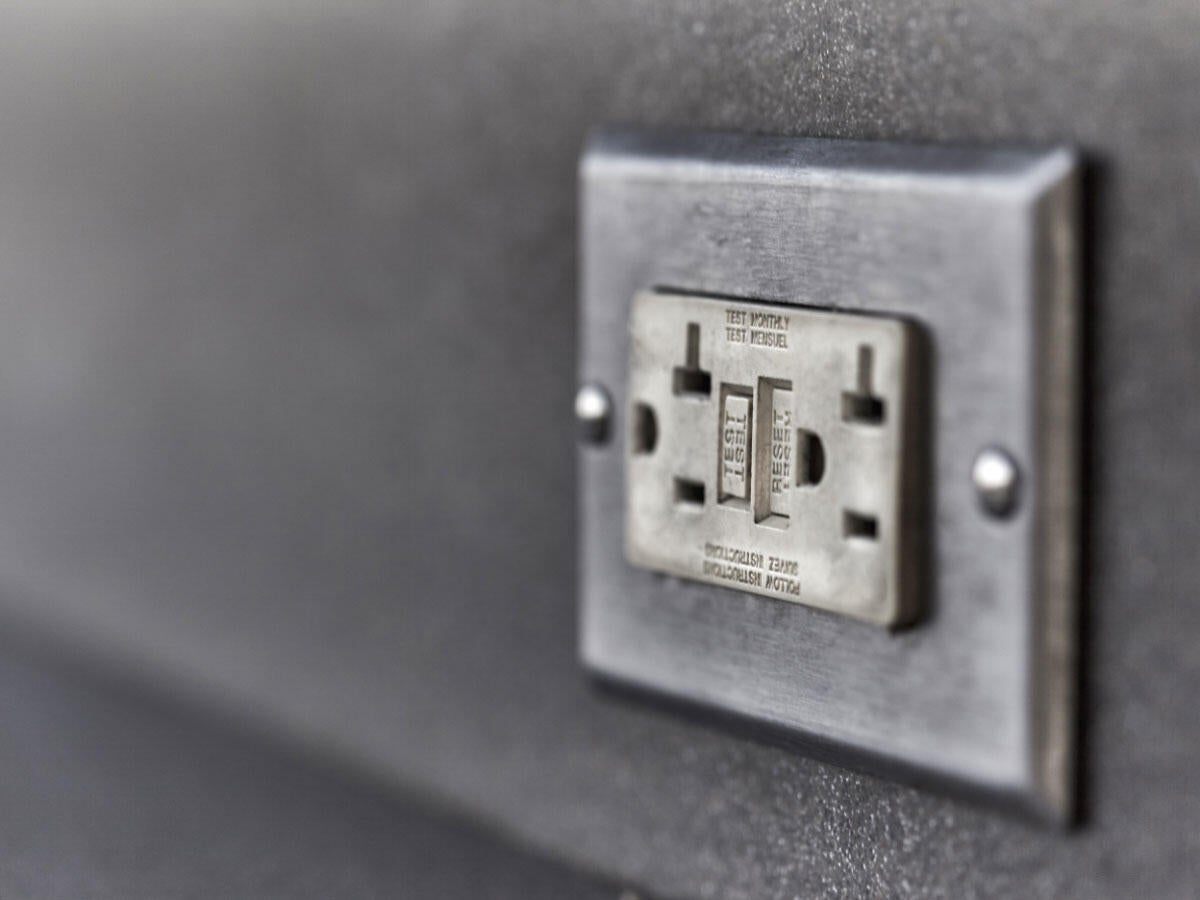
This section requires all outdoor outlets at dwelling units, with exceptions, that are supplied by single-phase branch circuits rated 150 volts or less to ground, 60 amperes or less, to have ground-fault circuit-interrupter (GFCI) protection. This requirement is specific to outlets, which are defined as the points on the wiring system at which current is taken to supply utilization equipment. There are provisions in other subsections of Article 210 that address the need for GFCI protection for receptacles.
The provisions in 210.8(F) apply to hard-wired equipment and therefore include outdoor HVAC equipment. Upon discovering that some HVAC equipment was incompatible with standard GFCI devices, a Tentative Interim Amendment (TIA) was issued to the 2020 NEC that added an exception to this requirement. The exception delayed the need for GFCI protection for listed HVAC equipment until Sept. 1, 2026. This exception was carried over into the 2023 and 2026 editions of the NEC. This delay permitted our technical panel to create Supplement SB to UL 943, the Standard for Ground-Fault Circuit-Interrupters, which was issued in August 2025. Supplement SB introduces the requirements to cover a supplemental test procedure for a ground-fault circuit interrupter HF rating compatible with utilization equipment evaluated to the GFCI Interoperability Test of UL 101, the Standard for Leakage Current for Utilization Equipment. High Frequency GFCIs (HFGFCIs) are now coming to market.
How emerging technologies influence updates to model codes and product safety standards
The NEC has a long history of driving the need for new or updated standards. The 2014 and 2017 NEC had requirements for the rapid shutdown of photovoltaic (PV) systems on buildings, which led to the development of ANSI/CAN/UL 3741, the Standard for Photovoltaic Hazard Control, in December 2020.
The 2026 NEC, like all previous editions, does not recognize the use of plug-in photovoltaic (PIPV) modules. Often referred to as balcony solar, these small PV systems are designed to be installed on a balcony or on the ground and send the generated power into the building through a back-fed standard receptacle. Recognizing the dangers associated with such an arrangement, UL Standards & Engagement issued UL 3700, the Outline of Investigation for Interactive Plug-In PV (PIPV) Equipment and Systems. For additional information about PIPV, see Safety Considerations for Plug-In Photovoltaic (PIPV) Systems from January’s The Code Authority® Newsletter.
In 1999, the NEC published requirements for the use of arc-fault circuit-interrupters in dwelling unit bedrooms, with an effective date of Jan. 1, 2002. In February 1999, UL Standards & Engagement issued UL 1699, the Standard for Safety for Arc-Fault Circuit-Interrupters. With a standard available, manufacturers were able to develop the products that would allow for compliance with the new requirement.
Conversely, sometimes a change in a standard leads to a change in the model code. UL 3141, the Outline of Investigation for Power Control Systems (PCS), was updated with several new safety requirements for PCS systems in October 2024. When the 2026 NEC was published, the updated requirements in the Standard became a part of the electrical code.
The interplay between codes and standards is a never-ending dance. They are intertwined. Sometimes the code leads the dance, sometimes the standard does. In the end, safety results from the continual alignment between the two.
Contact us
Email: ULRegulatoryServices@ul.com