
May 11, 2026
By Xunyao Fu, PhD, Regulatory Affairs Lead, Software, UL Solutions
Taiwan has released a draft amendment to the Regulations for the Labeling and Hazard Communication of Hazardous Chemicals, as published in the Executive Yuan Gazette. The proposal aims to further align Taiwan’s workplace chemical hazard communication framework with the United Nations Globally Harmonized System of Classification and Labelling of Chemicals (GHS), Revision 8. At this stage, the amendment remains in draft form, and its requirements will become legally binding only after finalization and promulgation.
The draft introduces targeted updates across hazard classification, labeling, and safety data sheet (SDS) requirements, reflecting changes adopted in GHS Rev. 8 and corresponding updates to Taiwan’s national standards.
Changes to Hazard Classification
The draft amendment updates hazard classification requirements by referencing the revised CNS 15030 series, which incorporates GHS Rev. 8 criteria. Notable proposed changes include the introduction of desensitized explosives as a new hazard class and refinements to several existing classifications. In particular, flammable gases are further subdivided into Category 1A and Category 1B, with Category 1A flammable gases further differentiated into pyrophoric gases and chemically unstable gases (Type A and Type B). In addition, the classification of aerosols is revised and expanded to explicitly address aerosols and pressurized chemicals, including differentiation based on flammability and explosion risk under pressure, in line with the updated GHS framework.
Moreover, while Acute Toxicity Category 5, Skin Irritation Category 3, and Aspiration Hazard Category 2 remain included under GHS Rev. 8 and are adopted in CNS 15030, the draft amendment proposes to eliminate the application of these categories in the Regulations, by reference to international practices in jurisdictions such as the United States, the European Union, Japan, and Korea, while maintaining focus on hazards of higher concern.
Updates to Labeling Requirements
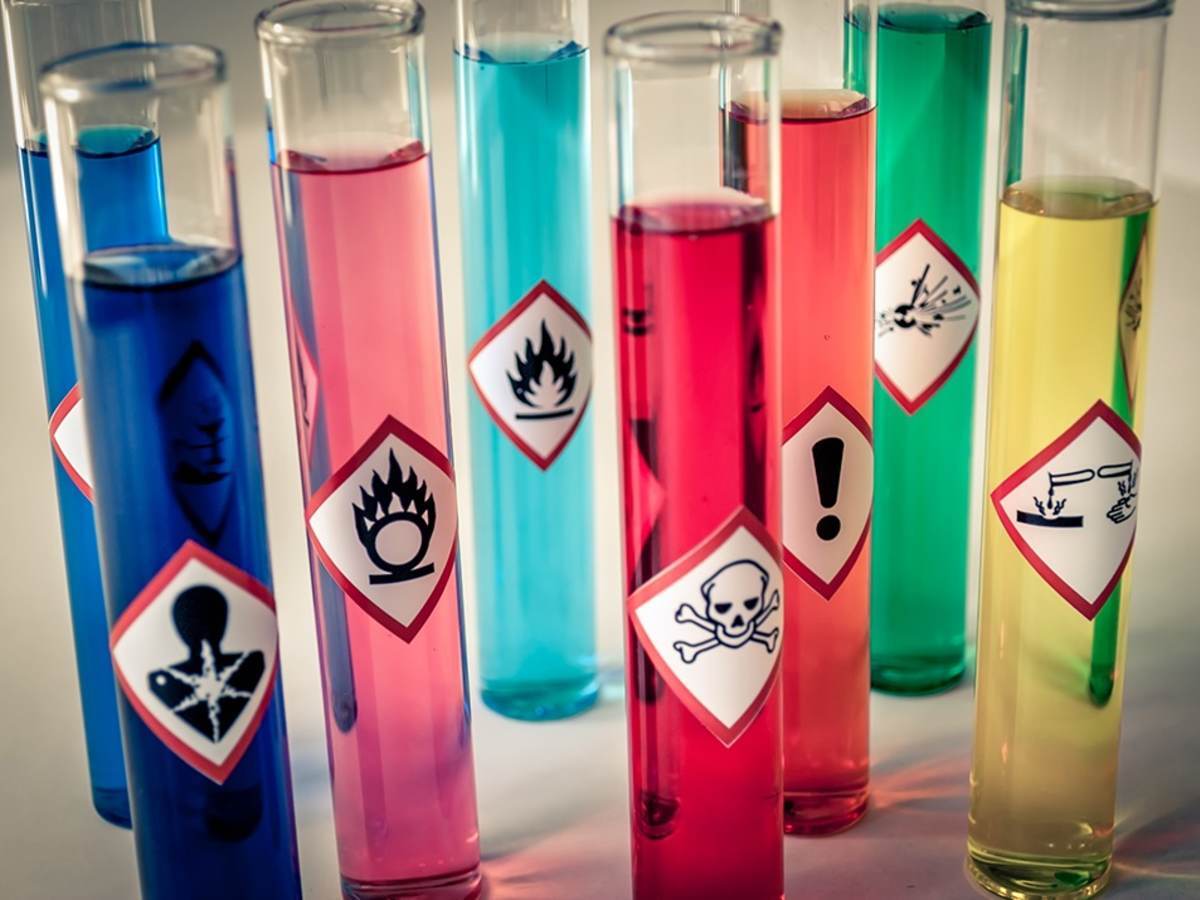
Labeling requirements are proposed to be updated in line with the revised hazard classifications in the regulations. Changes include adjustments to hazard statements, signal words, and pictograms to reflect new or revised hazard classes under GHS Rev. 8. The draft also removes transitional provisions that previously addressed differences between transport labeling and workplace GHS labeling, as the UN transport hazard system and GHS have now been largely harmonized.
Revisions to Safety Data Sheet (SDS) Content
The draft amendment also revises SDS content requirements in accordance with GHS Rev. 8. Under the proposal, Section 3 (Composition/Information on Ingredients) would be revised to remove the "chemical properties" field. In Section 9 (Physical and Chemical Properties), the draft proposes to delete odor threshold and evaporation rate, while adding kinematic viscosity and particle characteristics.
In addition, Section 14 (Transport Information) would be expanded to include bulk cargo transport provisions, providing clearer guidance for chemicals transported in bulk. Section 16 (Other Information) would also be revised to remove the "prepared by" field, further aligning the SDS format with GHS Rev. 8.
Importantly, the draft amendment strengthens regulatory oversight of SDS accuracy by authorizing competent authorities to require corrections within a specified timeframe where SDS content contains errors or omissions, and to impose penalties if corrections are not made.
Proposed Effective Dates and Alignment with GHS Rev. 8
Under the draft text, most amended provisions would take effect on the date of promulgation once finalized. However, key technical annexes - Attachment 1 to Article 5 (Classification and Labeling Requirements for Hazardous Chemicals) and Attachment 4 to Article 12 (Content and Template for SDS) - are proposed to take effect on January 1, 2028, providing industry with a transition period.
With the future implementation of the finalized amendment to the Regulations for the Labeling and Hazard Communication of Hazardous Chemicals, GHS Revision 8 based classification, labeling, and SDS requirements will be enforced in practice in Taiwan, reflecting the updated national standards (CNS 15030) already aligned with GHS Rev. 8. As a result, GHS Rev. 8 will become mandatory under Taiwan’s hazard communication framework.
Companies manufacturing, importing, or supplying hazardous chemicals in Taiwan should closely monitor the progress of this draft amendment and begin assessing potential impacts on existing classifications, labels, and SDS in preparation for compliance once the regulation is finalized.
References
Announcement on Draft Amendment to the Regulations for the Labeling and Hazard Communication of Hazardous Chemicals (in traditional Chinese only)
Regulations for the Labeling and Hazard Communication of Hazardous Chemicals (in traditional Chinese only)

Regulatory Roundup Newsletter
Never miss an update
UL Solutions, the global safety science leader, can keep you updated on the latest events with a variety of materials, ranging from the latest regulatory news, webinars, white papers, events, industry insights and more.
Subscribe to our monthly Regulatory Roundup Newsletter and stay up to date on current and upcoming regulations and all the latest chemical industry news.
Safety Data Sheet (SDS) Authoring and Labeling Software and Services
Create, maintain and distribute comprehensive SDSs and labels to meet your increasingly complex global compliance requirements.

Chemical Regulatory Compliance
Manage your chemical compliance needs with the help of global regulatory expertise and leading resources.

Chemical Compliance Training
We provide a series of chemical regulatory training programs designed to help understand the diverse set of requirements and how to confront them.
Get connected with our sales team
Thanks for your interest in our products and services. Let's collect some information so we can connect you with the right person.