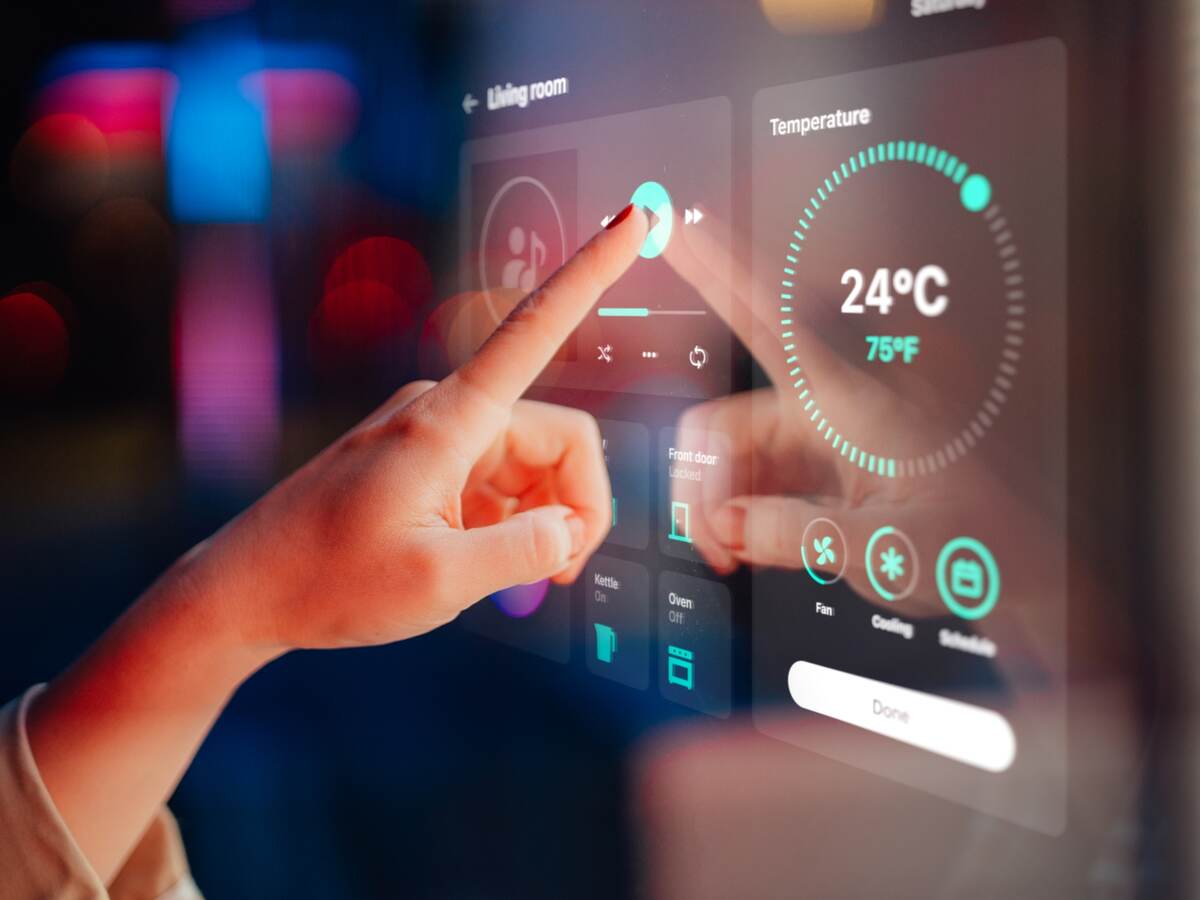

As buildings evolve toward 2030 and beyond, safety, security and sustainability are becoming inseparable priorities. In this interview, Travis Hardin, director of principal engineering for appliances, HVAC and lighting at UL Solutions, explores how ultra-low Global Warming Potential (GWP) refrigerants, digital twins, artificial intelligence (AI)-driven maintenance and smart controls are reshaping building design and operations worldwide. He also explores how global standards, building codes and collaboration across the value chain work to balance decarbonization, occupant safety and long-term resilience.
Industry trends from now until 2030 and beyond
What major shifts do you expect in building safety, security, and sustainability practices by 2030 and beyond, and what is driving them?
One of the major regulatory shifts we’re seeing is HVAC and refrigeration equipment (HVACR) moving to utilize ultra-low GWP refrigerants. Within certain safety contexts, these substances are often referred to as flammable refrigerants. Designs have been moving away from the current widely used refrigerants (i.e., R410A) due to global regulation and enhanced visibility on sustainability. The current refrigerants were developed to reduce the environmental impact of hydrofluorocarbons (HFCs) and performed well with HVACR equipment over the past 30 years or so. However, they were considered a contributing factor to greenhouse gas production or global warming.
New refrigerants are being developed to have lower GWP to meet global environmental regulations. Ultra-low-GWP refrigerants, as their name suggests, have minimal greenhouse gas effects as compared to other refrigerants. A notable side effect of these modern refrigerants is their increased flammability compared to earlier generations of refrigerants, resulting in new designs of equipment to mitigate this risk. To facilitate standardization and code development, research conducted by UL Solutions determines the necessary and safe quantity of refrigerant contained within equipment and identifies effective firefighting and first responder methods.
Various global regions are better positioned to move faster with this transition due to a combination of equipment and dwelling designs. For example, in Europe, most of the HVAC systems are entirely contained on the outside of the building, which can reduce the risk due to refrigerant leakage compared to a dwelling or commercial space in the United States that could have refrigerant lines installed within the walls or floor space connecting the condenser and evaporator coils of the HVAC system.
As that development happens in different countries and regions, are you seeing any overlap or commonalities? Are there any regions that are influencing others?
Yes, the global safety standards for HVACR are largely aligned with IEC standards, which contributes to enhanced consistency in both the design and safe utilization of these products. Building codes are actively evaluating and reacting to the use of low-GWP refrigerants. In some cases, the regulatory requirements are supported by global agreements. For example, one agreement, the Montreal Protocol, involves various nations agreeing to essentially draw down the production of higher GWP refrigerants following a specified timeline.
Are the manufacturers of the refrigerants that are being phased out transitioning to produce more DWP-friendly refrigerants?
Chemical companies producing refrigerants understand that, as the market evolves, they must meet global regulations. Consequently, they are actively producing low- GWP refrigerants.
The American Society of Heating, Refrigerating and Air-Conditioning Engineers’ (ASHRAE) ASHRAE Standard 34 covers the “designation and safety classification of refrigerants” and is primarily used in the U.S. Generally, refrigerants are categorized as A1, A2, A2L and A3, with respect to flammability and toxicity characteristics. A1 refrigerants are considered to be non-flammable, whereas A2 refrigerants are more environmentally friendly with respect to greenhouse gases but are considered flammable. As you move toward more environmentally friendly options, the trade-off is that the refrigerants become more flammable. This means a leak poses a greater hazard if it finds an ignition source. Currently, the industry is undergoing a transitional phase in which A2L refrigerants are gradually being implemented instead of an immediate shift to A3 alternatives. Chemical companies are not only adapting to this change but are also actively contributing to its direction.
What role do you think new technologies such as AI and digital twins will play in this space in the coming years?
I think these technologies will assist building owners and managers with maintaining a safer and more optimal environment for the occupants. From a digital twin standpoint, you could use virtual reality to undertake maintenance. If you have a digital twin of a building and place that same building in 10 different cities, it is essentially the same building. You now possess a manual or blueprint designed to facilitate prompt and effective issue resolution. For example, equipment can be preemptively replaced prior to failure by leveraging data that indicates typical breakdown points. This demonstrates how digital twins facilitate a proactive approach to maintenance, enabling organizations to shift from reactive to preventive strategies.
Today, there are certainly well-run buildings that perform preventive maintenance, but there are plenty of other situations where this is not the case. As an illustrative example, maintenance personnel may be required to manage several facilities or locations within a system, often responding to issues as they arise. If you had a digital twin to put maintenance on a schedule, you would potentially have a safer environment and better comfort for the occupants. In North Carolina, where I reside, it has been reported that school gets canceled when the HVAC system goes out during summer weather (hot temperature, high humidity) since this condition is not an effective learning environment for students.
HVAC and healthy buildings
Is the HVAC industry adapting to meet both decarbonization goals and indoor air quality to meet expectations around healthy buildings?
Yes, organizations like ASHRAE formally embedded both indoor environmental quality (IEQ) and decarbonization into their strategic priorities to reduce greenhouse gas emissions, enhance air quality and improve overall building resilience.
What are the biggest safety risks associated with outdated HVAC systems, and how can predictive maintenance help mitigate them?
Historical HVAC systems are typically on/off operation and lack the ability to run at variable speeds/loads to meet the heating/cooling demand. As traditional systems age, they can become increasingly inefficient if improperly maintained. For example, sediment buildup in water heaters forces the unit to consume more energy to transfer heat. Likewise, refrigerant leaks reduce cooling and/or heating capacity and failing gas heat exchangers can leak hazardous carbon monoxide.
Preventative or predictive maintenance extends a system's lifespan by identifying components that need attention or could be upgraded. Ultimately, proactive maintenance prevents systems from operating inefficiently before a total failure, and predictive maintenance helps us understand where proactivity is needed.
What innovations in HVAC controls or heat pumps do you think are most likely to transform energy efficiency in the next several years?
Controls with AI features could identify optimal system operation to meet demands and/or goals (i.e., lower energy cost or decarbonization) and still provide the expected indoor comfort conditions.
How is the shift toward low-carbon refrigerants affecting system design, safety protocols and long-term sustainability?
Low carbon is not the primary metric for refrigerants, as many still contain carbon, such as R290 (i.e., propane). Instead, the metric is GWP, which measures how long the refrigerant traps energy in the atmosphere when leaked. As we transition from traditional A1 refrigerants to A2L and A3 refrigerants, the major hazard is increased flammability. To address this, safety standards assume leaks will occur and require mitigation strategies, such as using ignition-protected equipment, limiting the amount of refrigerant allowed to leak and allowing for proper airflow. Additionally, building codes require adequate airflow scaled to refrigerant charge in equipment.
Lighting and smart controls
How can advanced lighting controls contribute to safer, healthier, and more sustainable occupant environments by 2030 and beyond?
Programmable smart controls that autonomously regulate lighting systems without depending on occupant intervention will be more sustainable. For instance, the system automatically turns off or dims lighting in unoccupied rooms, thereby conserving energy and extending product lifespan while supporting safety by providing illumination when occupancy is detected. At parking facilities such as Raleigh-Durham International Airport in North Carolina, intelligent lighting systems efficiently direct drivers to vacant spaces, thereby minimizing unnecessary fuel consumption. Furthermore, modern LED lighting can provide adjustable color temperatures and dimming for eye comfort. Ultimately, advanced lighting controls contribute to safer environments, healthier conditions and greater sustainability by minimizing waste.
What security and data privacy considerations come to mind as everything is increasingly connected?
As with any connected system, there is always a risk of cyberattacks or unauthorized access. Let me give a fictional scenario. If you have networked sensors in a hospital parking deck without the proper cybersecurity protections, a bad actor could potentially use them to access the hospital's main network. They could access sensitive hospital records or even turn off the power in an operating room. While that may sound far-fetched, any networked device creates an entry point. Unauthorized access can clearly result in unsafe conditions for lighting and other critical systems. I think most of us in the HVAC world remember when a prominent retailer experienced a cyberattack which entered through the HVAC system, so this isn’t just hypothetical.
Future strategy
What is the most overlooked challenge facing the industry over the next five to 10 years, and what should building owners and manufacturers be thinking about?
I am not sure if this is an overlooked challenge, but a major challenge is helping buildings use power as efficiently as possible while maintaining the performance level occupants expect. This involves using the minimum energy necessary to meet expectations. For lighting, you can effectively balance natural and artificial light and use circadian rhythms to promote healthier spaces. For HVAC, you can employ localized modules for greater spatial control. Furthermore, the power source itself should be evaluated, such as connecting to a DC microgrid to use power more effectively than a standard grid. Ultimately, people must view their building as a true system to determine the best operational approach.
What emerging regulations or global policy shifts do you expect to have a big impact on the industry in the next five to 10 years, and how do you think the industry should prepare?
As discussed earlier regarding the HVAC and refrigeration space, the transition to ultra-low GWP refrigerants will be driven by regulation. Because these new refrigerants carry higher flammability risks, this transition will likely force a redesign of building HVAC systems. To mitigate fire hazards, safety measures will be built directly into the equipment to comply with updated building codes governing installation, ventilation and airflow.
This regulatory shift will significantly change how buildings are designed. To prevent hazardous refrigerants from leaking into interior spaces, equipment placement must be reconsidered. Ultimately, this is a major emerging global policy shift that all building owners, especially those managing existing structures, will have to effectively navigate.
How can industry stakeholders strengthen collaboration across the value chain to deliver resilient and future-ready buildings by 2030 and beyond?
For industry stakeholders, which could be municipal fire service, building inspectors, property developers, original equipment manufacturers (OEMs), designers, builders or building owners, active participation in the development of building codes and product safety standards is paramount. These individual stakeholders bring varying perspectives to the discussion. If diversity has taught us anything, it is that having only a single perspective around a table could result in blind spots, while having multiple different viewpoints forces a compromise that typically results in a good solution.
With diverse experience present during the consensus process for developing these codes and standards, all viewpoints are heard by relevant stakeholders. This collaborative approach can lead to better, more applicable regulatory requirements.
Is the challenge lack of involvement, or lack of interest from certain areas of the industry?
It may involve multiple factors, but I also think that it's awareness of what's driving regulations and trends in the industry. For example, UL Standards & Engagement doesn't create nor revise a UL Standard in a vacuum. It’s an open process made up of many people, from varying perspectives, so, again, I think it’s important we get the word out, so people understand that standards development is a consensus process and that everyone is welcome to participate.

Meet our expert
Travis Hardin is the director of principal engineering at UL Solutions. He leads global technical initiatives that help unite safety, performance, innovation and sustainability, guiding industries through the low‑GWP refrigerant transition, hydrogen integration and evolving standards that shape safer, more sustainable technologies worldwide.
X
Get connected with our team
Navigate evolving standards and building codes while helping buildings use power as efficiently as possible.
Please wait…
Characters remaining