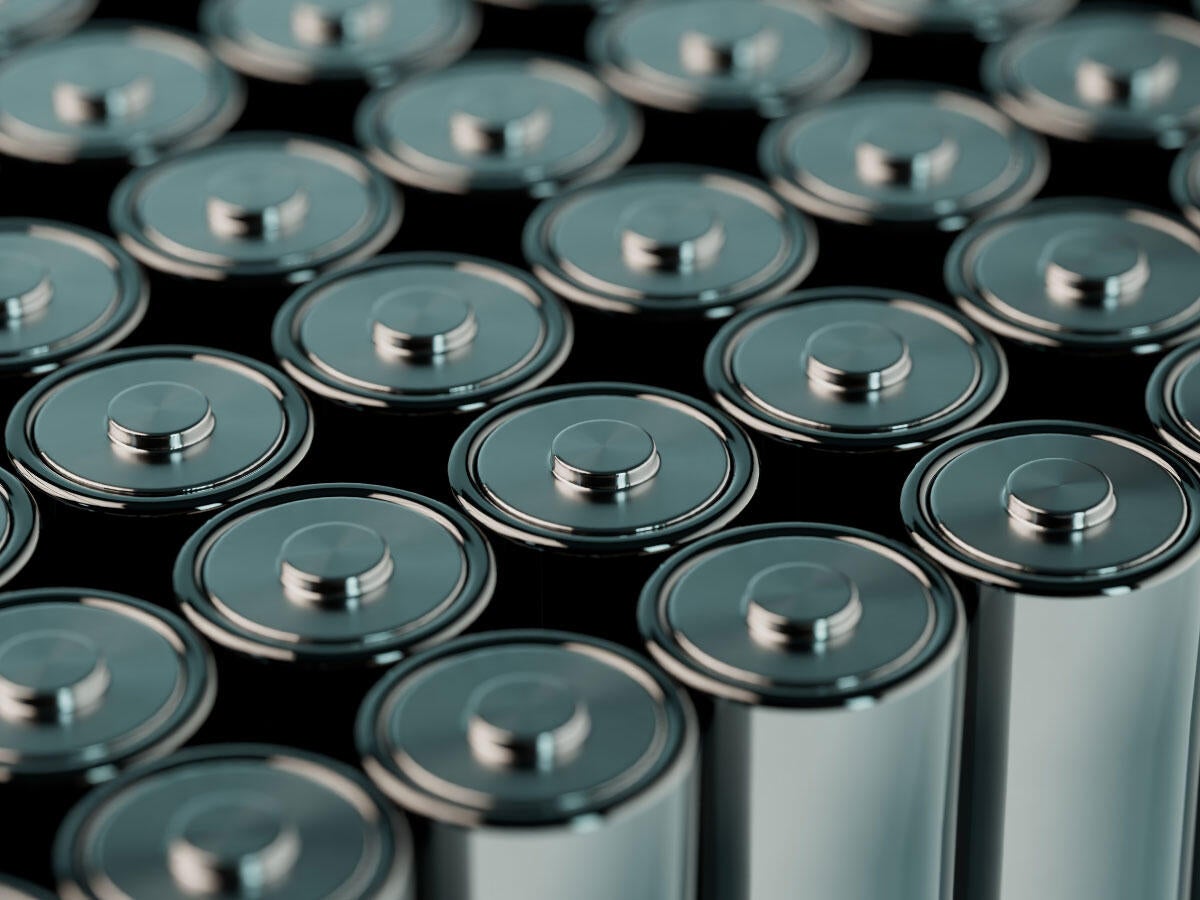

Global battery demand is expected to increase fourteenfold by 2030, reaching 4,700 gigawatt-hours (GWh) for lithium-ion batteries, with the European Union (EU) accounting for 17% of that demand.1,2
To manage this surge responsibly, the EU has introduced the EU Battery Regulation (Regulation (EU) 2023/1542), replacing the older Batteries Directive and setting stricter rules for battery safety, sustainability and traceability. Rooted in the EU Green Deal, this regulation supports a circular economy and climate neutrality.
Overview of the new EU Battery Regulation
The EU Battery Regulation applies to a wide range of battery types, including:
Portable batteries

Light means of transport (LMT) batteries

Industrial batteries, including battery energy storage systems (BESS)

Electric vehicle (EV) batteries

Starting, lighting and ignition (SLI) batteries
Key changes from the EU Batteries Directive
The new regulation introduces:
- Carbon footprint reporting requirements for batteries
- Digital product passports for traceability
- Recycled content targets
- Due diligence requirements to support ethical sourcing
- Performance and durability criteria
Implementation timeline
- Labeling requirements: Cadmium and lead content (2025)
- Carbon footprint reporting: Industrial and EV (2026 — or by a certain period after the entry into force of the related delegated/implementing act, whichever is the latest), LMT (2028)
- Removability/recyclability: Portable/LMT (2027)
- Due diligence requirement: All (2027)
- Recycled content targets: SLI, EV and industrial (2028), LMT (2033)
Why compliance matters for manufacturers and distributors
Businesses face significant challenges while navigating EU Battery Regulation compliance, including reviewing 90+ articles of requirements, meeting tight implementation timelines, managing material shortages and understanding impacts across the battery life cycle. But noncompliance can lead to:
- Market access restrictions
- Financial penalties
- Reputational damage
- Missed opportunities in the growing EV and energy storage markets
Challenges for organizations navigating the EU Battery Regulation
Many organizations struggle to identify their role in the battery supply chain and understand which parts of the EU Battery Regulation apply to them. For example, if an organization qualifies as a producer, it may have additional extended producer responsibilities, including waste management, waste battery collection and reporting obligations.
Companies also seek clarity on:
- What compliance documentation is required – Which reports, evidence or records are sufficient to demonstrate compliance?
- Where and how to register – What steps are needed to meet regulatory registration requirements?
EU Battery Regulation: See the full picture
Gain a better understanding of the EU Battery Regulation and how it may impact your business. Our infographic gives you the essentials at a glance, including:
- Key dates and milestones
- Battery types covered
- Practical steps to staying compliant
View the infographic now to gain a better understanding of the EU Battery Regulation and how it may impact your business.

EU Battery Regulation: What you need to know
780 KB


References
- European Commission. (n.d.). Batteries. In Environment – European Commission. Retrieved December 19, 2025, from https://environment.ec.europa.eu/topics/waste-and-recycling/batteries_en
- McKinsey & Company. (2023, January 16). Battery 2030: Resilient, sustainable, and circular. McKinsey & Company. Retrieved December 19, 2025, from https://www.mckinsey.com/industries/automotive-and-assembly/our-insights/battery-2030-resilient-sustainable-and-circular
X
Get connected with our sales team
Thanks for your interest in our products and services. Let's collect some information so we can connect you with the right person.
Please wait…
Characters remaining