Watch now:
As the energy storage industry continues to evolve, lithium-ion batteries play a critical role in the global energy transition. These batteries help balance renewable energy supply, support grid reliability, and help enable more flexible energy use. But these benefits also come with safety challenges. Our applied research, development, and innovation team wanted to better understand these hazards and how to measure them effectively in the context of battery energy storage systems.
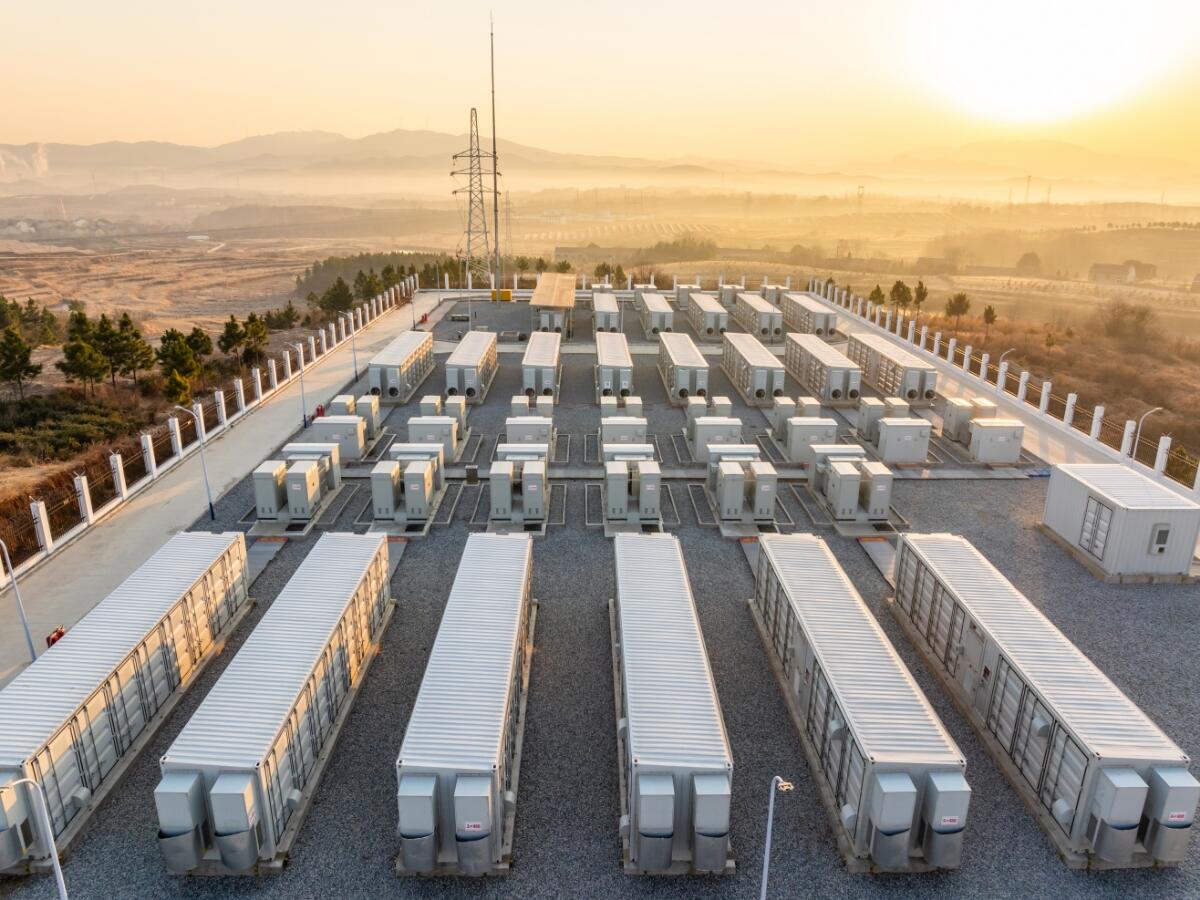
The global shift toward renewable energy signifies a fundamental transformation of today’s power infrastructure. Battery energy storage system (BESS) technology, primarily powered by lithium-ion batteries (LIBs), is at the heart of this transition. Although this technology offers significant benefits for balancing energy supply and demand, it also introduces a safety challenge: thermal runaway.
When a battery cell enters thermal runaway, the cell temperatures spike uncontrollably, and a combination of flammable and toxic gases known as thermal runaway effluent gases (TREG) is released. These gases can accumulate in space, mix with air and ignite.
The result of ignition is a rapid combustion reaction, or deflagration, that spreads through the flammable mixture of air and TREG at less than the speed of sound. The deflagration causes a rise in pressure that can damage the surrounding structure. In the case of a BESS enclosure, pressure may be relieved through a purpose-built pressure relief panel or the failure of a door or wall panel. This is known as a vented deflagration, and it can generate hazards in the area surrounding the BESS, including flaming, pressure waves and projectiles.
"Methods and recommendations for large-scale deflagration testing of battery energy storage enclosures," a technical report from UL Solutions, provides a road map for measuring and assessing these hazards. Based on large-scale experimental data, this report helps define the next generation of safety methodologies for the energy storage system industry.
Addressing explosion hazards in BESS
Explosion hazards are relevant across the energy industry, but there is heightened focus on BESS, where advancement in energy storage technologies come with explosion risks.
Current safety standards, such as UL 9540A, the Standard for Test Method for Evaluating Thermal Runaway Fire Propagation in Battery Energy Storage Systems, have historically been the benchmark for quantifying thermal runaway propagation in BESS. However, the industry has recognized that evaluating the specific explosion hazards of accumulated flammable gases in a BESS requires a targeted, comprehensive methodology.
In 2025, significant revisions were proposed to the UL 9540 Technical Committee to address large-scale fire hazards. Part of that revision, denoted Annex C, was also drafted as a framework for large scale explosion testing. "Methods and recommendations for large-scale deflagration testing of battery energy storage enclosures" serves as a parallel effort to define the measurement methods for explosion hazards in support of BESS explosion safety evaluations.
Testing at Sandia National Laboratories
To determine correct measurement techniques, our researchers conducted a series of large-scale experiments at the Sandia National Laboratories (SNL) site in Albuquerque, New Mexico. The intent was to create severe-case deflagrations to evaluate the instrumentation and analysis methods used by safety engineers today and to study the relevant explosion dynamics at play.
The test environment
The test article was a 20-foot intermodal container modified with a single side-mounted 16-foot-by-7-foot vent opening. In a subset of tests, steel rack obstructions were also installed inside the container. This setup allowed our researchers to generate a range of vented deflagration effects that could be measured and evaluated with different instruments.
Access the full report
Download the full technical report today to learn more about deflagration explosion hazards in BESS and the methodologies used to assess them.

Deflagration testing of BESS enclosures



Get connected with our sales team
Thanks for your interest in our products and services. Let's collect some information so we can connect you with the right person.