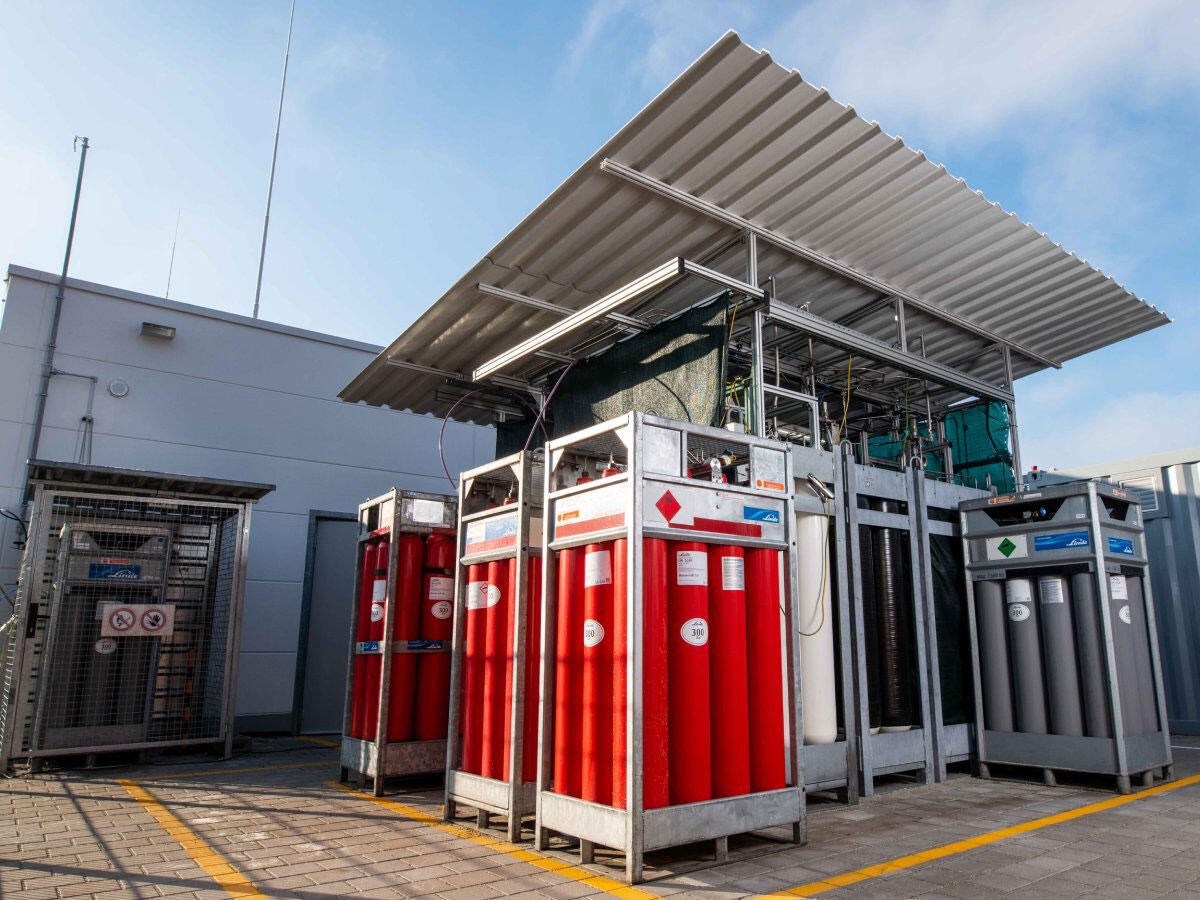
Hydrogen storage systems must withstand extreme operating conditions, including high internal pressures, rapid pressure cycling, and cryogenic temperatures. This creates unique challenges during design validation and compliance testing.
UL Solutions provides advanced laboratory capabilities to evaluate the safety compliance of hydrogen gas cylinders and related components under realistic, controlled conditions.
Real-world cylinder testing conditions
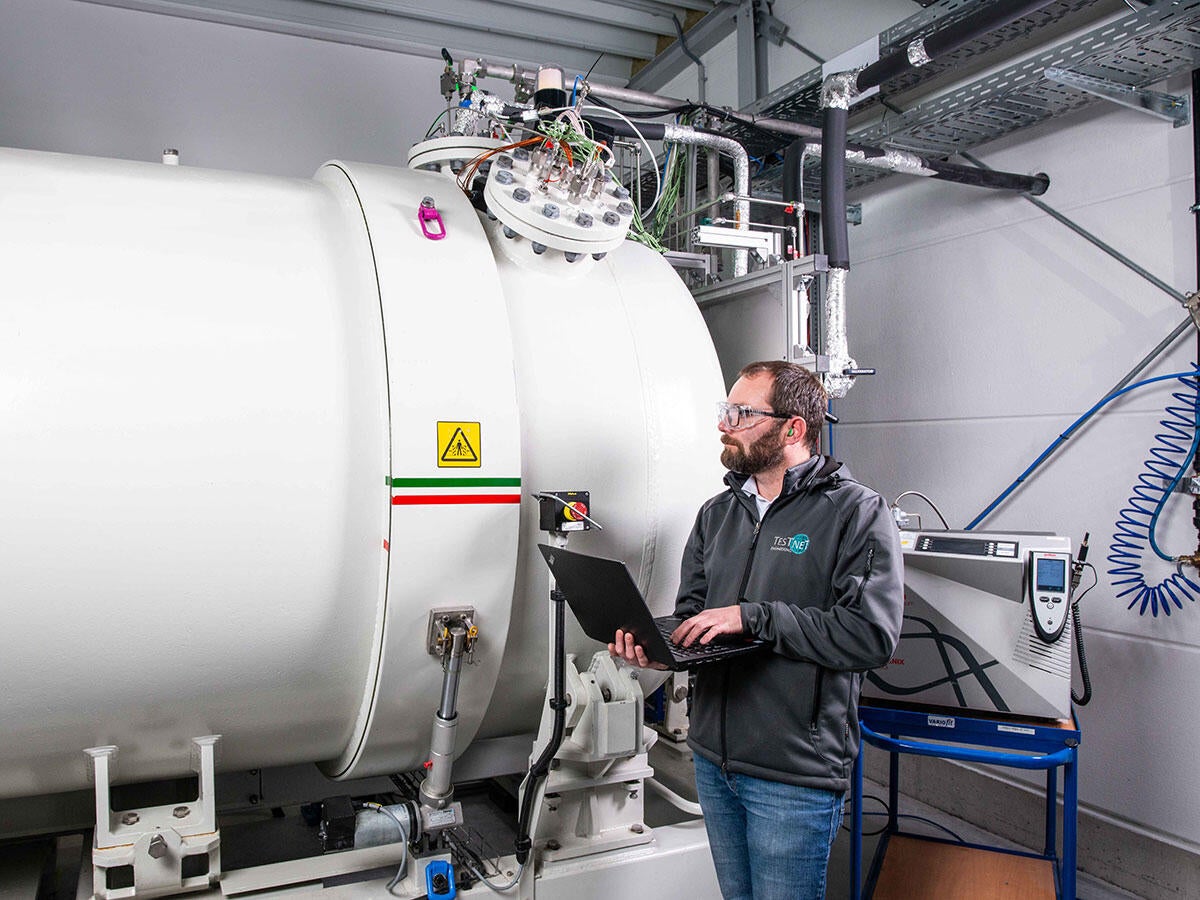
Assess cylinder integrity, material behavior and sealing performance under the most demanding conditions. Our wide range of evaluations replicates real-world operating conditions and failure scenarios:
- Tank fueling and defueling cycles – Pneumatic and hydraulic cycling to simulate service conditions
- Safety chamber – For controlled evaluation under high-risk conditions (including rupture) for prototypes, out-of-spec testing or pre-damaged samples
- Permeation testing – Hydrogen permeation rates through vessel walls and interfaces
- Leakage measurement – Including high-sensitivity detection in vacuum environments
- Environmental testing – Inside temperature and humidity-controlled chambers for durability and performance testing
High-risk hydrogen storage testing methods
Testing safety-critical specifications during development can be complex, costly and time-consuming. UL Solutions has the expertise to conduct high-risk evaluations safely and efficiently, including:
- Hydraulic and pneumatic burst testing – Determining ultimate strength and failure modes.
- Bonfire testing – Assessing thermal resistance and pressure relief device performance.
- Gunfire testing – Evaluating impact resistance under extreme abuse conditions.
- Cryogenic burst testing – Evaluating vessel performance at cryogenic temperatures.
These tests provide essential data to demonstrate compliance and evaluate safety margins before launching.
Hydrogen testing standards and regulations
Our hydrogen cylinder testing services cover international and regional standards, including:
- R134 – Global technical regulation for hydrogen and fuel cell vehicles
- HGV2 – Compressed hydrogen vehicle fuel containers
- PED – Pressure Equipment Directive (EN 12245 and EN 11427)
- GTR 13 – Global technical regulation for hydrogen-powered vehicles
- SAE J2579 – Technical information report for hydrogen vehicle fuel systems
- EC79 – European regulation for hydrogen-powered vehicles
We can tailor our testing programs to meet national or customer-specific requirements as needed.
Why test with UL Solutions?
Hydrogen storage system failures can have severe consequences, making rigorous testing essential. By leveraging UL Solutions’ advanced capabilities, you can:
- Evaluate compliance with applicable regulations and standards
- Identify design weaknesses early in the development cycle
- Reduce the risk of costly redesigns and delays
- Build confidence in product safety and performance

Get connected with our sales team
Thanks for your interest in our products and services. Let's collect some information so we can connect you with the right person.