By: Michael Nicasio, Principal Engineering Manager, UL Solutions Fire Containment and Fenestration, Built Environment, Distinguished Member of Technical Staff – William Henry Merrill Society
Fire protection in buildings is not defined by a single feature; it is the result of many systems working together, including education and prevention, interior finishes, fire detection, automatic suppression, passive fire-resistance and the role of the fire service. Effective fire safety requires balancing all these elements.
At UL Solutions, we are often asked how openings such as doors and windows fit into fire resistance rated construction and whether these openings can themselves be considered fire resistance-rated.
Understanding how codes and test standards treat walls and opening protectives helps clarify this important topic.
Why openings in fire rated walls matter
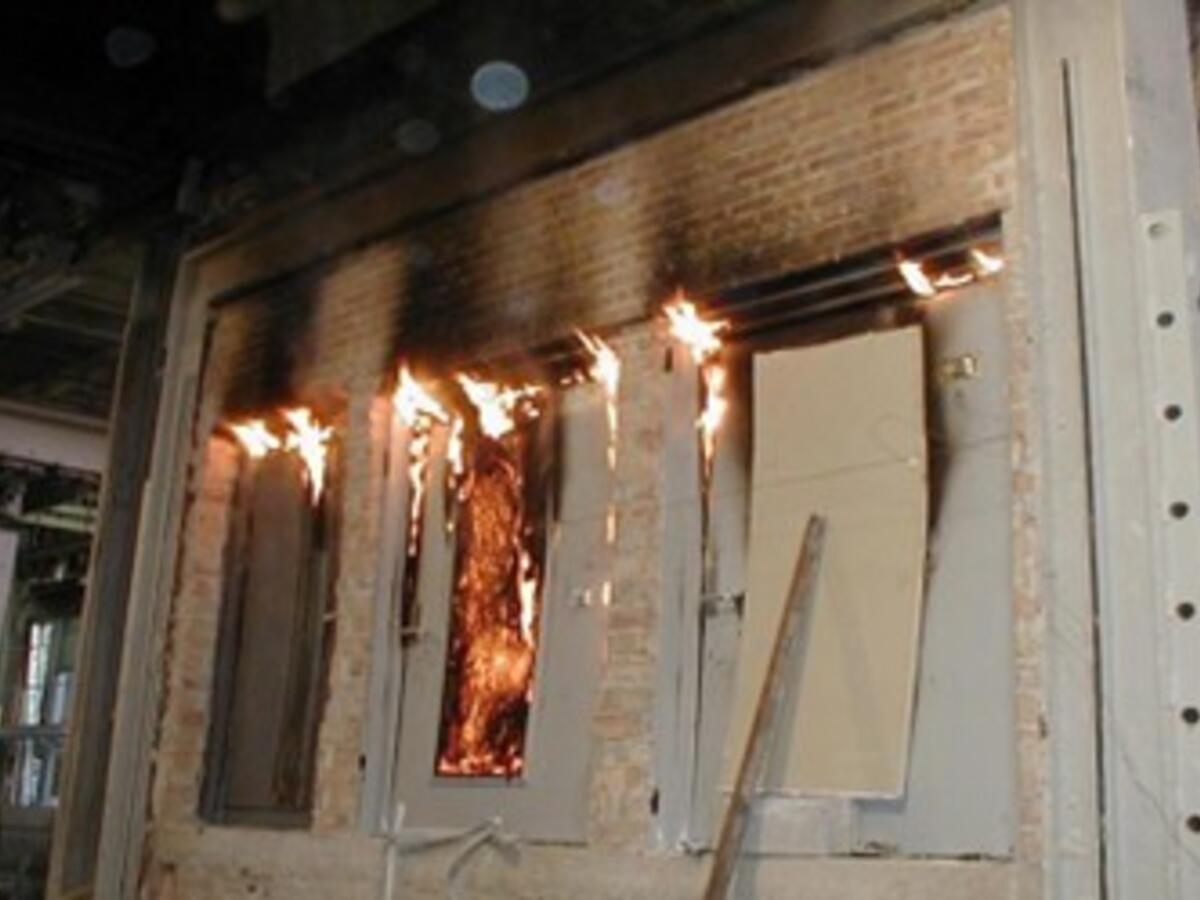
Fire resistance rated walls are designed to limit the spread of fire and heat for a specified period, often one to four hours. However, buildings also need openings in those walls, such as doors, to allow people and materials to move through the building, while windows and glass block assemblies can provide natural light or serve as daylighting.
Because openings can represent a weakness in a fire resistance-rated wall, building codes regulate the sizes of openings. Requirements for openings vary by wall type, including fire walls, fire barriers, exterior walls and more. Generally, the International Building Code (IBC) limits openings in a fire resistance rated wall to:
- No more than 156 square feet of openings
- No more than 25% of the total wall length, when combining all openings
Fire barriers include multiple exceptions to these limits, including factors such as buildings equipped with an automatic sprinkler system throughout. Another exception allows for larger openings when the opening protective has been tested to UL 263, the Standard for Fire Tests of Building Construction and Materials, or ASTM E119, along with a fire resistance rating equal to or greater than that of the wall.
However, this exception raises questions as to whether an opening protective can be fire-resistant-rated. An exploration of fire-resistance tests may clear up confusion.
How fire resistance rated walls are tested
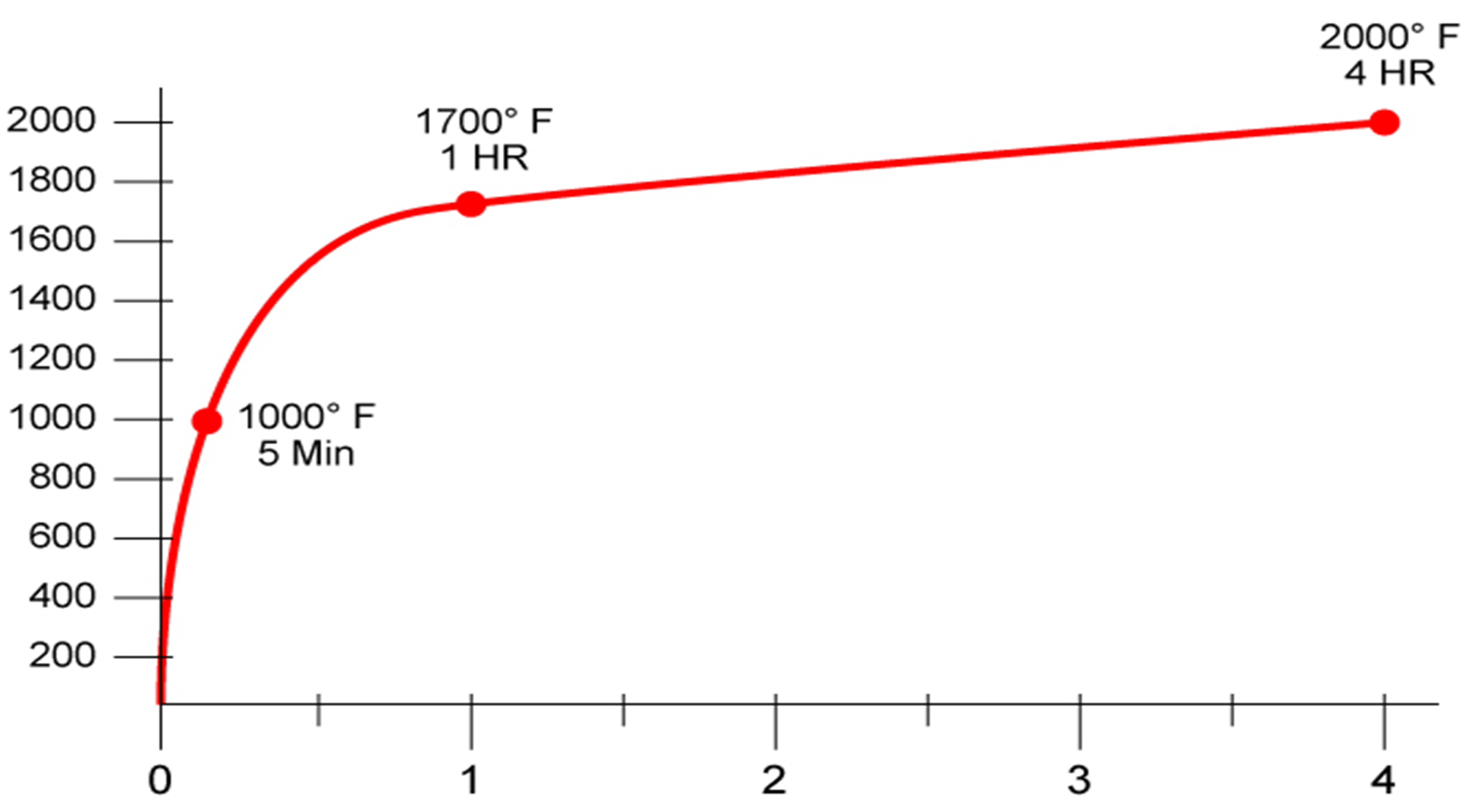
Fire resistance rated building elements, such as walls, are tested according to UL 263 or ASTM E119. These standards evaluate how an assembly performs during a standardized fire exposure, monitoring heat transmission, barrier integrity and structural stability. The fire exposure follows a standard time-temperature curve, where the temperature increases from ambient conditions to 1000 degrees Fahrenheit (538 degrees Celsius) within five minutes and then increases more slowly for the remainder of the fire test. At one hour, the temperature is 1700 degrees Fahrenheit (927 degrees Celsius), and at four hours, the temperature is 2000 degrees Fahrenheit (1093 degrees Celsius).
Standard time-temperature curve
Immediately following the fire endurance test, the hose stream test is conducted, in which a water stream is intended to impose a perpendicular load on the assembly. The hose stream provides impact, erosion and cooling effects on the assembly, probing the entire assembly for potential creation of openings and structural noncompliances.
UL 263 and ASTM E119 allow for a duplicate test specimen that includes subjecting an additional, identical test specimen to a fire exposure test for a period equal to one-half of that indicated as the resistance period in the fire endurance test, but not for more than one hour. For example, this allows for a three-hour fire-resistance-rated wall to include one test specimen subjected to the fire endurance test for three hours with no hose stream application, and a second, identical test specimen subjected to a one-hour fire endurance test, followed by a hose stream application based on the resistance period of one hour.
This is notable because the allowance of a duplicate test assembly with a reduced hose stream application is not permitted by opening protective standards referenced within this article.
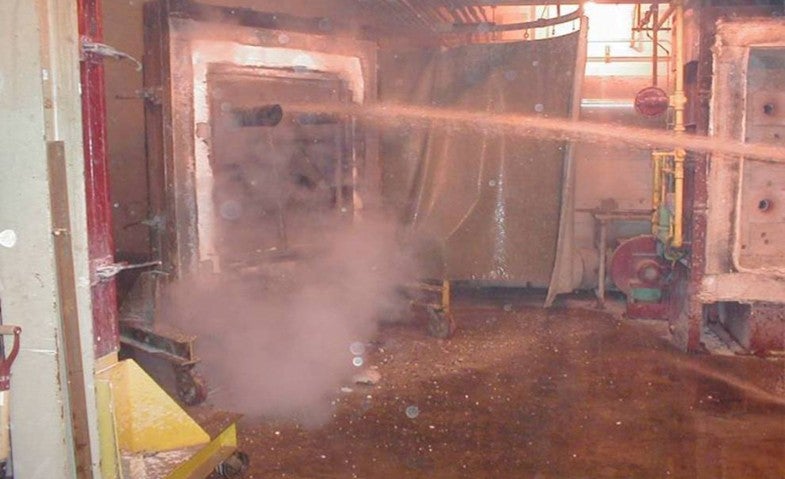
Hose stream test
During and after completion of the fire endurance and hose stream tests, the fire-resistance-rated test specimen is evaluated against various compliance criteria, including:
- No passage of flame or hot gases capable of igniting cotton waste
- No openings that allow water from the hose stream to pass beyond the unexposed surface
- Limited heat transfer so the unexposed surface does not rise more than 250 degrees Fahrenheit (139 degrees Celsius) above the initial temperature at the start of the fire test
How opening protectives are tested
The IBC defines opening protective products as fire doors, fire shutters, fire windows or glass-block assemblies where these products are provided with a fire protective rating indicating the period of time a fire can be confined by preventing or slowing of the passage of flames.
Depending on the product type, different test standards apply:
- Fire doors and shutters
- UL 10B, the Standard for Fire Tests of Door Assemblies
- UL 10C, the Standard for Positive Pressure Fire Tests of Door Assemblies
- NFPA 252, Standard Methods of Fire Tests of Door Assemblies
- Fire windows and glass block assemblies
- UL 9, the Standard for Fire Tests of Window Assemblies
- NFPA 257, Standard on Fire Test for Window and Glass Block Assemblies
While these standards use the same fire temperature curve and a similar hose stream application as defined by UL 263 and ASTM E119, these additional opening protective standards do not allow duplicate test specimens or reduced duration hose stream testing.
Unlike fire-resistance-rated walls, opening protectives are allowed to have limited openings, such as clearances between the operable element and frame and gaps at the bottom of a door. These allowances reflect the operational needs of doors to properly function and comply with various accessibility requirements, especially at the threshold or sill location. Additionally, opening protectives are evaluated using criteria tailored to their function and design. Some examples include:
Doors and shutters (UL 10B, UL 10C, NFPA 252)
- No passage of flame
- Door must remain in the opening
- Hardware must keep the door closed
- Deflection limits based on door type and thickness
Windows and glass block assemblies (UL 9, NFPA 257)
- No passage of flame
- Assembly must remain in place
- Limits on glass breakage and edge separation
From a testing and standards perspective, opening protectives and fire resistance rated walls are evaluated under different criteria.Fire resistance rated walls are tested in accordance with UL 263 or ASTM E119 and are required to resist fire spread, limit heat transmission and maintain structural integrity for the duration of the test. In contrast, opening protectives are evaluated using product specific standards that account for operational clearances and permissible openings and product deflection. While unexposed surface temperatures may be measured on opening protective assemblies, the requirement for the number and placement of thermocouples is less rigorous than what is required by UL 263 and ASTM E119, and therefore does not provide an equivalent assessment of heat transfer performance.
How fire-resistance standards apply to opening protective products
Opening protective standards are comprehensive and establish important performance criteria that support a building’s overall fire safety strategy. However, the IBC also includes specific provisions requiring certain opening protective assemblies or portions of those assemblies to comply with the fire-resistance test standards, UL 263 or ASTM E119.
These requirements apply to certain hourly rated window assemblies and glazing installed in doors, sidelights and transoms, where compliance with fire-resistance standards is necessary to meet code-mandated fire separation performance.
Applicability of test standards for opening protectives
While it may be technically possible for an opening protective to satisfy both fire resistance and opening protective test standards, there is typically no practical code need for such a product, especially in the case of a door assembly.
Each test standard exists to address a specific application and to support consistent, appropriate evaluation of products used in code-mandated conditions. When the allowable area or number of openings in a fire resistance rated wall is exceeded, the appropriate solution is not to require opening protectives, particularly doors, to be tested to UL 263 or ASTM E119. Instead, designers should look at the allowances, alternatives or exceptions already provided within the model codes to address those conditions.
Support from experts at UL Solutions
UL Solutions plays a critical role in helping manufacturers, designers and authorities having jurisdiction (AHJs) understand how products are tested and certified. Clear distinctions between fire resistance ratings and opening protective ratings support safer designs and proper code application.
Understanding how these systems are tested and why they differ helps ensure that openings in fire rated walls continue to balance life safety, functionality and code compliance.
For additional technical information and links to UL Certified open protectives, please review our informative guide, Fire Doors, Windows and Related Hardware Application Guide.
Contact Us