By: Travis F. Hardin, Director, Principal Engineering, Appliances, HVAC and Lighting, UL Solutions
ASHRAE 127, formally ANSI/ASHRAE Standard 127-2020, is a globally recognized standard for laboratory test methodology and performance evaluation of data center cooling equipment. The standard plays a critical supporting role by defining how data center cooling equipment performance is measured enabling more informed review of efficiency, capacity and system claims.
With the recent publication of Addendum b to ASHRAE 127 on Feb. 27, 2026, the standard now expands coverage by including liquid cooling equipment to the existing air cooling requirements.
Gross sensible and net sensible distinctions
While the standard does not prescribe minimum efficiency requirements, it defines performance metrics that are commonly referenced in specifications and energy analyses. One of the foundational concepts in ASHRAE 127 is the distinction between gross sensible and net sensible cooling capacity.
Net sensible capacity reflects the amount of heat removed from the conditioned information technology equipment (ITE) environment after accounting for internal heat gains introduced by the equipment itself, such as fan power. This distinction is intended to maintain that published ratings represent usable sensible cooling delivered to the data center, rather than theoretical heat exchanger performance.
Performance and net sensible cooling capacity
Performance (efficiency) in data center cooling frameworks aligned with ASHRAE 127 is often expressed using the Net Sensible Coefficient of Performance (NSenCOP). NSenCOP is a ratio of the net sensible cooling capacity (W) to the total electrical input power (W), determined in accordance with defined test procedures and at specified rating conditions; as such, it represents efficiency at a specific set of rating conditions.
ASHRAE 127 also permits the publication of application ratings, which represent performance at conditions other than standard rating points. These ratings may be useful for project‑specific evaluations but are not a substitute for standard ratings. When application ratings are provided, they are typically identified alongside standard rating data to support transparent comparison of performance across operating conditions.
New definitions and metrics specific to liquid cooling equipment
Addendum b to ASHRAE 127 reflects the continued evolution of data center cooling technologies, such as the increased adoption of liquid cooling to support high-density IT equipment. While the original 2020 edition of ASHRAE 127 focuses on air-conditioning equipment, Addendum b introduces test methods and reporting requirements for liquid-to-liquid coolant distribution units (CDUs), which are used to transfer heat from IT equipment cooling loops to facility heat rejection systems.
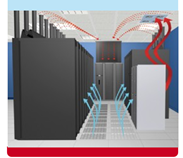

The Addendum expands ASHRAE 127 by introducing new definitions, performance metrics and calculation procedures specific to liquid cooling equipment. These include definitions for the technology cooling system (TCS) and facility water system (FWS), as well as metrics such as CDU net capacity, critical input power, thermal efficiency and thermal losses. Together, these additions establish a standardized approach for quantifying how effectively a CDU transfers heat while consuming electrical power, enabling consistent comparison between products tested under controlled laboratory conditions.
Revised requirements to support test results
Addendum b also provides detailed requirements for instrumentation accuracy, data collection, energy balance validation and reporting. These provisions are intended to ensure repeatability and transparency in test results, given the relatively small temperature differences and high flow stability associated with liquid-cooling systems. Addendum b explicitly states that testing conducted under ASHRAE 127, including liquid cooling equipment, is limited to laboratory facilities designed to maintain steady-state conditions and does not apply to field installations.
Expands equipment addressed to evolve with technology
Although ASHRAE 127 was originally scoped around air-conditioning units serving data centers and ITE spaces, Addendum b reflects the standard’s evolution as liquid cooling technologies have matured.
The Addendum does not alter the formal scope language of the 2020 edition but expands the types of equipment addressed by the standard by introducing test methodologies for liquid-to-liquid coolant distribution units (CDUs). This update allows ASHRAE 127 to continue to serve its original purpose — providing a uniform method of testing and rating data center cooling equipment — without extending into system design, installation or field performance evaluation.
Contact Us
Email: ULRegulatoryServices@ul.com