

October 7, 2026
Welcome to the Q3 2026 Global Market Access Regulatory Newsletter from UL Solutions. You’ll find timely content on new and updated regulations in markets around the world — including Asia Pacific, Africa, Europe, the Middle East and Latin America.
Q3 2026 Global Market Access regulatory updates
Bangladesh MOI Adds New BSTI Mandatory Products
On June 23, 2026, the Ministry of Industries (MOI) published S.R.O. No. 232-Act/2026 and S.R.O. No. 233-Act/2026 adding seven new products in the list of mandatory products of Bangladesh Standards and Testing Institution (BSTI) wherein LED luminaires are included.

China NDRC and SAMR Issued 2026 Catalogue of Products Subject to China Energy Label
On April 30, 2025, the National Development and Reform Commission (NDRC) and the State Administration for Market Regulation (SAMR) released Regulation No. 550 of 2026, introducing the Catalogue of Products Subject to Energy Efficiency Labelling in the People’s Republic of China (2026 Edition) and related implementation rules, which set mandatory China Energy Label (CEL) requirements for 37 categories of energy-using products.

China MIIT Published RoHS Mandatory Compliance Management Catalog and Exemption List (2026)
On May 28, 2026, the Ministry of Industry and Information Technology (MIIT) of the People’s Republic of China published the 2026 Edition of Mandatory Compliance Management Catalog for Restriction of Hazardous Substances in Electrical and Electronic Products and Exemption List.

Ghana EPA Announces Ban on Polystyrene Foam Products
On May 25, 2026, the Environmental Protection Authority (EPA) of Ghana announced a new policy on the prohibition of importation, production and use of polystyrene (Styrofoam) products.
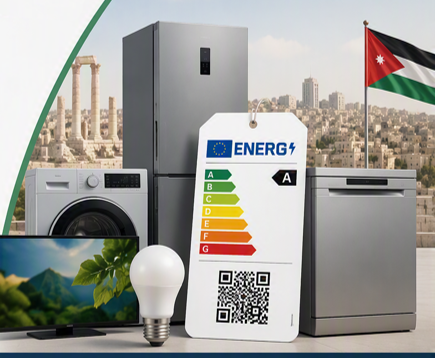
Jordan Accepts New EU Energy Efficiency Labels for Electrical Products
The Jordan Standards and Metrology Organization (JSMO) has announced the acceptance of the new European Union (EU) energy efficiency labels for covered appliances while updated Jordanian technical regulations are being finalized.
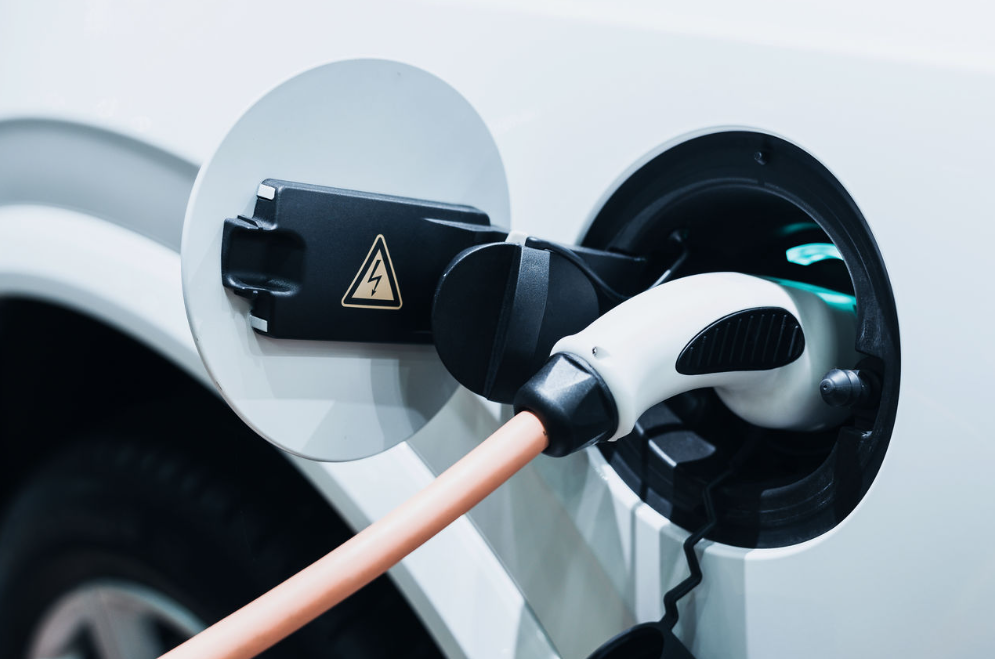
Taiwan BSMI Announces Mandatory Certification Requirements for Nine Product Categories
On June 23, 2026, the Bureau of Standards, Metrology and Inspection (BSMI) announced new and revised mandatory certification requirements for nine product categories, including EV charging equipment, energy storage products, rechargeable household appliances, etc., to enhance product safety and consumer protection.

Vietnam Prime Minister Promulgated the List of High-Risk Artificial Intelligence Systems
On June 30, 2026, the Prime Minister of Vietnam promulgated the official list of high-risk artificial intelligence (AI) systems pursuant to the Artificial Intelligence Law No. 134/2025/QH15 and Decree No. 142/2026/ND-CP.

Mozambique AR Approved Cybersecurity Law
On July 1, 2026, the Assembly of the Republic (AR) of Mozambique published Law No. 13/2026 approving the Cybersecurity Law.

South Korea MCEE 2026-137: Efficiency Rules Revision
On May 27, 2026, The Ministry of Climate, Energy and Environment (MCEE) of South Korea issued Notice No. 2026-137, amending the Efficiency Management Equipment Operation Regulations.
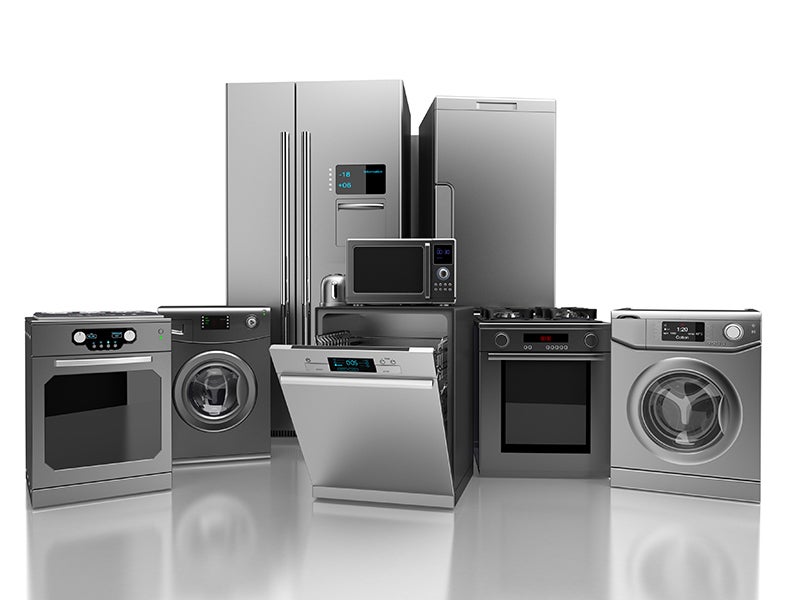
Colombia Published Amendments to the Technical Labeling Regulation (RETIQ)
On June 23, 2026, Colombia’s Ministry of Mines and Energy published Resolution No. 40284, amending the Technical Labeling Regulation (RETIQ) for the energy efficiency of household appliances.

European Council Gave Final Confirmation to Simplify Rules for AI
On June 29, 2026, the European Council gave the final confirmation on a new regulation aiming to streamline and simplify certain rules regarding artificial intelligence (AI).

Gibraltar Government Published Data Protection Regulations
On May 14, 2026, the Government of Gibraltar published the Data Protection Regulations 2026 (Legal Notice No. 96 of 2026).
Bangladesh MOI Adds New BSTI Mandatory Products
On June 23, 2026, the Ministry of Industries (MOI) published S.R.O. No. 232-Act/2026 and S.R.O. No. 233-Act/2026 adding seven new products in the list of mandatory products of Bangladesh Standards and Testing Institution (BSTI) wherein LED luminaires are included.
S.R.O. No. 232-Act/2026 prohibits the sale, distribution and advertisement of the products listed in column (2) of the schedule unless they comply with the corresponding Bangladesh Standards.
S.R.O. No. 233-Act/2026 mandates that the products listed in column (2) of the schedule must bear the Bangladesh Standards mark if they conform to the Bangladesh Standard specified in column (3). The standard mark must be affixed either to the goods themselves or to their packaging/label.
These orders aim to strengthen product quality and consumer safety by enforcing compliance with national standards.
This notification will come into effect from the day following the expiry of a period of two months from the date of its publication in the Official Gazette.
| Serial number | Product name | Bangladesh Standard |
|---|---|---|
| (1) | (2) | (3) |
| 1 | Fortified maize (corn) oil | BDS 2055: 2025 |
| 2 | Saris made of man-made fiber and their blends (first revision) | BDS 1490: 2007 |
| 3 | Women’s and girls’ woven dress fabrics made of man-made fibers and their blends | BDS 1940: 2018 |
| 4 | LED luminaires | BDS IEC 62722-2-1: 2025 BDS 2053: 2025 |
| 5 | Plastic feeding bottles | BDS 2045: 2025 |
| 6 | Toys | BDS ISO 8124-2: 2025 BDS ISO 8124-3: 2025 BDS ISO 8124-6: 2025 |
| 7 | Autoclaved aerated concrete (AAC) blocks | BDS EN 771-4: 2025 |
Source:
https://www.dpp.gov.bd/upload_file/gazettes/62107_63792.pdf
https://www.dpp.gov.bd/upload_file/gazettes/62108_13527.pdf
China NDRC and SAMR Issued 2026 Catalogue of Products Subject to China Energy Label
On April 30, 2025, the National Development and Reform Commission (NDRC) and the State Administration for Market Regulation (SAMR) released Regulation No. 550 of 2026, introducing the Catalogue of Products Subject to Energy Efficiency Labelling in the People’s Republic of China (2026 Edition) and related implementation rules, which set mandatory China Energy Label (CEL) requirements for 37 categories of energy-using products:
- Household refrigerators
- Electric washing machines and dryers
- Unitary air conditioners
- Self-ballasted fluorescent lamps for general lighting
- High-pressure sodium lamps
- Small and medium three-phase asynchronous motors
- Heat pumps and chillers
- Household instantaneous gas water and gas heating water boiler
- Room air conditioners
- Multi-connected A/C (heat pump) units
- Storage-type electric water heaters
- Household kitchen appliances (induction cookers, electric rice cookers and microwave ovens)
- Displays
- Printers, copiers and fax machines
- Electric fans
- Alternating current contactors/AC contactors
- Positive displacement air compressors
- Power transformers
- Air ventilators
- Flat televisions and digital television receivers (set-top boxes (STBs))
- Household solar water heaters
- Microcomputers
- Range hood and household and similar purpose AC electric ventilating fans
- Heat pump water heaters (heaters)
- Gas cookers
- LED products for indoor lighting
- Projectors
- Permanent magnet synchronous motors
- Air cleaners/air purifiers
- LED luminaires for road and tunnel lighting purposes
- Ducted air conditioners
- Welding machines
- LED flat panel lamps for general lighting
- Commercial induction cookers
- Tower and rack servers
- High-voltage three-phase squirrel-cage asynchronous motors
- Commercial refrigeration equipment (refrigeration vending machines, remote commercial freezers, self-propelled commercial freezers)
The authorities will implement the updated rules in phases starting from June 1, 2026, with each remaining valid for five years. They will allow a grace period of up to two years for products manufactured or imported before the effective dates to enable a smooth transition.
The updated framework gave the different transitional period for the new implementation rules and also repealed the old implementation rules in announcement No. 14 of 2016.
- The Implementation Rules for Energy Efficiency Labeling of LED Luminaires for Road and Tunnel Lighting and Household Refrigerators
- Effective on June 1, 2026, and remain valid for five years.
- The transition period (manufactured or imported from the implementation date) is until June 1, 2028.
- The Implementation Rules for Energy Efficiency Labeling of Projectors
- Effective on July 1, 2026, and remain valid for five years.
- The transition period (manufactured or imported from the implementation date) is until July 1, 2028.
- The Implementation Rules for Energy Efficiency Labeling of Household Solar Water Heating Systems
- Effective on Aug. 1, 2026, and remain valid for five years.
- The transition period (manufactured or imported from the implementation date) is until Aug.1, 2028.
- The Implementation Rules for Energy Efficiency Labeling of Household and Similar Range Hoods and Exhaust Fans
- Effective on Nov. 1, 2026, and remain valid for five years.
- The transition period (manufactured or imported from the implementation date) is until Nov. 1, 2028.
- The Implementation Rules for Energy Efficiency Labeling of Electric Washing Machines and Wash-Dryer Integrated Machines
- Effective on April 1, 2027, and remain valid for five years.
- The transition period (manufactured or imported from the implementation date) is until April 1, 2029.
- The Implementation Rules for Energy Efficiency Labeling of LED Products for Indoor Lighting
- Effective on Sept. 1, 2027, and remain valid for five years.
- The transition period (manufactured or imported from the implementation date) is until Sept.1, 2029.
Meanwhile, for the following regulated categories, since the new implementation rules have come into effect, the manufacturer shall pay attention to the deadline for affixing the label to the product based on the new implementation rules.
- Self-ballasted fluorescent lamps
- Effective Feb. 1, 2025.
- The transition period (manufactured or imported from the implementation date) is until Feb. 1, 2027.
- Heat pumps and chillers
- Effective Feb. 1, 2025.
- The transition period (manufactured or imported from the implementation date) is until Feb. 1, 2027.
- Household kitchen appliances (induction cookers, rice cookers and microwave ovens)
- Effective Nov. 1, 2025.
- The transition period (manufactured or imported from the implementation date) is until Nov. 1, 2027.
- Display
- Effective June 1, 2024.
- The transition period (manufactured or imported from the implementation date) is until June 1, 2026.
- Power transformers
- Effective Feb. 1, 2025.
- The transition period (manufactured or imported from the implementation date) is until Feb. 1, 2027.
- Microcomputers
- Effective Feb. 1, 2026.
- The transition period (manufactured or imported from the implementation date) is until Feb. 1, 2028.
- Gas cooking appliances (household gas cooking appliances and commercial gas cooking appliances)
- Effective March 1, 2026.
- The transition period (manufactured or imported from the implementation date) is until March 1, 2028.
- Permanent magnet synchronous motors
- Effective Jan. 1, 2026.
- The transition period (manufactured or imported from the implementation date) is until Jan. 1, 2028.
- Air cleaners
- Effective Jan.1, 2026.
- The transition period (manufactured or imported from the implementation date) is until January 1, 2028.
- Tower and rack servers
- Effective Dec. 1, 2025.
- The transition period (manufactured or imported from the implementation date) is until Dec. 1, 2027.
- High-voltage three-phase squirrel-cage asynchronous motor (induction motors)
- Effective April 1, 2026.
- The transition period (manufactured or imported from the implementation date) is until April 1, 2028.
- Commercial refrigerating appliances (refrigerated vending machines, refrigerated display cabinets with remote condensing unit, commercial refrigerated cabinets with self-contained condensing unit, refrigerated display cabinet with remote condensing unit and self-contained condensing units for commercial freezers)
- Effective April 1, 2026.
- The transition period (manufactured or imported from the implementation date) is until April 1, 2028.
There is no change for the other 19 regulated products categories. The application shall comply with the current implementation rules and applicable standards.
Source: https://www.ndrc.gov.cn/xxgk/zcfb/ghxwj/202604/t20260430_1404998.html
China MIIT Published RoHS Mandatory Compliance Management Catalog and Exemption List (2026)
On May 28, 2026, the Ministry of Industry and Information Technology (MIIT) of the People’s Republic of China published the 2026 Edition of Mandatory Compliance Management Catalog for Restriction of Hazardous Substances in Electrical and Electronic Products and Exemption List. This has expanded the product categories under mandatory restriction of hazardous substances from 12 to 33 products.
Effective from May 28, 2026 (existing products in the catalog)
- Air conditioners
- Refrigerator
- Washing machines
- Electric water heaters
- Television set (Aug. 1, 2027, for laser TVs)
- Monitoring equipment (Aug. 1, 2027, for cameras that collect image or video information)
- Multifunction printers with copying, scanning or fax functions (Aug. 1, 2027, for single scanners)
- Microcomputers
- Mobile phones (Aug. 1, 2027, for mobile phone accessories)
- Telephones
Effective from Aug. 1, 2027 (newly added products)
- Industrial washing machinery
- Air purifiers
- Water dispensers
- Dishwashers
- Electric ovens
- Microwave ovens
- Rice cookers
- Vacuum cleaners
- Robotic vacuum cleaners
- Gas water heaters
- Projectors
- Smart speakers
- Electronic smart locks
- Servers
- Network switching and routing equipment
- Smartwatches and smart bands
- Headphones
- Portable power banks
- Reading and writing desk lamps
- Electric toys
- Electronic blood pressure monitors
- Blood glucose meters
- Hearing aids
The electrical and electronic products listed in the mandatory catalog shall meet requirements of the standard Restriction of Hazardous Substances in Electrical and Electronic Products (GB 26572-2025). The compliance shall be proved through self-declaration or third-party voluntary certification in alignment with Implementation Measures on Conformity Assessment System for Restricted Use of Hazardous Substances in Electrical and Electronic Equipment. The relevant information shall be demonstrated via an online public service platform.
Other electrical and electronic products not listed shall still follow the relevant marking and labeling requirements for hazardous substances according to GB 26572-2025, although they don’t need to comply with the concentration limit of restricted substances.
This update shall take effect on the date of publication, with a certain transition period granted for newly added products, which will be effective from Aug. 1, 2027.
Source: https://www.miit.gov.cn/jgsj/jns/gzdt/art/2026/art_cdaaacfc30024387b7d292a9822adc82.html
Ghana EPA Announces Ban on Polystyrene Foam Products
On May 25, 2026, the Environmental Protection Authority (EPA) of Ghana announced a new policy on the prohibition of importation, production and use of polystyrene (Styrofoam) products.
The ban shall apply to all forms of expanded polystyrene (EPS) foam products used for human activities and commercial purposes, including but not limited to:
- Food packaging containers and takeaway packs
- Disposable cups and plates
- Foam packs used by restaurants, chop bars and food vendors
- Ceiling and insulation materials made from polystyrene foam
- Foam mattresses and bedding materials
- Packaging and cushioning materials
- Any other form of polystyrene foam product intended for human use or consumption-related activities
The ban does not apply to EPS products specifically intended for medical, scientific, laboratory and diagnostic purposes, subject to the applicable regulator.
As a preparative measure, the Authority requires economic operators and stakeholders to transition to safer, reusable, recyclable and environmentally sustainable alternatives.
During the transition period, the Authority will engage stakeholders across the country, promote public awareness and carry out technical consultations, alongside strengthening monitoring, inspections and enforcement readiness.
The ban becomes effective on Jan.1, 2027.
Jordan Accepts New EU Energy Efficiency Labels for Electrical Products
The Jordan Standards and Metrology Organization (JSMO) has announced the acceptance of the new European Union (EU) energy efficiency labels for covered appliances while updated Jordanian technical regulations are being finalized. This measure is not limited to specific product categories and applies to all covered products under the energy efficiency requirements, such as air conditioners, refrigerators, freezers, washing machines, washer-dryers, dryers, dishwashers, lighting products, electronic displays and televisions.
Manufacturers and importers can demonstrate compliance through either registration in the European Product Registry for Energy Labelling (EPREL), allowing the use of the same EU energy label and QR code in Jordan, or by providing valid third-party test reports for products not registered in EPREL.
The announcement streamlines market access by aligning Jordan’s acceptance criteria with the latest EU energy efficiency labeling framework, reducing administrative burden and enabling continued placement of compliant products on the Jordanian market during the transition period.
Taiwan BSMI Announces Mandatory Certification Requirements for Nine Product Categories
On June 23, 2026, the Bureau of Standards, Metrology and Inspection (BSMI) announced new and revised mandatory certification requirements for nine product categories, including EV charging equipment, energy storage products, rechargeable household appliances, etc., to enhance product safety and consumer protection. The measures will take effect on July 1, 2026.
New products that require BSMI certification:
Electric vehicle (EV) charging equipment (up to 30 kW) Power conversion systems (PCS) (up to 20 kW) Stationary lithium energy storage systems (up to 20 kWh) Lithium battery packs for energy storage (greater than 1 kWh and up to 20 kWh) Seven types of rechargeable household appliances, including electric mosquito swatters Interlocking soft foam floor mats
BSMI also:
- Added energy-efficiency requirements for automotive tires
- Revised inspection requirements for Portland cement
- Revised inspection requirements for wood-based panel products
- Strengthened product safety
BSMI stated that the increasing use of EV charging equipment, power conversion systems, energy storage devices and lithium battery products in homes and other settings requires stronger safety oversight. The bureau will inspect these products against nationally adopted standards aligned with international requirements to improve:
- Electrical insulation performance
- Thermal stability
- Electromagnetic compatibility (EMC)
- Flame-retardant performance
The changes aim to ensure safe electricity use across various consumer applications.
- Protecting children’s health
- To reduce potential exposure to chemical substances such as phthalates and formamide, BSMI will include interlocking soft foam floor mats within the mandatory inspection scope.
- Beginning July 1, 2026, affected products must complete the required inspection procedures and meet applicable requirements before entering the Taiwanese market.
- Supporting energy efficiency and sustainability
- To support global carbon-reduction goals and improve vehicle performance, BSMI will add the following energy-efficiency indicators for automotive tires:
- Rolling resistance
- Wet grip performance
- External rolling noise
- The bureau will also:
- Introduce chloride-ion testing for Portland cement to ensure that the use of alternative and recycled materials does not affect product stability.
- Update inspection standards and procedures for wood-based panel products to improve regulatory efficiency.
- To support global carbon-reduction goals and improve vehicle performance, BSMI will add the following energy-efficiency indicators for automotive tires:
- Consumer guidance
- BSMI stated that it will continue monitoring emerging products and safety risks and will update inspection requirements as needed.
- The bureau encouraged:
- Manufacturers and importers to comply with product safety and labeling requirements.
- Consumers to purchase products bearing the Commodity Inspection Mark.
- Consumers to use qualified installers designated by manufacturers when installing applicable electrical equipment.
Source: https://www.bsmi.gov.tw/wSite/ct?xItem=127889&ctNode=8321&mp=1
https://www.bsmi.gov.tw/wSite/public/Data/f1782459430047.png
Vietnam Prime Minister Promulgated the List of High-Risk Artificial Intelligence Systems
On June 30, 2026, the Prime Minister of Vietnam promulgated the official list of high-risk artificial intelligence (AI) systems pursuant to the Artificial Intelligence Law No. 134/2025/QH15 and Decree No. 142/2026/ND-CP. Alongside its official list, the decision outlines criteria for classifying high-risk AI and the transitional period.
An AI system is considered high risk if it may cause significant harm to human life and health, the rights and legitimate interests of organizations and individuals, public interests, national interests or national security. In addition, the system must not fall within the exclusions specified under Decree No. 142/2026/ND-CP for it to be classified as a high-risk AI system.
Scope and general requirements:
- High-risk AI systems must comply with the principles established under Vietnam’s AI legislation.
- AI systems must not transfer or remove the legal responsibility of competent authorities, organizations or individuals.
- Human oversight, control and intervention capabilities must be maintained throughout the operation of AI systems.
- AI systems must not perform activities prohibited under AI laws.
The annex identifies relevant AI systems as high risk, including:
- Litigation – Widespread biometric recognition AI systems used in resolving public interest civil cases are categorized as high risk.
- Transportation sector – Autonomously control vehicles, manage traffic and dispatch operations, operate or directly intervene in critical transportation infrastructure, assess infrastructure safety and trigger operational restrictions, and perform real-time violation detection or biometric surveillance for enforcement and public security purposes.
- Aviation – Used to support or autonomously perform critical aviation functions that can directly affect flight operations, air traffic management, airport operations, aviation security, passenger safety or the operation of essential airport infrastructure.
The decision took effect on Aug. 15, 2026.
Source: https://vanban.chinhphu.vn/?pageid=27160&docid=218658
Mozambique AR Approved Cybersecurity Law
On July 1, 2026, the Assembly of the Republic (AR) of Mozambique published Law No. 13/2026 approving the Cybersecurity Law.
The law enters into force on Sept. 29, 2026, and mandates further implementing regulations within 180 days.
The Cybersecurity Law establishes a national legal framework to help ensure the security of the State, institutions, citizens and protection of information systems and critical infrastructures in cyberspace. It defines governance structures, obligations for public and private entities, and cybersecurity requirements. This finalizes the draft Cybersecurity Law (GMA News ID: 12963).
- National cybersecurity governance
- Establishes the National Cybersecurity System comprising:
- National Cybersecurity Council
- National Cybersecurity Authority
- National Cybersecurity Incident Response Team (CSIRT)
- Defines the roles, responsibilities and coordination mechanisms of these bodies.
- Establishes the National Cybersecurity System comprising:
- Regulated entities
- Covers:
- National CSIRT network
- Critical infrastructure operators
- Intermediary service providers
- Essential service operators
- Digital service providers
- Digital platform operators
- Data center operators
- Cloud computing platform operators
- Cybersecurity service providers
- Electronic communications operators
- Specialized cyber operations units
- Requires registration with the National Cybersecurity Authority and, for many entities, establishment of institutional CSIRTs.
- Covers:
- Cybersecurity obligations
- Requires implementation of cybersecurity governance, risk management, technical and organizational security measures, business continuity, data protection and incident response capabilities.
- Mandates minimum cybersecurity requirements, including information security policies, cyber risk management, internal audits, security officers, employee awareness, backup systems and CSIRTs.
- Network and information system security
- Establishes requirements for:
- Network security of data communication systems (integrity, confidentiality and privacy)
- Protection of the Domain Name System (DNS)
- Establishment of CSIRTs and coordination for incident response
- Security and confidentiality of traffic data
- Storage and identification of traffic and location data
- Access to information systems and preservation of digital evidence
- Preservation of data for investigation and legal purposes
- Identification and localization of IP addresses
- Data retention obligations for communications
- Security of information systems and devices
- Protection of ICT infrastructure
- Security measures for computer programs
- Protection and secure management of databases
- Establishes requirements for:
- Cybersecurity incident notification
- Defines criteria for significant cybersecurity incidents.
- Requires mandatory incident notification by covered entities to the National CSIRT and relevant sectoral CSIRTs.
- Requires monthly incident response and resolution reports.
- Introduces voluntary incident reporting and responsible vulnerability disclosure.
- Cybersecurity fund
- Creates a cybersecurity fund managed by the National Cybersecurity Authority.
- Finances cybersecurity capacity building, training, CSIRT development and national cybersecurity initiatives through government funding, donations and industry contributions.
- Supervision and enforcement
- Empowers the National Cybersecurity Authority to supervise, inspect and audit compliance.
- Establishes administrative offenses and financial penalties for noncompliance, including failures related to licensing cybersecurity requirements, incident reporting and regulatory directives.
Source: BR Nº 123 de 01.07.26, Boletim da República - I Serie | Imprensa Nacional de Moçambique
https://www.incm.gov.mz/?sdm_process_download=1&download_id=5244
South Korea MCEE 2026-137: Efficiency Rules Revision
On May 27, 2026, the Ministry of Climate, Energy and Environment (MCEE) of South Korea issued Notice No. 2026-137, amending the Efficiency Management Equipment Operation Regulations. The amendment strengthens minimum energy efficiency standards, expands the scope to include newly designated products, and revises measurement, labeling and reporting requirements.
The regulation enters into force on the date of public notice; however, product-specific enforcement dates apply. Amendments for household gas boilers and clothes dryers apply from Oct. 1, 2026, while amendments for electric fans, air fryers and printers apply from Jan. 1, 2027, based on the manufacturing date, including for imported products manufactured abroad.
The Efficiency Management Equipment Operation Regulations amendment aims to strengthen energy efficiency management by tightening efficiency standards, expanding regulated equipment categories and clarifying enforcement and application timelines. The main changes of the amendment are as follows:
- For electric fans, the applicable scope is expanded to include circulators and AC/DC (BLDC) motor types, and minimum energy efficiency standards and measurement criteria are reinforced. The revised requirements apply to products manufactured on or after Jan. 1, 2027.
- For clothes dryers, minimum efficiency standards and efficiency grading criteria are strengthened. The amended requirements apply to products manufactured on or after Oct. 1, 2026.
- For household gas boilers, the efficiency management system is changed from an efficiency grading system to a minimum efficiency standard-only system, with a higher minimum efficiency threshold. The amended requirements apply to products manufactured on or after Oct. 1, 2026.
- Air fryers are newly designated as efficiency management equipment, with newly established provisions covering scope, measurement methods, efficiency standards, test report items and labeling requirements. These requirements apply to products manufactured on or after Jan. 1, 2027.
- Printers are transferred from the standby power reduction system to the energy efficiency grading system, introducing new requirements for measurement methods, efficiency criteria, reporting items and labeling. These requirements apply to products manufactured on or after Jan. 1, 2027.
Additionally, the competent authority name reflected in the regulation is updated to the Ministry of Climate, Energy and Environment. For full details of the amendment, see the attached link.
Source: South Korea MCEE Notice
Efficiency Management Equipment Operation Regulations
Korea Energy Agency Guidance
Colombia Published Amendments to the Technical Labeling Regulation (RETIQ)
On June 23, 2026, Colombia’s Ministry of Mines and Energy published Resolution No. 40284, amending the Technical Labeling Regulation (RETIQ) for the energy efficiency of household appliances. Key changes affecting existing products are summarized below:
| Product | Energy Efficiency Range | Applicable Standard (Main) | Applicable Standard (Equivalent) | Changes |
|---|---|---|---|---|
| Air conditioners with cooling capacities up to 17,580 watts | A-F | ISO 16358-1:2013 / Amd 1:2019 | ANSI/ASHRAE 127-2020 |
|
| Refrigerators and freezers for domestic use | A-C | IEC 62552-1:2015+AMD1:2020 CSV IEC 62552-2:2015+AMD1:2020 CSV IEC 62552-3:2015+AMD1:2020 CSV | NTC-IEC 62552-1:2019 NTC-IEC 62552-2:2019 NTC-IEC 62552-3:2019 |
|
| Commercial refrigerators and freezers | A-G | NTC 5310:2021 | ISO 23953-2:2023 NOM-022-ENER-SCFI-2014 ANSI/ASHRAE 72-2022 |
|
| Electronic type ballasts for lighting | N/A | NTC 5112:2002-10-30 | IEC 60921:2004+AMD1:2006 CSV IEC 60929:2011+AMD1:2015 CSV NMX-J-198-ANCE-2015 ANSI ANSLG C82.11:2011 CAN/CSA-C654 |
|
| Single-phase AC electric motors | A-C | NTC 3477:2016 | NTC 6083:2014 NTC 3477 IEEE 112-2017 IEEE 114-2010 CSA C390-10 CSA C390:10 CSA C747:22 10CFR431 IEC 60034-2-1, Ed.2.0.2014 |
|
| Three-phase squirrel cage induction motors for 60 Hz | A-C | NTC 3477:2016 | NTC 6083:2014 IEEE 112-2017 IEC 60034-2-1 |
|
| Electric clothes washers for domestic use | A-E | NTC 5913:2021 | NMX-J-585-ANCE-2014 CAN/CSA-C360:2013 (R2018) CAN/CSA-C361:2016 (R2021) |
|
| Electric water heaters, accumulator type | IEC 60379:1987 | NTC 4720:2018 |
| |
| Gas water heaters accumulator type | A-E | NTC 5042:2002-04-30 | EN 13203-2 |
|
| Pass-through gas water heaters | A-E | NTC 3531:2021 | UNE-EN26:2021 |
|
| Gas appliances for cooking food | A-E | NTC 2832-2:2019 | CEN EN 30-2-1:2015 UNE EN 30-2-1:2016 |
|
New products were added for the scope:
| Product | Energy Efficiency Range | Applicable Standard (Main) | Applicable Standard (Equivalent) | Changes |
|---|---|---|---|---|
| Electric Ovens | A-E | IEC 60350-1:2023 | N/A | |
| Televisions | A-F | NTC-IEC 62087-3:2023 | EN 50564:2011 IEC 62087-3:2023 IEC 62301:2011 |
The products included within the scope of this regulation (electric ovens and televisions) must mandatorily comply with the energy efficiency requirements six months after its entry into force (Dec. 25, 2026). On a transitional basis, compliance with these requirements may be demonstrated via a Producer’s Declaration of Conformity.
Certification schemes and conformity assessment procedures remain the same as the previous regulation.
https://www.minenergia.gov.co/es/misional/energia-electrica-2/reglamentos-tecnicos/
European Council Gave Final Confirmation to Simplify Rules for AI
On June 29, 2026, the European Council gave the final confirmation on a new regulation aiming to streamline and simplify certain rules regarding artificial intelligence (AI). The new law forms part of the “Omnibus VII” legislative package in the European Union’s (EU’s) simplification agenda.
Overview of the key updates:
- Application dates for high-risk AI rules are delayed. Rules for stand-alone high-risk AI systems would apply from Dec. 2, 2027, while rules for high-risk AI systems embedded in products would apply from Aug. 2, 2028.
- The regulation introduces a ban on certain harmful AI-generated content. It adds a new provision to the AI Act prohibiting AI practices involving the generation of nonconsensual sexual and intimate content and AI-generated child sexual abuse material (CSAM).
- The deadline for AI regulatory sandboxes is postpone. Competent national authorities will now have until Aug. 2, 2027, to establish AI regulatory sandboxes.
- The transparency grace period for artificially generated content is shortened. Providers will have a reduced grace period of three months instead of six months to implement transparency solutions for artificially generated content. The new deadline is set for Dec. 2, 2026.
- The regulation clarifies the AI Office’s supervisory role. The AI Office will supervise AI systems based on general-purpose AI models when the model and system are developed by the same provider.
- Implementing acts may limit the application of AI Act requirements to avoid duplication, addressing the overlap between the AI Act and sector-specific legislation. Examples include sectors such as medical devices, toys, lifts and watercraft.
- Machinery Regulation products are exempted from direct AI Act applicability.
- The Commission must provide guidance for economic operators.
Source: https://r.newsletter.consilium.europa.eu/mk/mr/sh/7nVTPdZCTJDXOqyfeaH6X6MSRr0gceU/6jX1QeLEC6gW
Gibraltar Government Published Data Protection Regulations
On May 14, 2026, the Government of Gibraltar published the Data Protection Regulations 2026 (Legal Notice No. 96 of 2026).
The regulation takes effect on the Implementation Date of the Treaty on Gibraltar and the European Union, which is July 15, 2026.
The document updates Gibraltar’s data protection framework to align with European Union (EU) arrangements under the new treaty. It amends both the Gibraltar General Data Protection Regulation (Gibraltar GDPR) and Data Protection Act 2004.
Source: https://www.gibraltarlaws.gov.gi/legislations/data-protection-regulations-2026-8442
Stay current, stay informed and stay ahead
Don’t miss the essential updates that could shape your business’s future. Subscribe now and empower your team with the insights needed to thrive in a competitive global marketplace.





X
Stay informed
Actionable insights on the topics you choose, delivered directly to your inbox.
Please wait…
Characters remaining