June 30, 2026
Key Points
- Anurag Vennavaram, product manager, Consumer, Medical and Information Technologies at UL Solutions, has written an article for Biometric Update explaining how digital locks are evolving from standalone devices into connected access systems.
- As digital access technology evolves and adoption grows, UL Solutions’ UL Verified IoT Security Rating can help address cybersecurity and performance considerations.
- Industry efforts such as Aliro, along with UL Solutions’ work in testing and certification, can help stakeholders overcome interoperability challenges.
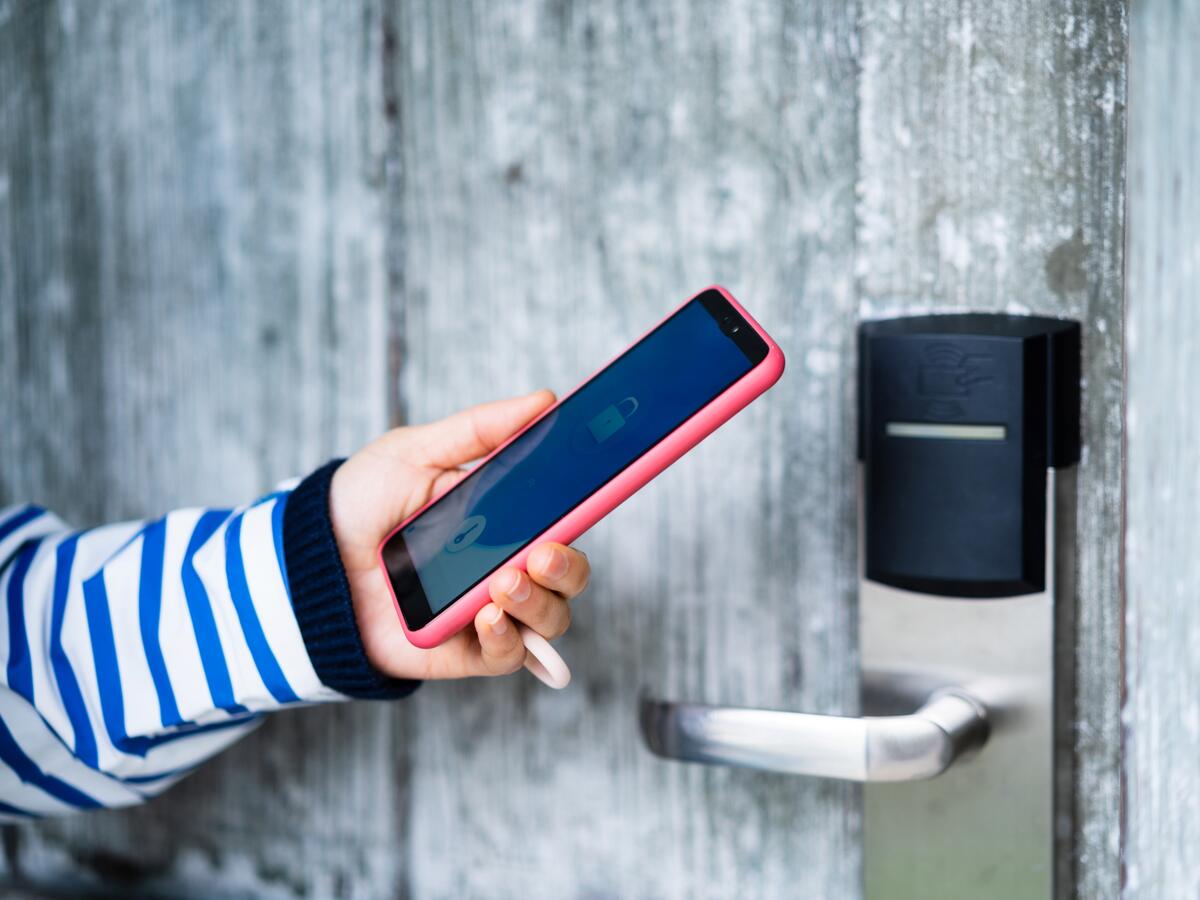
Unlocking a door used to be a simple act involving a physical key. Today, as digital locks become more common, unlocking a door often requires a credential stored on a phone or a wearable.
One industry where the installation of digital locks has expanded is lodging. According to a study from Verified Market Reports, the global market for electronic hotel locks was valued at $2.1 billion in 2024 and is projected to reach $4.5 billion by 2033. The study indicates that this growth is fueled, in part, by “escalating demand for enhanced security protocols in hospitality establishments.”
In a recent Biometric Update article, UL Solutions expert Anurag Vennavaram, product manager, Consumer, Medical and Information Technologies, explores how digital locks are evolving into connected access systems and why that shift introduces new considerations for safety, reliability and trust. The article answers these key questions:
What are digital keys and how do they work?
Digital keys are secure, software-based credentials stored on devices such as smartphones or wearables. Instead of relying on a physical object, access is granted through encrypted communication between the device and the lock. This allows access permissions to be issued, updated or revoked in real time without changing the physical hardware.
Why are digital locks so complex?
Digital locks depend on multiple systems working together in real time. This includes the user’s device, the application managing credentials, communication networks and the lock itself. Each interaction requires authentication, data transmission and system coordination, all of which must perform reliably.
How do digital locks introduce cybersecurity risks?
Because digital locks rely on connected systems, vulnerabilities in software, communication protocols or credential handling can create entry points for cyber threats. A single weakness can affect multiple devices, users or locations simultaneously, making security a critical consideration in system design and operation.
Why is interoperability important in digital access systems?
Digital access systems often combine technologies developed by different organizations. Interoperability ensures these technologies can communicate and function together consistently. Without it, access may fail when systems cannot properly recognize or process credentials across devices or platforms.
How does system-level performance affect safety?
Access control systems govern entry to physical spaces such as homes, workplaces and healthcare environments. If a system fails to authenticate a credential or communicate properly, access may be incorrectly granted or denied. Consistent system-level performance is essential to ensuring both usability and safety.
How does UL Solutions help companies address safety and performance issues for digital access systems?
Industry efforts such as Aliro, a standardized credential and communication protocol, are helping define guidelines for secure communication between devices and access systems.
UL Solutions supports this work through testing, evaluation and certification to assess interoperability, cybersecurity protections and real-world performance. Services such as UL Solutions’ UL Verified IoT Security Rating can provide an objective, independent way to evaluate how systems protect data and manage risk.
The UL Verified IoT Security Rating is based on emerging industry consensus on baseline security capabilities, and it provides a differentiated product security rating and associated label.
Where can I learn more?
Read the article in Biometric Update: The growing safety responsibility behind digital locks.
Additional information about digital locks and UL Solutions’ services for Aliro is available on the Aliro Testing Services page at UL.com.