June 26, 2026
Key Points
- UL Solutions launches new BESS evaluation services to provide data that can help manufacturers and developers demonstrate alignment with NFPA 855, NFPA 68 and NFPA 69 requirements.
- The new services combine modeling, simulation and expert interpretation to strengthen risk assessment and technical documentation.
- The new services supplement UL Solutions’ existing testing and certification services for UL 9540 and UL 9540A, helping accelerate battery energy storage deployment.
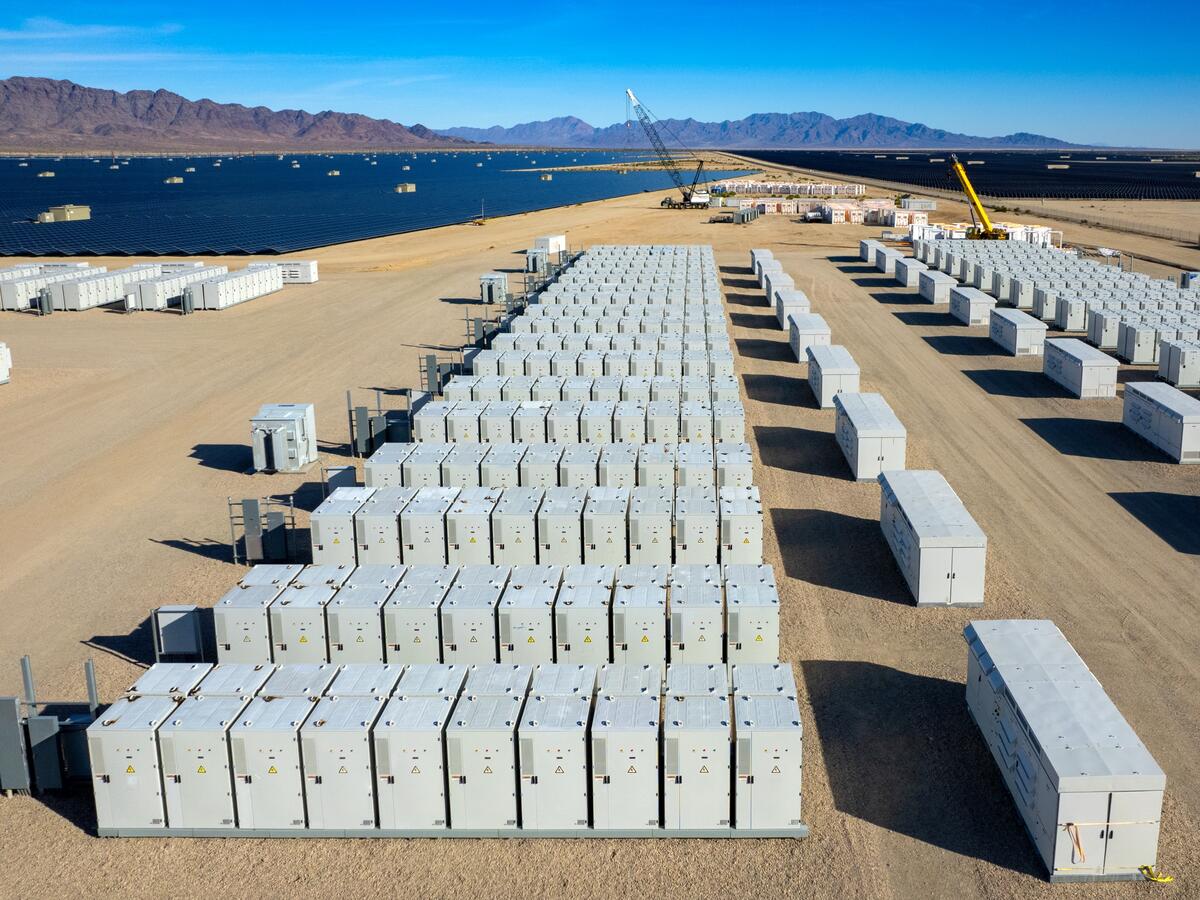
As the global demand for battery energy storage systems (BESS) increases, applied safety science leader UL Solutions is using advanced technological capabilities to help companies demonstrate alignment with applicable requirements.
On June 22, UL Solutions announced new services to address National Fire Protection Association (NFPA) requirements for mitigating fire and deflagration hazards. The Q&A below describes the services and explains why they matter.
What did UL Solutions announce?
UL Solutions has introduced new evaluation services designed to support safer and more efficient deployment of BESS installations. The offerings help manufacturers, developers and integrators assess and document explosion risks in alignment with NFPA standards.
The new services expand UL Solutions’ existing portfolio of testing and certification programs, including those for UL 9540 (Standard for Energy Storage Systems and Equipment) and UL 9540A (Standard for Test Method for Evaluating Thermal Runaway Fire Propagation in Battery Energy Storage Systems).
Why is UL Solutions launching these services now?
The launch comes amid rapid growth in battery energy storage, both in the United States and globally. Utility-scale systems have expanded significantly in recent years, driven by the need to store renewable energy and support grid reliability. As installations increase in size and complexity, regulatory scrutiny has intensified regarding fire safety, thermal runaway and deflagration risks.
UL Solutions helps organizations demonstrate alignment with NFPA 855 (Standard for the Installation of Stationary Energy Storage Systems) along with protection and prevention requirements addressed in NFPA 68 (deflagration venting) and NFPA 69 (explosion prevention systems). The company identified a growing need for clear, science-based guidance that can help organizations address these requirements, reduce uncertainty and accelerate project timelines.
By combining modeling, simulation-based analysis and expert interpretation, UL Solutions delivers detailed technical reports that can help organizations smoothly navigate the complexities of NFPA requirements.
What problems do these new services solve?
The new evaluation services help identify gaps and improve justification packages. Second, they integrate advanced modeling, simulation-based analysis and expert interpretation to help organizations better understand risks and mitigation strategies. Third, they streamline permitting by delivering structured engineering reports and supporting stronger justification packages that align with code authorities’ expectations.
What are the benefits of a collaborative approach?
Organizations can benefit from direct engagement with UL Solutions technical specialists through virtual sessions, where results are reviewed. This collaborative approach ensures that stakeholders fully understand safety and performance issues.
What role could batteries play in the future of energy?
As renewable energy adoption accelerates, battery energy storage is projected to play an increasingly central role in grid stability and energy resilience. UL Solutions’ new evaluation services reinforce the critical concept that safety is the foundation for innovation.
By helping improve documentation and permitting efficiency, UL Solutions is supporting the responsible expansion of the energy storage infrastructure.
Where can I learn more?
For more details on this announcement, read the press release.
Additional information on ways that organizations can meet regulatory requirements and reduce risk is available on the ESS Safety Assessment and NFPA Compliance page at UL.com.