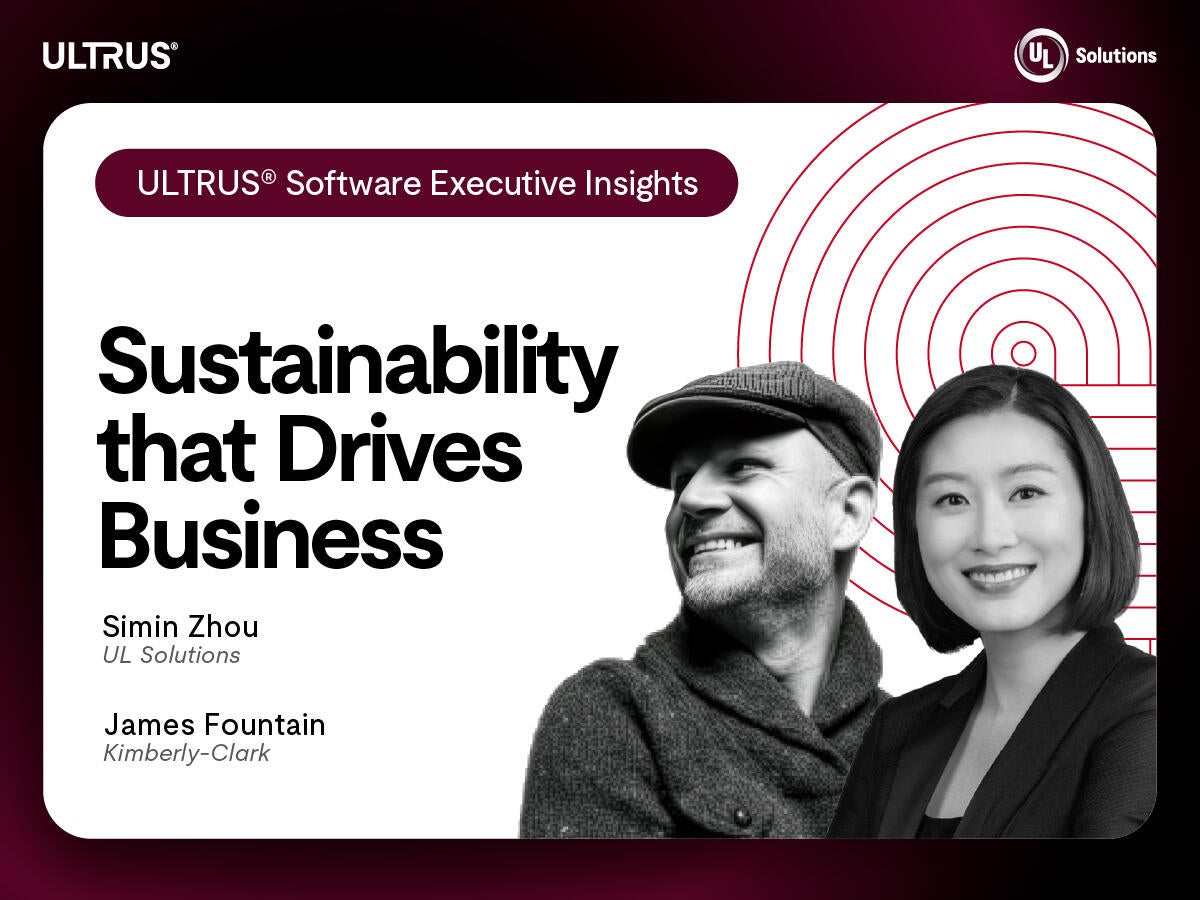

I recently had the pleasure of sitting down with James Fountain, Head of Sustainability Reporting & Analytics at Kimberly-Clark, as part of our ULTRUS Executive Insights series.
James is an incredibly thoughtful leader, and what makes his perspective especially compelling is the unique lens he brings to sustainability. His background spans cultural geography, organizational transformation and sustainability leadership, giving him a systems-level view of how organizations navigate change.
Our conversation covered a lot of ground, from sustainability reporting and governance to stakeholder management, technology and the future of sustainability leadership. But what stood out most were five perspectives James shared that I believe every sustainability leader should be thinking about today.
1. Sustainability has moved beyond reporting
Early in the conversation, James and I chatted about how dramatically the sustainability conversation has shifted over the last decade.
Not long ago, many sustainability leaders were focused on reporting frameworks, disclosures and how to tell their organization's sustainability story. Today, the questions are much more operational: What sustainability issues are material to the business? How will they affect risk, resilience, product design, supply continuity and access to markets? Who owns delivery? How will progress be measured?
James described the shift this way: the field has matured from asking, 'What should we say?' to asking, 'What must the enterprise be able to do?' That is a meaningful change. Sustainability is no longer just a reporting exercise. It is becoming a core business discipline.
James’ key takeaway: Successful sustainability should be ready to drive results, not just report progress.
Pressure-test whether your program is optimized for outcomes, not just disclosure.
Ask: Would our sustainability program create value if no report was ever published?
2. Use sustainability information to drive business action
Organizations are navigating a growing web of sustainability requirements, ESG reporting expectations and stakeholder demands. James specifically pointed to the challenge of a more fragmented accountability environment, where companies must respond to evolving requirements across regions and markets.
It can be tempting to build a separate workflow for every regulation, framework, customer request or internal reporting need. James challenged that approach. The organizations making the most progress are building stronger management systems, governance models and trusted information architectures that can serve multiple requirements and multiple business decisions.
Throughout our discussion, James repeatedly emphasized that reporting should not operate as a separate annual exercise. The same information used for disclosure should help inform planning, risk reviews, capital allocation and operational decision-making.
James’ key takeaway: Sustainability creates value when the same information moves from an annual exercise into part of how the business operates.

Treat reporting as a management tool.
Ask: How often is sustainability information used in planning, budgeting, capital allocation, or risk reviews?
3. Great sustainability leaders are great translators
As sustainability has become more embedded in business, the number of stakeholders shaping priorities has expanded dramatically. Investors, procurement teams, suppliers, product leaders, regulators, employees and communities all bring different expectations, pressures and perspectives.
James' background in cultural geography has taught him that people experience the same issue differently depending on where they sit. Each stakeholder views sustainability through a different lens, making translation one of the most important leadership skills in the field today.
Successful leaders need to go beyond identifying stakeholders and spend time understanding what matters to them. The more complex sustainability becomes, the more important it is to connect the work to the goals, responsibilities and decisions each stakeholder cares about.
James’ key takeaway: People support sustainability when they understand why it matters to their work.

Move beyond stakeholder mapping and practice stakeholder translation.
Ask: For our five most important stakeholder groups, can we clearly explain how sustainability helps them achieve their goals?
4. The most important people may be in the middle of the organization
This may have been my favorite insight from the conversation. James argued that organizations often underestimate the internal middle of the organization: the talent leaders, category leaders, engineers, data owners, product teams and operational leaders who translate ambition into daily choices.
James made the case that the people closest to the work often have the clearest view of what's possible. They understand the practical realities, trade-offs and opportunities that ultimately determine whether a sustainability strategy succeeds.
A good reminder, that some of the most valuable sustainability insights don't come from executive dashboards. They come from listening to the people doing the work every day. Organizations that create space for those voices build more practical solutions and make faster progress.
James’ key takeaway: Sustainability outcomes are delivered in partnership with the people making everyday decisions.

Create more opportunities to learn from the people responsible for execution.
Ask: What are we learning from the people who have to turn our sustainability goals into everyday decisions?
5. The future sustainability leader will be an integrator
When I asked James how the role of the sustainability leader will evolve over the next five years, his answer was clear: sustainability leaders will look less like custodians of a specialized agenda and more like enterprise integrators or transformation executives.
Technical expertise will still matter. But the differentiating skill set will increasingly include business and financial acumen, operating model design, data and technology fluency, change leadership and the ability to translate across functions that use different languages.
That feels exactly right. Sustainability is increasingly connected to risk management, supply chain strategy, product development, capital planning, data governance, AI and customer expectations. The leaders who succeed will be the ones who can connect those systems and help the business make better decisions.
James’ key takeaway: The next generation of sustainability leaders will combine sustainability expertise with business and financial leadership.

Look at how time is spent and whether the role is set up to drive change.
Ask: How much of our sustainability leadership capacity is spent reporting and coordinating vs influencing how the business operates?
My biggest takeaway
What I appreciated most about my conversation with James is that he approaches sustainability through both a systems lens and a human lens. His background in cultural geography has clearly shaped the way he thinks about organizations, communities and change.
One idea sat at the center of nearly everything James shared: sustainability is lived before it's measured. While organizations often focus on frameworks, data and reporting, James repeatedly emphasized the human side of change. Lasting progress happens when people understand why the work matters, how it affects their decisions and what role they play in moving the organization forward.
The message is not that reporting doesn’t matter. It absolutely does. Reporting creates discipline, transparency and accountability. But reporting is most valuable when it changes what an organization actually does.
I am grateful to James and the Kimberly-Clark team for sharing their perspective with us. Conversations like this help all of us think more critically about how sustainability is evolving and what leadership will require in the years ahead.
Watch the full conversation
Want to hear James' insights firsthand? Watch the full ULTRUS Executive Insights interview for a deeper discussion on sustainability strategy, ESG reporting, stakeholder management, sustainability governance, data, AI and the future of sustainability leadership.
X
Get connected with our sales team
Thanks for your interest in our products and services. Let's collect some information so we can connect you with the right person.
Please wait…
Characters remaining