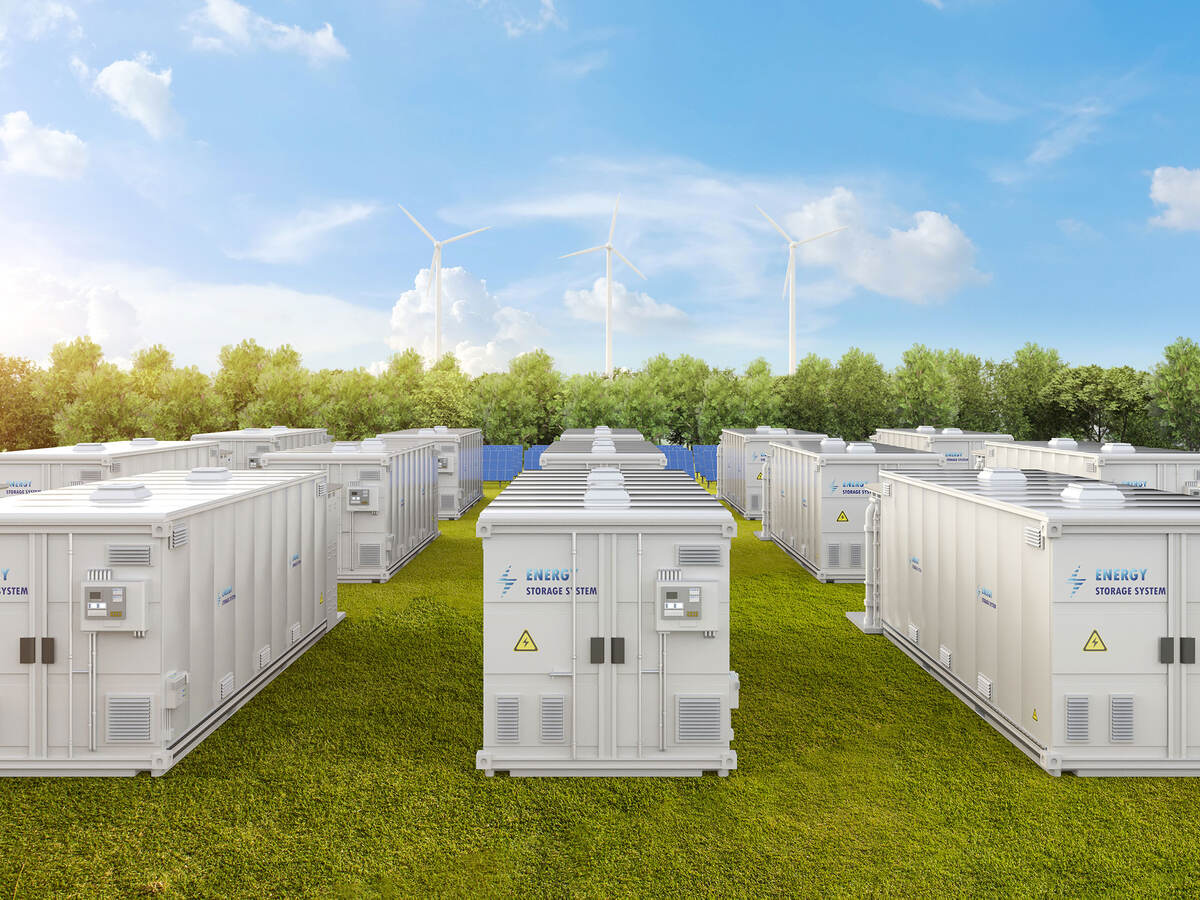
The future of green energy and decarbonization relies heavily on energy storage systems (ESS). Storage technologies are advancing rapidly, and UL Solutions helps support safety throughout this evolution. By participating in standards panels and industry working groups, we help gather all relevant perspectives, build consensus, create economies of scale, and bring clarity to safety regulations. This Q&A was created to address questions in the market while maintaining our history of transparency and support.
- What are the current installation codes and standard requirements for ESS in the US related to fire and explosion testing?
The 2026 edition of NFPA 855 and the 2024 edition of the International Fire Code (IFC) require fire and large-scale fire testing to be conducted in certain situations. NFPA 855 states that fire testing in accordance with UL 9540A and large-scale fire testing is required on representative ESS. The IFC states that large-scale fire testing shall be conducted on a representative ESS in accordance with UL 9540A, the Standard for Test Method for Evaluating Thermal Runaway Fire Propagation in Battery Energy Storage Systems.
- What is the fire and explosion test method specified in the 2026 edition of NFPA 855?
UL 9540A is the test method specified in the 2026 edition of NFPA 855 and the 2024 edition of the International Fire Code. UL 9540A is also referenced in Annex G.11 of the 2026 edition of NFPA 855, which provides guidance on conducting a large-scale fire test.
- Will the 2026 edition of NFPA 855 reference any test method other than UL 9540A?
UL 9540A is the only fire and explosion testing method that will be referenced in the 2026 edition of NFPA 855.
- How soon will the large-scale fire testing be incorporated in UL 9540A?
The 6th Edition of UL 9540A was published March 13, 2026.
The most significant change was the revision of Section 10 to incorporate a clear, large-scale fire test method that aligns with the guidance in NFPA 855, Annex G.11.
Another change is that the Unit Level Test is no longer required for non-residential BESS. After the Module Level Test, is the Installation Level – Large Scale Fire Test of Section 10 in UL 9540A. The Unit Level Test is required for residential BESS, and in some cases, it can be used to test the efficacy of active thermal runaway propagation prevention systems that are incorporated into non-residential BESS.
Another notable revision came with the addition of Annex C for a large-scale deflagration test for BESS enclosures. This test was developed to address the explosion testing specified in the NFPA 855, section entitled Fire and Explosion Testing. The test can be conducted to help establish the post-deflagration scenario condition in large-scale fire testing for BESS that have no designed deflagration pressure relief areas (deflagration vents).
- Can test methods other than UL 9540A be used for ESS large scale fire and explosion testing?
The current edition of NFPA 855 specifies that UL 9540A is the required fire test method for ESS. While Annex G.11 provides guidance on conducting a large-scale fire test, UL 9540A is referenced throughout as a source of multiple data points for large-scale fire testing. No other test standards or test methods are referenced in NFPA 855.
- Does UL Solutions offer large scale fire testing today? Where can UL Solutions conduct large-scale fire testing?
UL Solutions offers large-scale fire testing out of several facilities in the US, China and Korea.
Large batteries present unique safety considerations, because they contain high levels of energy. We remain committed to helping battery innovators enhance energy storage capacity with services to support greater safety, performance and reliability.
Get connected with our team
Learn more about ESS testing and certification with UL Solutions.