October 22, 2026
Key Points
- UL Solutions participated in an APEC workshop focused on the role of digital twins in manufacturing environments.
- Dr. Graham Conway highlighted how confidence in digital twins is critical to customers’ trust and success in the market.
- Safety science-based approaches to digital twin certification, model verification and validation, and simulation can help organizations transform predictive insights into real-world performance.
As organizations increasingly use digital twins to support product innovation, production, maintenance and market access, trust in the underlying models and data is becoming more important. Digital twins are virtual representations of physical products or systems used to simulate and evaluate real-world performance. Standards and trusted third-party assessment can play an important role in helping organizations deploy these technologies with confidence.
UL Solutions shared its expertise on these topics during the Asia-Pacific Economic Cooperation (APEC) workshop “Digital Twin Standards and Applications for Manufacturing,” held Sept. 28-29 in Singapore.
The workshop brought together government officials, standards experts, technical specialists and industry leaders from across APEC’s 21 member economies to discuss digital twin technologies, standards development and practical implementation.
Discussions focused on how standards can support interoperability, data exchange and integration across systems while helping organizations realize the benefits of digital twin technologies. Potential benefits include reducing risk, lowering costs and avoiding rework.
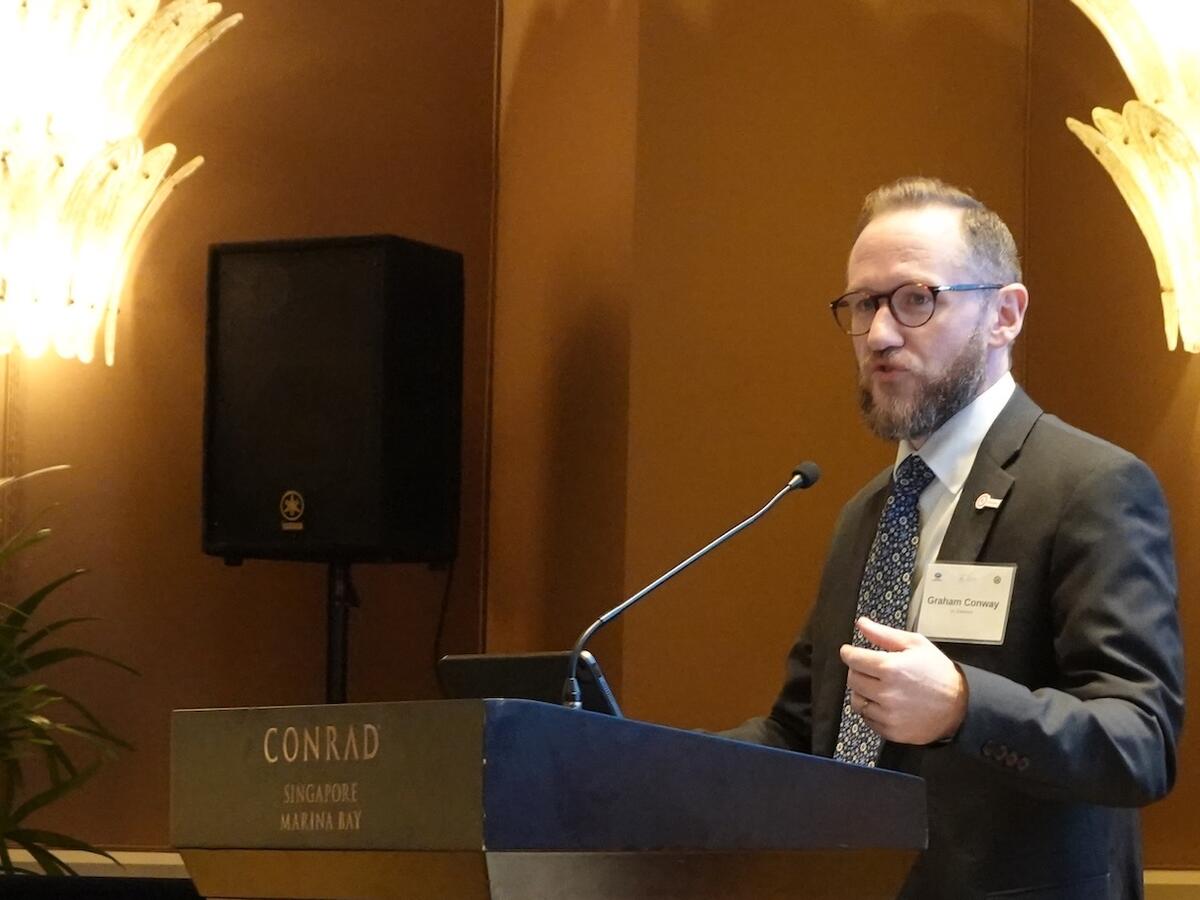
Representing UL Solutions, Dr. Graham Conway, director of innovation and applied R&D, spoke during a session focused on digital twin applications in manufacturing. Conway discussed considerations for identifying and managing risk associated with digital twins. He also highlighted how standards and conformity assessment can help establish trust in digital twin systems, support operational objectives and inform decision-making.
“Digital twins have significant potential to drive innovation and bring trusted products to market,” Conway said. “As adoption expands, grounding approaches in safety science can help organizations better understand risks, improve interoperability and build confidence in how these technologies are implemented.”
As digital twins expand into new manufacturing and product life cycle applications, organizations are seeking credible ways to evaluate model performance, manage risk and demonstrate that virtual representations remain aligned with physical systems. UL Solutions supports these efforts through services such as model verification and validation, helping customers build confidence in digital tools.
Through participation in forums such as APEC, UL Solutions continues to contribute its safety science expertise to discussions on emerging technologies, helping stakeholders better understand how standards and conformity assessment can support innovation, trust and responsible technology adoption.
Information about UL Solutions’ services for certification, modeling and simulation, and model verification and validation is available on the digital twins page at UL.com.
Photo caption: Dr. Graham Conway, director of innovation and applied R&D at UL Solutions, speaks during an APEC workshop on digital twin technology.