Materials have historically been viewed as predictable inputs in vehicle safety engineering. Steel deforms in known ways, and plastics insulate, absorb and protect with consistency, so variability has rarely been treated as a major factor. Test methods likewise assumed materials served singular, stable functions within defined mechanical limits. However, as new materials enter the supply chain, that model no longer fully applies. Vehicles are evolving inside and out, and the materials used, particularly in electric vehicles (EVs) and autonomous vehicles (AVs), no longer serve just one purpose. Simultaneously, weight-reduction efforts are pushing the industry away from predictability as new materials — and legacy materials used in new ways — gain traction.
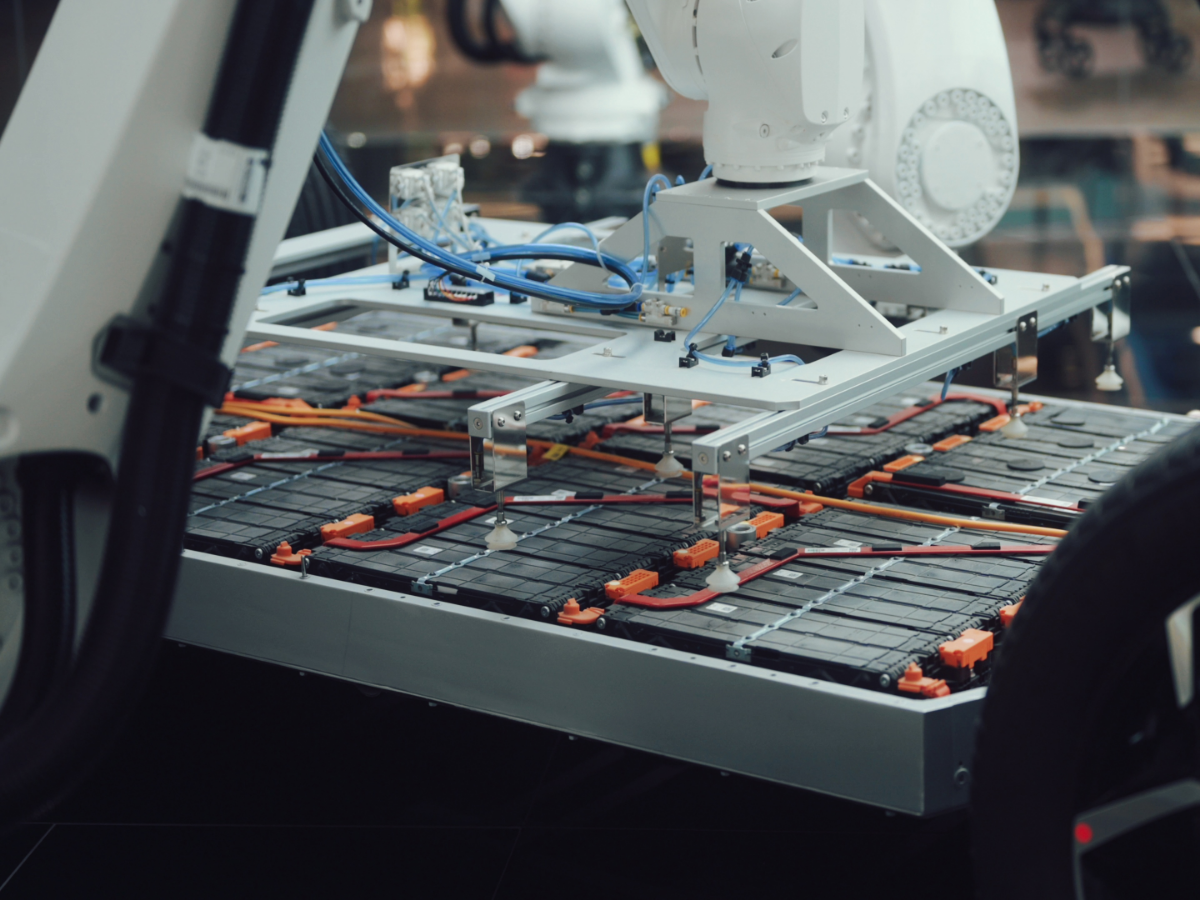
In today’s EVs and AVs, lightweight composites are replacing structural metals. Battery enclosures are designed to protect the cells while also carrying load, managing heat and helping contain fire in the event of battery failure. Interior and exterior polymers hold sensors, antennas and electronic functions. These new materials can reduce weight effectively, but they also influence crash behavior, thermal propagation and electromagnetic performance.
The era of predictable inputs is fading quickly, but safety practices and evaluation frameworks have not kept pace. Many suppliers and original equipment manufacturers (OEMs) still evaluate materials as isolated components rather than as contributors to larger, more complex systems. This is widening the gap between how vehicles are designed and how their safety is evaluated.

Reducing mass while reshaping performance
Automotive lightweighting focuses mainly on the transition from traditional metals to advanced multi-material systems, including high‑strength steel, aluminum alloys, magnesium and fiber‑reinforced composites such as carbon fiber-reinforced polymers (CFRP) and glass fiber-reinforced polymers (GFRP). These materials offer high strength‑to‑weight ratios, corrosion resistance and design flexibility, enabling engineers to replace heavier steel structures with optimized, multifunctional components.1
At the component level, replacing steel with glass fiber-reinforced polymer composites, high-strength steel or aluminum can reduce weight by 10% to 60%, while composite battery enclosures can achieve approximately 30% to 40% mass reduction compared with aluminum and up to 50% compared with steel.2,3 With a 10% decrease in vehicle weight potentially improving fuel economy or energy efficiency by 6% to 8% — while also extending EV range — lightweighting offers significant benefits that support both performance and sustainability goals.4
Beyond efficiency, lightweighting offers broader benefits for drivers, passengers and vehicle designers. Reduced inertia can improve handling. Powertrains and batteries may be downsized. Life cycle emissions can be lowered. Part consolidation and integrated structures can also expand design flexibility. As a result, lightweighting has become a central engineering strategy shaping next-generation vehicle architectures. However, along with these advantages, important behavior changes occur, especially under stress. That is where predictability begins to shift.
During an impact, metals primarily undergo plastic deformation — a permanent change in shape at the atomic level. Composites, by contrast, experience progressive damage through mechanisms such as fiber fracture, matrix cracking and delamination.5 These mechanisms can provide strong energy absorption, but they also introduce complex and less predictable failure patterns than traditional materials.
On the surface, this difference may seem subtle, but the physics of safety change as these materials change. This means assumptions built over decades of vehicle design become less applicable, leaving suppliers, designers and OEMs to identify and address new material challenges. Lightweighting should not be viewed only as a mass decision; it must be embraced as a shift in how the vehicle responds to stress, impact and failure.
Multifunction materials challenge static tests
Material selection remains central to lightweighting, but weight reduction can also come from multifunctional materials. Increasingly, new materials and components are being designed to perform multiple roles within the same structure.
Battery enclosures are a clear example. Composite housings are already being designed to provide mechanical strength, thermal insulation, flame resistance and electromagnetic shielding.6 Future designs aim to push this further by combining mechanical load‑bearing capability with electrochemical energy storage, effectively turning the vehicle structure itself into a battery.7 This multifunctionality contributes to weight reduction, but it can also introduce new risks and potential failure points.
When functions are separated, failures can often be contained. When they are combined, failures can spread. As a result, a single material fault can cascade across systems and complicate root-cause identification and mitigation. For example, a thermal event that begins as overheating could affect structural integrity. A mechanical impact could also disrupt electrical pathways or shielding performance. Electromagnetic interference could degrade sensing accuracy in autonomous systems that rely on precise signal integrity.8
Despite these changes, safety evaluation methods often still reflect a legacy model in which materials serve one function and behave in stable ways. Testing frameworks make it possible to evaluate properties such as tensile strength, flammability or thermal resistance independently. Advanced materials call for a more connected approach because they operate under conditions in which mechanical load, temperature, electrical activity and other attributes may be intertwined and may change simultaneously. This means that a material may reduce weight and perform well under mechanical load or extreme temperatures, yet these factors may still impact one another in ways isolated testing does not capture.
This gap is especially visible in battery safety. Thermal runaway remains a critical hazard in lithium‑ion systems, as temperatures can exceed 1,000 degrees Celsius in extreme scenarios, creating the potential for fire or explosion. While individual materials may pass fire‑resistance or mechanical tests, system‑level performance depends on how those materials interact under stress.9 For example, research on EV battery enclosures highlights the importance of evaluating thermomechanical behavior under coupled fire and structural loads — conditions traditional test setups may not fully capture.10
Even advanced solutions, such as thermoplastic composites designed to delay thermal propagation, require integrated evaluation to show how they perform across real‑world conditions.11 The challenge is not that testing is insufficient. Rather, testing is often misaligned with how modern materials behave and interact.

EV and AV architectures amplify material risk
Electrification and autonomy intensify material dynamics. EV architectures concentrate large amounts of energy into compact spaces, requiring materials to manage heat, contain fire and maintain structural integrity. Composite battery enclosures are increasingly used to reduce weight, delay thermal propagation and help meet safety requirements. At the same time, autonomous systems are highly sensitive to environmental and electromagnetic conditions. Sensors such as radar and lidar rely on specialized materials that must protect components while allowing signals to pass without interference.12
This creates a new dynamic: The performance of an individual material directly affects system functionality, and structural, thermal and electronic behaviors become interdependent. As vehicle architectures consolidate and complexity increases, the margin for error narrows, leaving suppliers and OEMs to navigate material innovation and reduce vehicle weight while approaching safety more dynamically. However, life cycle blind spots continue to obscure second‑order safety risks.
Material decisions are often evaluated during design validation. Although this approach has long been effective, it is becoming less reliable as material become more complex. A material that performs as expected in isolation may still introduce risk at the system level, and safety performance can change across the vehicle life cycle. Composite materials can degrade through thermal cycling, mechanical fatigue and environmental exposure, but internal damage is not always visible, complicating post‑incident inspection. Progressive failure modes such as delamination and microcracking also make prediction and detection more difficult.13 Battery systems add another layer of complexity, as materials used for fire protection and structural support may change behavior under repeated stress, affecting long‑term safety outcomes.
Material intelligence is emerging as a safety capability gap
The challenge facing the industry is not a lack of innovation but a gap in how that innovation is understood and evaluated. Materials are now dynamic contributors to interconnected systems in which mechanical, thermal and electrical behaviors converge and change over time. Closing this gap requires a mindset shift.
Suppliers and OEMs must move beyond static testing and adopt integrated, cross-disciplinary approaches that reflect real-world conditions. This means evaluating materials not only for individual performance but also for how they interact across systems and throughout the entire vehicle life cycle. Research on multifunctional composites underscores the difficulty of balancing competing requirements — such as mechanical strength, electrical conductivity, thermal stability and meaningful weight reduction — within a single material system.14 Improvements in one domain can introduce trade-offs in another, and understanding those trade-offs requires perspectives spanning materials science, electrical engineering and system design. Without that shift, safety frameworks risk overrelying on test results that do not fully explain real‑world behavior.
The question is no longer whether these materials should be used. That transition is already underway. The more pressing question is how lightweighting strategies can be paired with material intelligence to support safety across the entire system.
References
U.S. Department of Energy. (n.d.). Lightweight materials for cars and trucks. https://www.energy.gov/cmei/vehicles/lightweight-materials-cars-and-trucks
Ibid.
Etengoff, A. (2026, April 7). What advances in materials are supporting lighter-weight EV architectures? EV Engineering Online. https://www.evengineeringonline.com/what-advances-in-materials-are-supporting-lighter-weight-ev-architectures/
Ibid.
Azad, M. M., Jung, J., Elahi, M. U., Sohail, M., Kumar, P., & Kim, H. S. (2024). Failure modes and non-destructive testing techniques for fiber-reinforced polymer composites. Journal of Materials Research and Technology, 33, 9519–9537. https://www.sciencedirect.com/science/article/pii/S2238785424027972
Hu, S., Wang, D., Večerník, J., Křemenáková, D., & Militký, J. (2024, August 14). Electromagnetic interference (EMI) shielding and thermal management of sandwich-structured carbon fiber-reinforced composite (CFRC) for electric vehicle battery casings. Polymers, 16(16), 2291. https://www.mdpi.com/2073-4360/16/16/2291
Larsson, C., Larsson, F., Xu, J., Runesson, K., & Asp, L. E. (2025, May). Electro-chemo-mechanical modelling of structural battery composite full cells. npj Computational Materials, 11(1). https://www.nature.com/articles/s41524-025-01646-x
Kori Science. (n.d.). Autonomous driving sensor materials: The plastic science behind lidar & radar.
https://koriscience.com/autonomous-driving-sensor-materials-en/Kim, H. S., Cho, M., Lee, D., Lee, C., Kim, J., & Kang, S. (2025, December 13). Flame-retardant battery pack case design for delaying thermal runaway: A CFD and experimental study. Materials, 18(24), 5605. https://www.mdpi.com/1996-1944/18/24/5605
JOTA International. (n.d.). Battery enclosure fire test using intumescent polypropylene.
https://jotaintl.com/intumescent-polypropylene-battery-enclosure-fire-test/Ibid.
Kim, H. S., Cho, M., Lee, D., Lee, C., Kim, J., & Kang, S. (2025, December 13). Flame-retardant battery pack case design for delaying thermal runaway: A CFD and experimental study. Materials, 18(24), 5605. https://www.mdpi.com/1996-1944/18/24/5605
Hu, S., Wang, D., Večerník, J., Křemenáková, D., & Militký, J. (2024, August 14). Electromagnetic interference (EMI) shielding and thermal management of sandwich-structured carbon fiber-reinforced composite (CFRC) for electric vehicle battery casings. Polymers, 16(16), 2291. https://www.mdpi.com/2073-4360/16/16/2291
Patsnap Eureka. (n.d.). Structural battery composites: Load-bearing energy storage EV platforms.
https://eureka.patsnap.com/blog/research-report/structural-battery-composites-load-bearing-energy-storage-ev-platforms/



Get connected with our sales team
Thanks for your interest in our products and services. Let's collect some information so we can connect you with the right person.